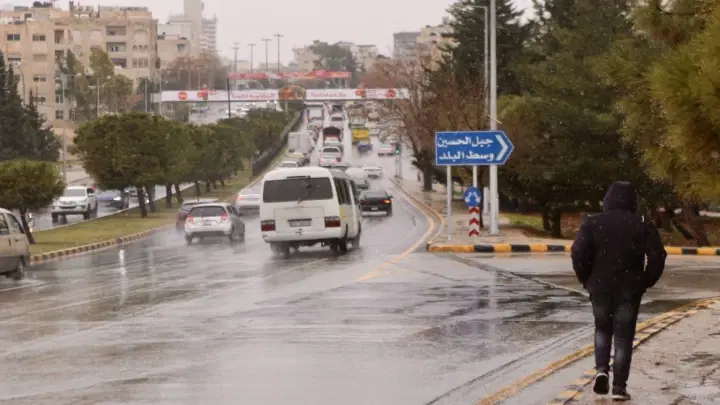
He pointed out that there are no new hotspots in the capital, Amman, but rather sites that had been previously monitored and identified, and work is currently underway to implement projects to develop rainwater drainage networks there by constructing box and pipe culverts.
He indicated that some water accumulations resulted from runoff and water pooling due to the nature of the mountainous terrain and slopes, which may lead to soil and debris being carried into drainage lines and culverts, requiring field intervention to remove obstructions and ensure smooth drainage.
He added that rainwater drainage networks are operating with high efficiency, but the intensity of rainfall and the speed of surface runoff may sometimes lead to a delay in water entering the pipe and box drainage lines, which may give the impression of a defect in the efficiency of the networks, while the matter is related to the nature of the weather conditions, rainfall amounts, and water flow speed.
He noted that water accumulations often begin to recede and drain within a short period after rainfall stops or decreases in intensity, explaining that the duration of water remaining in most locations does not exceed about ten minutes, coinciding with the intervention of field teams to remove any obstacles that may hinder the drainage process.
He confirmed the continuation of monitoring and exploration work with the beginning of the rainy season, with the aim of identifying sites that may experience water accumulation in the future and studying appropriate solutions for them, whether through immediate interventions or the implementation of new infrastructure projects, pointing out that work is ongoing in a number of sites where culvert construction projects are still under implementation.