In this context, the blood test known as high-sensitivity C-reactive protein (hs-CRP) stands out as an indicator that helps assess inflammation in the body and adds important information to the estimation of cardiovascular risk.
So, what is the relationship between inflammation and arterial health? How can the heart remain at risk even when cholesterol is normal? And when does this test become necessary?
How does inflammation threaten arterial health?
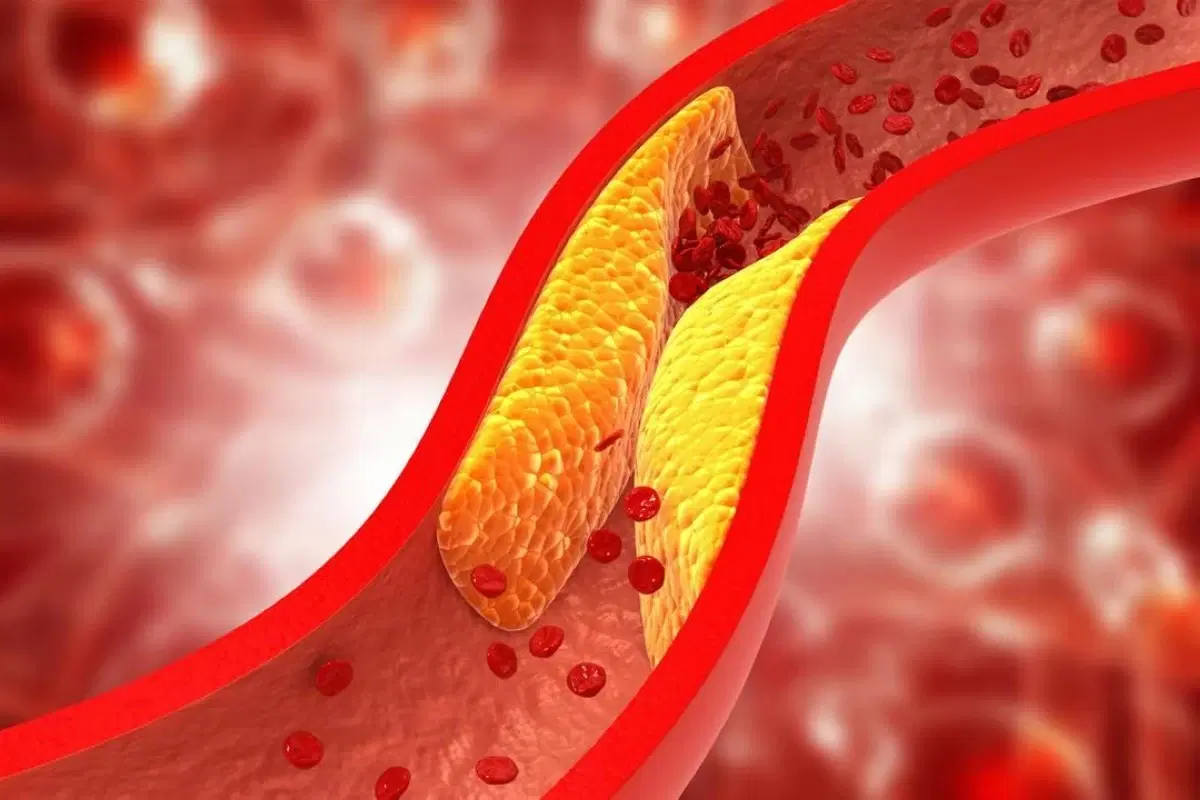
Atherosclerosis does not occur as a result of fat accumulation alone; rather, a series of immune and inflammatory reactions within the walls of blood vessels participate in its development.
This process begins when LDL cholesterol particles infiltrate the arterial wall, where they undergo changes that trigger an immune system response.
Immune cells intervene to engulf these fatty particles, transforming into what are known as foam cells, which contribute to the formation of atherosclerotic plaques within the arteries.
Over time, these plaques may accumulate and lead to the narrowing of the arteries, but the greatest danger may occur when inflammation weakens the fibrous cap that protects the plaque, making it more susceptible to rupture.
When rupture occurs, a blood clot can form that suddenly blocks the artery, causing a heart attack or stroke.
This illustrates that inflammation is not merely a consequence of atherosclerosis, but one of the factors that contribute to its development and the occurrence of its complications.
Why does normal cholesterol not guarantee heart health?
Lowering bad cholesterol is one of the most important ways to prevent heart disease, but reaching target levels does not eliminate other risk factors.
A person may suffer from high blood pressure, diabetes, or obesity, or have a family history of early heart disease, all of which are factors that may increase the likelihood of disease even with regular cholesterol levels.
Some inflammatory processes associated with atherosclerosis may also persist in people taking lipid-lowering medications.
In some medical contexts, this situation is called "residual inflammatory risk," meaning the persistence of a portion of the risk of cardiovascular disease despite the control of cholesterol and some other risk factors.
Therefore, monitoring lipids alone is not enough; prevention requires a comprehensive assessment of the various factors that affect heart health.
A test that reveals an additional risk indicator
The high-sensitivity C-reactive protein (hs-CRP) test measures small amounts of a protein produced by the liver in response to inflammatory signals in the body, most notably interleukin-6.
Its importance lies in its ability to detect low levels of inflammation, which may be associated with an increased risk of heart and arterial disease.
However, it is important to know that this test does not reveal the presence of blockage in the arteries, nor does it identify the location or cause of the inflammation, nor is it considered an independent diagnosis for heart disease.
Its result may be elevated due to an infection, an inflammatory disease, or a physical injury; therefore, it should be interpreted in light of the health history, clinical examination, and other test results.
When does an elevated indicator become concerning?
According to the 2026 American Lipid Disorders Management Guidelines, a high-sensitivity C-reactive protein level of 2 milligrams per liter or more, in more than one measurement, is considered one of the factors that helps enhance the estimation of cardiovascular disease risk.
Some people with a borderline estimated cardiovascular risk over the next ten years, ranging from 3% to less than 5%, may benefit from intensifying preventive treatment with statins if the indicator remains elevated at this level or higher, without another cause to explain it.
However, an elevated result does not automatically mean the presence of arterial disease or the necessity of taking medication, as the treatment decision depends on a combination of factors, including age, blood pressure, diabetes, smoking, lipid levels, and family history.
Can the elevation be temporary?
Yes, the C-reactive protein indicator is not specific to heart disease, and it may rise as a result of respiratory infections or urinary tract infections, as well as in cases of chronic inflammatory diseases, injuries, and after surgical operations.
Therefore, a test result during an acute infection may not be suitable for estimating long-term cardiovascular risk.
When the result exceeds 10 milligrams per liter, potential causes for the elevation should be investigated, and the doctor may recommend repeating the test after about two to three weeks, once the health condition has stabilized.
Furthermore, a persistently elevated indicator does not necessarily mean there is a problem in the arteries; it could be related to a chronic inflammatory disease that requires independent evaluation.
Does everyone need to take the test?
Not necessarily. The hs-CRP test is used selectively when the doctor needs additional information to estimate the risk of heart disease, especially if the picture is not clear through traditional risk factors.
Scientific recommendations from the American College of Cardiology in 2025 indicated the importance of expanding the use of this test in assessing cardiovascular risks, while the 2026 lipid disorders guidelines focused on its use among factors that help in making preventive and therapeutic decisions.
In some cases, the doctor may recommend additional tests, such as:
Lipoprotein (Lp(a)): A genetic indicator that helps assess the risk of heart disease.
Coronary artery calcium scan: To help detect the accumulation of calcium inside the arterial walls and estimate the degree of calcification.
However, none of these tests should be interpreted in isolation from the general health condition, and a low inflammation indicator does not rule out the existence of atherosclerosis.
What are the causes of inflammation despite normal cholesterol?
There is a group of health and behavioral factors that may be associated with persistent low-grade inflammation, most notably:
Obesity and abdominal fat: Excess adipose tissue may secrete substances that contribute to activating inflammation and affecting the functions of blood vessels.
Insulin resistance and diabetes: The metabolic changes associated with them are linked to increased inflammation and cardiovascular risks.
Smoking: It damages the lining of blood vessels and stimulates the inflammatory processes associated with atherosclerosis.
Lack of physical activity: It may contribute to metabolic disturbance and an increase in risk factors.
Unhealthy diet: Especially excessive sugars, processed meats, and foods rich in unhealthy fats.
Sleep disorders and chronic stress: They may be associated with hormonal and immune changes that affect heart health.
Chronic inflammatory diseases: Such as rheumatoid arthritis and lupus, which may increase the risk of heart disease through multiple mechanisms.
The presence of one of these factors does not necessarily mean an elevated inflammation indicator, nor does an elevated result alone reveal the cause responsible for it.
Steps to protect your heart and arteries
Protecting the heart begins with controlling known risk factors, not just monitoring cholesterol.
Among the most important steps that help reduce risks are:
Monitoring blood pressure, sugar, and lipid levels regularly.
Refraining from smoking and avoiding exposure to its smoke.
Maintaining a healthy weight and reducing fat accumulated around the abdomen.
Practicing regular physical activity.
Following a diet rich in vegetables, fruits, whole grains, and fish.
Limiting excess sugars, processed meats, and unhealthy foods.
Prioritizing sleep quality and reducing chronic stress.
Committing to the treatments prescribed by the doctor according to the risk level and health condition.
People with high cardiovascular risk or a history of arterial disease may need additional preventive treatments, which the doctor will determine after a comprehensive assessment, not relying on an elevated inflammation indicator alone.
Summary: Normal cholesterol is a positive indicator for heart health, but it does not represent a complete guarantee for the safety of the arteries. Cardiovascular risk is affected by multiple factors, including chronic inflammation, blood pressure, diabetes, smoking, and obesity.
Therefore, do not rely on one test to be reassured about your heart; ensure regular medical follow-up, evaluate risk factors collectively, and adopt a healthy lifestyle that protects your arteries in the long term.