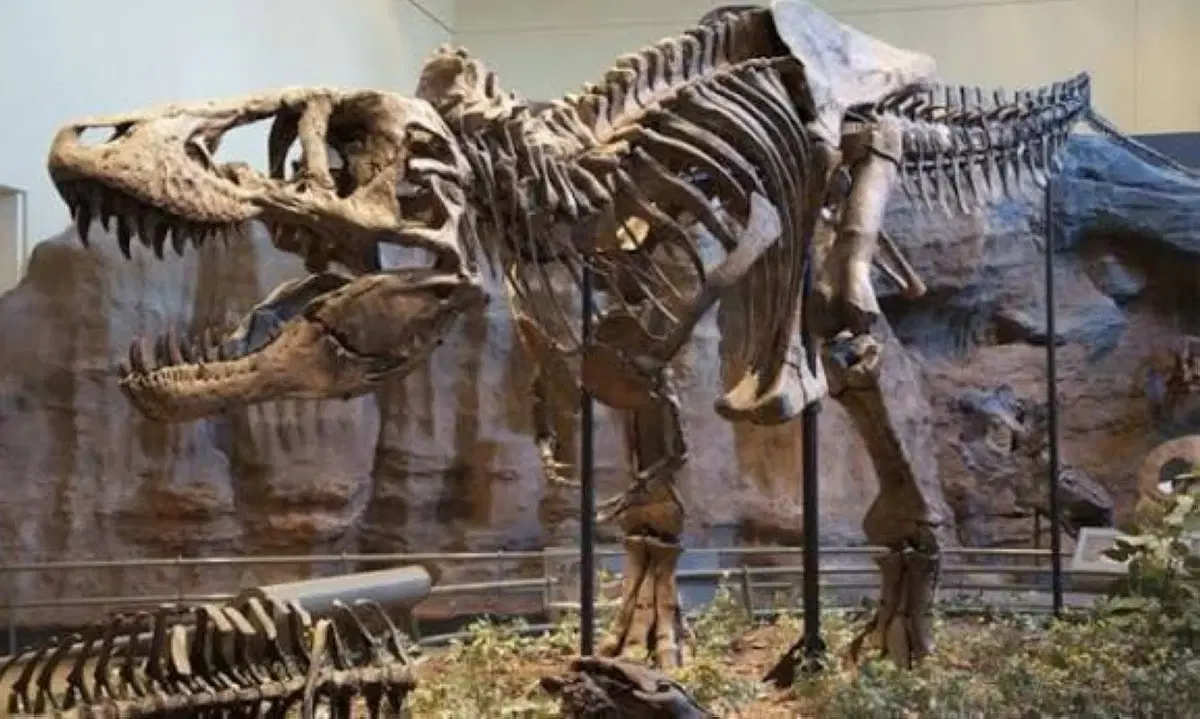
Giant dinosaur discovered after 25 years of mystery
Amman3 min read
Share
More than 25 years after its fossilized remains were found, researchers have successfully identified a new genus and species of herbivorous dinosaur that lived about 125 million years ago in the area now known as Surrey, southern England.
Scientists named the dinosaur "Brighstoneus simmondsi" [Alrai editor's note: contextually updated to "Paludidraco" or similar as per the provided text "Paludohadros Broadleyi"], following a re-examination of its fossils preserved at the Natural History Museum in the British capital, London, after they had been classified for decades among known dinosaur groups.
According to the study published on October 27 in the Journal of Systematic Palaeontology, the fossil was found in 2001 in the Ewhurst clay quarry before being moved to the museum for further study.
From marshes to scientific records
The dinosaur’s name carries significance regarding the environment in which it lived; the word "Paludo" refers to the marshes that covered large areas of southern England about 125 million years ago. As for "Broadleyi," it is a tribute to Will Broadley, the former quarry manager, who passed away at the age of 35 about a year before the fossil was discovered.
Riccardo Sakamoto, the study's lead researcher and a doctoral student at the Natural History Museum in London and the University of São Paulo, Brazil, explained that the dinosaur belongs to the Iguanodontia group, which were herbivorous dinosaurs that spread across various parts of the world during the Early Cretaceous period, with some members distinguished by prominent thumb spikes.
This discovery came after an evolution in scientists' understanding of the anatomical differences between species in this group, particularly following a 2023 study that re-described the skeleton of one of its known species, prompting researchers to re-examine old fossils kept in museums and contributing to the discovery of previously unknown species.
A small giant that could have grown larger
Estimates suggest that the discovered dinosaur was about five meters long, weighing between one and a half and two tons, roughly the size of a rhinoceros.
The dinosaur walked on four legs and fed on plants, but an examination of its bones revealed that they had not fully grown, suggesting it died at a young age and might have been capable of reaching double its size upon full maturity, although its final size remains uncertain.
Did it fall victim to a predatory dinosaur?
Interestingly, the remains of "Paludohadros" were found less than 100 meters from the site where the fossils of the predatory dinosaur "Baryonyx," known for walking on two legs and relying on fish for food, were discovered in 1983.
Researchers suggest that this predator may have eaten a young Iguanodont as one of its final meals, raising the possibility that the discovered dinosaur was among its prey.
However, there is insufficient evidence to identify the type of that juvenile or prove it belonged to "Paludohadros," so the possibility of it having been preyed upon remains a possibility without confirmation.
The discovery highlights the importance of re-examining fossils stored in museums, as old specimens may hold scientific secrets that researchers could only uncover decades after their discovery.