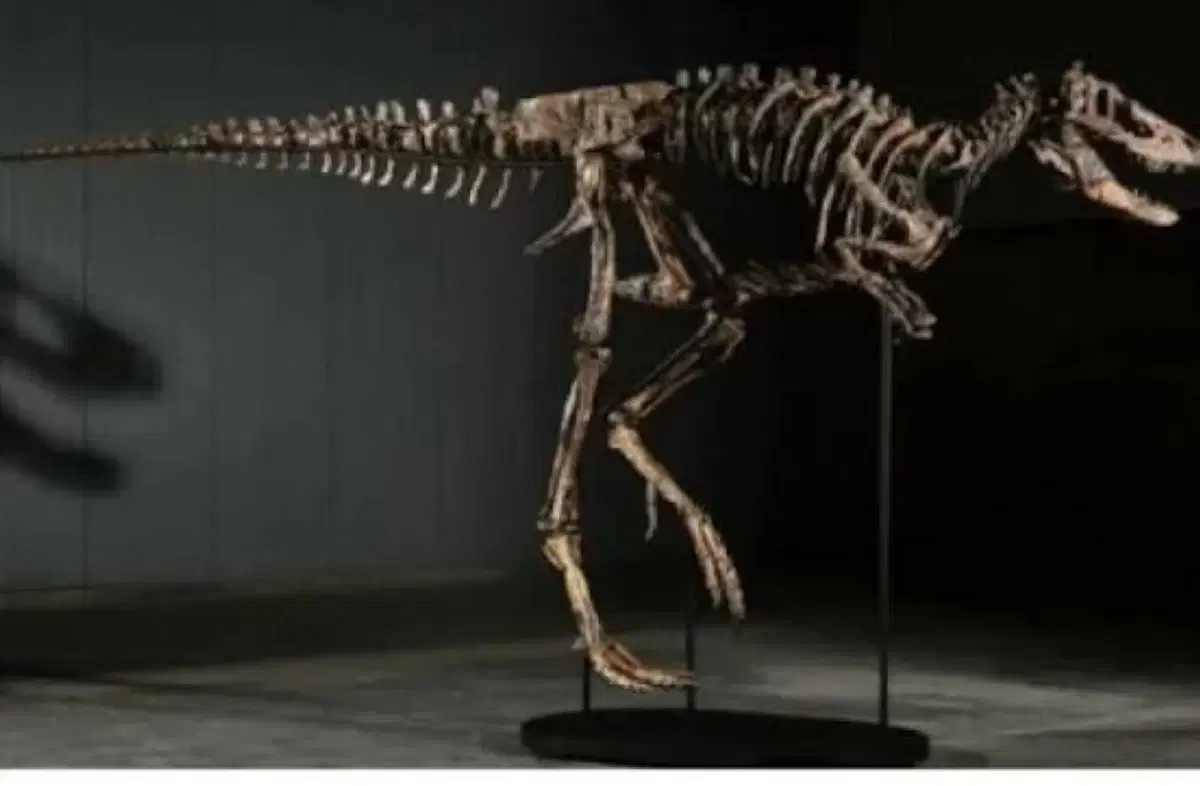
In just 12 minutes, the skeleton of a dinosaur that lived about 67 million years ago became one of the most expensive fossils in the world, after being sold for $47.3 million at an auction held by Sotheby's in New York, far exceeding initial estimates that ranged between $6 million and $9 million.
However, the exceptional value of the skeleton, known as "Judy," does not stop at its record price; it extends to its rarity and scientific importance, as well as the controversy over the fate of fossils that may move from scientific institutions to private collections.
A rare discovery in Montana
The story of "Judy" began in 2019, when the skeleton was found on a ranch owned by Judy Peterson in the U.S. state of Montana, within the Hell Creek geological formation, which is famous for containing fossils dating back to the late Cretaceous period.
The skeleton belongs to a "Nanotyrannus" dinosaur, a carnivorous dinosaur similar to the Tyrannosaurus rex, but smaller and more agile. The skeleton is about 6 meters long and is estimated to be about 70% complete, comprising nearly 191 fossilized bones.
The importance of this fossil is increased by its rarity, as reports indicate that it is one of only three known large skeletons of this dinosaur. It was named "Judy" in honor of the owner of the ranch where it was discovered.
A scientific mystery that increased its value
For many years, scientists have been divided over the reality of the Nanotyrannus: is it an independent species of dinosaur, or is it just a juvenile stage of the Tyrannosaurus rex?
While one group of researchers believed that the differences in size and structure were due to growth, others considered that the anatomical characteristics indicate that it is a separate genus that lived concurrently with the Tyrannosaurus rex about 67 million years ago.
In 2025, a study published in the journal "Nature" reignited this debate, after researchers concluded that there are differences supporting the consideration of the Nanotyrannus as an independent dinosaur, based on anatomical comparisons and analyses of bone and growth characteristics.
Here lies one of the most prominent points of "Judy's" importance: it is not just a rare skeleton, but a specimen that may help clarify the diversity of carnivorous dinosaurs at the end of the Cretaceous period, and develop scientists' understanding of their evolution and relationships to one another.
A record auction in 12 minutes
On October 27, 2026, six bidders competed for the skeleton at the Sotheby's auction in New York, before an undisclosed buyer clinched the deal for $47.3 million, following bids via phone and the internet.
The final price was more than five times higher than the upper limit of the initial estimates, making "Judy" the second most expensive dinosaur skeleton ever sold at auction, according to the report, behind a Tyrannosaurus rex skeleton known as "Gus," which sold for $50.1 million earlier that same year.
Despite the magnitude of the deal, the new owner's plans remain unannounced, whether regarding displaying the skeleton to the public or allowing researchers to study it.
Who has the right to keep fossils?
The sale of "Judy" has reopened the debate over the fate of rare fossils, especially when they move into private ownership, away from museums and research institutions.
Paleontologists warn that individuals keeping exceptional specimens may limit researchers' access to them, making it difficult to conduct the necessary studies to understand the evolution of species and review scientific conclusions. The true value of a fossil is not measured only by its rarity and price, but also by the information it can reveal about the history of life on Earth.
In contrast, proponents of the fossil trade argue that finding, extracting, and restoring them requires specialized expertise and high costs, and that selling them may provide a return for the discoverers and owners who contribute to preserving and making them available.
However, the transfer of "Judy" to private ownership does not necessarily mean depriving scientists and the public of it, as the buyer has not yet announced their future plans.
Between its enormous financial value and its scientific importance, "Judy" remains a clear example of the controversy over the rare fossil trade and the right to keep precious evidence that reveals the secrets of life on Earth.