Among the most prominent incidents was the theft of equipment estimated at $13 million, which was en route to Fayetteville, Georgia, home to one of the largest data center projects in the country.
Despite the shipment being escorted by an unmarked civilian vehicle containing law enforcement officers, the thieves managed to obstruct the security vehicle and force it to stop, while the truck continued on its way at speed. The trailer was later found in a truck yard in California, near the starting point of the journey.
About three weeks later, the incident was repeated with another shipment containing servers valued at approximately $10 million, which was heading to a data center project in Texas. Despite using an application to track the shipment's location, the thieves managed to seize its contents, and they have not been found to date.
24 incidents in several states
According to investigations reported by NBC News, authorities have tracked about 24 incidents of theft of trucks carrying high-value technological equipment in states including California, Texas, and Utah.
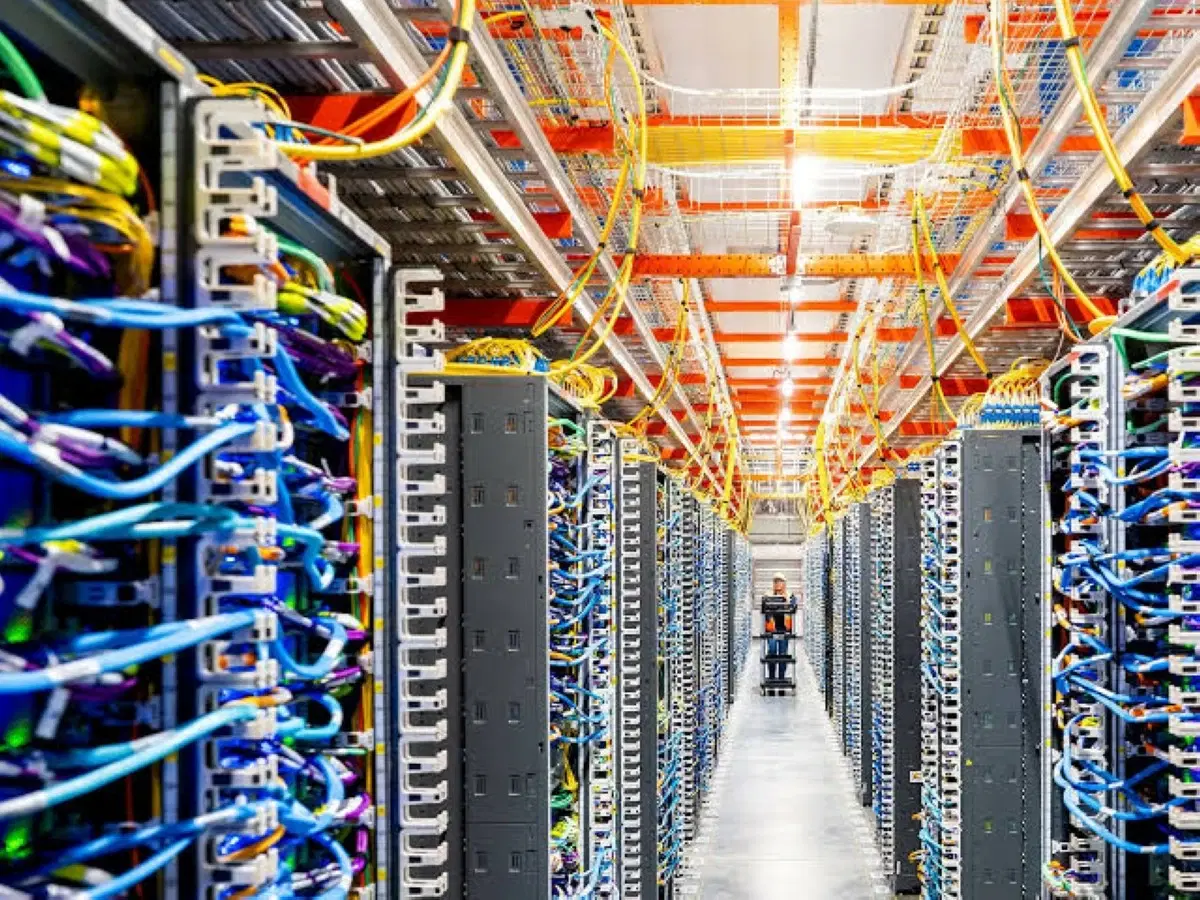
The theft is no longer limited to expensive electronic chips, but has extended to servers, RAM units, storage drives, fiber optics, and copper wiring, as well as the cooling equipment necessary to operate data centers.
Keith Lewis, vice president of operations at Verisk CargoNet, a company specializing in shipping risk assessment, describes these components as being like gold bars, noting that the value of some stolen shipments exceeds $30 million, and that seizing them can be easier than robbing a bank.
The phenomenon has also extended to shipments prepared for air transport to Asia, with one shipment reaching a value of approximately $38 million, reflecting the widening scope of risks facing advanced technology supply chains.
Buyers waiting for stolen shipments
Shipping experts believe that these operations do not necessarily end with the stolen equipment being offered in traditional markets, as they may be sold to buyers outside the United States; some gangs even identify buyers in advance before carrying out their operations.
Tracking the stolen goods is becoming increasingly difficult due to the varying nature of their components; while some chips can be tracked via their serial numbers, it is difficult to trace other equipment used in data center infrastructure.
These components may find their way into informal gray markets in various countries, where they can be sold to buyers who are unaware they are stolen. In some cases, they may stop working if manufacturers report their serial numbers and list them as stolen components.
Sophisticated fraud and hacking methods
Gangs rely on advanced methods to obtain shipment information, including hacking into carrier systems and stealing employee email data, which helps them know transport schedules, truck routes, and the nature of their cargo.
In one instance, thieves posed as drivers with the necessary licenses to drive trucks, while another incident involved tampering with a geolocation tracking application, making it appear to the sender that the shipment had reached its destination, despite it having been seized.
These methods raise concerns about the security of technical supply chains, especially with the increasing reliance on digital tracking systems that could become a point of weakness if compromised or manipulated.
AI boom raises risks
The report suggests that these thefts will likely increase as investments in AI data centers accelerate and competition between companies intensifies, given the high value of the equipment and the difficulty of tracking some components after they are stolen.
The repercussions are not limited to losses for the companies owning the shipments, but may extend to increased insurance and transport costs and tighter security measures, which could raise the cost of building data centers and operating AI services in the future.