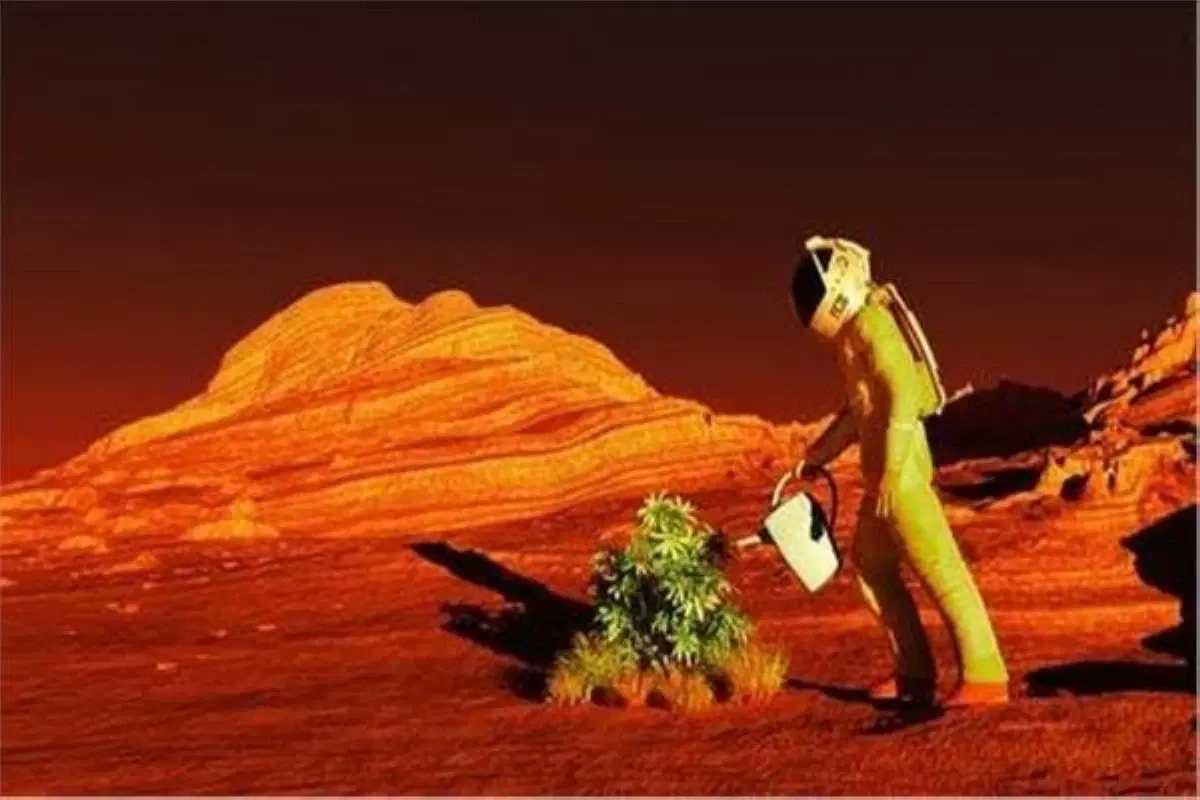
Scientists from the University of Sydney have classified Martian soil in detail for the first time, dividing it into nearly two thousand types and preparing a map showing its geographical distribution, a step that could help identify the most suitable locations for establishing future farms for human bases on the Red Planet.
The results of the study, published in the journal "CATENA", showed that soil with the best potential initial characteristics for crop cultivation covers only 0.14% of the Martian surface, making the identification of suitable sites a major challenge for human settlement plans.
A new map of the Red Planet's soil
The new classification was prepared by graduate student Daniel Irving and Professor Alex McBratney, who named the Martian soil types "Arets," after the ancient Greek god of war, Ares.
The researchers relied on integrating data from satellites orbiting Mars with computer modeling algorithms to analyze nearly 800 million locations and create a comprehensive map covering about 92% of the planet's surface.
The soil was classified according to a set of characteristics, including texture, mineral composition, pH level, layer thickness, and the proportions of clay and gravel. The scientists also evaluated the different types according to five basic criteria related to the soil's ability to support plant root growth.
Promising soil in limited areas
A soil type named "Nohibareth" ranked first, achieving 0.93 points out of one in the evaluation.
This soil is characterized by a near-neutral pH of 6.8 and contains about 72% clay particles, with very small amounts of sand and gravel. Its properties allow it to retain about 202 millimeters of water per meter of depth.
The researchers spotted the largest concentrations of this type in the mid-latitudes, especially in the volcanic highlands of the "Tharsis" region, as well as the "Arabia" and "Elysium" plains.
However, water retention poses a major challenge, as the analysis showed that 73% of the studied soil types suffer from a noticeable weakness in this property, which could hinder plant growth and increase the difficulty of providing the necessary water for roots.
Can crops be grown on Mars?
The researchers point out that identifying promising soil types does not mean that crops can be grown directly on the Martian surface. Future farms will require closed facilities equipped to control environmental conditions, in addition to adding necessary nutrients and treating the soil to remove toxic perchlorate compounds.
Martian soil also lacks the organic matter necessary to support plant growth, which requires improving its properties before using it in agriculture.
The importance of the study is not limited to exploring Mars, as its results could contribute to understanding harsh terrestrial ecosystems that suffer from a lack of organic matter, such as the Atacama Desert in Chile and the Pilbara region in Australia.
In the next phase, scientists plan to recreate the soil mixtures identified by the study in laboratories, in preparation for conducting practical experiments to test their ability to support crop growth in environments that simulate Martian soil.