Wheat straw.. "black gold" fighting global warming
Amman3 min read
Share
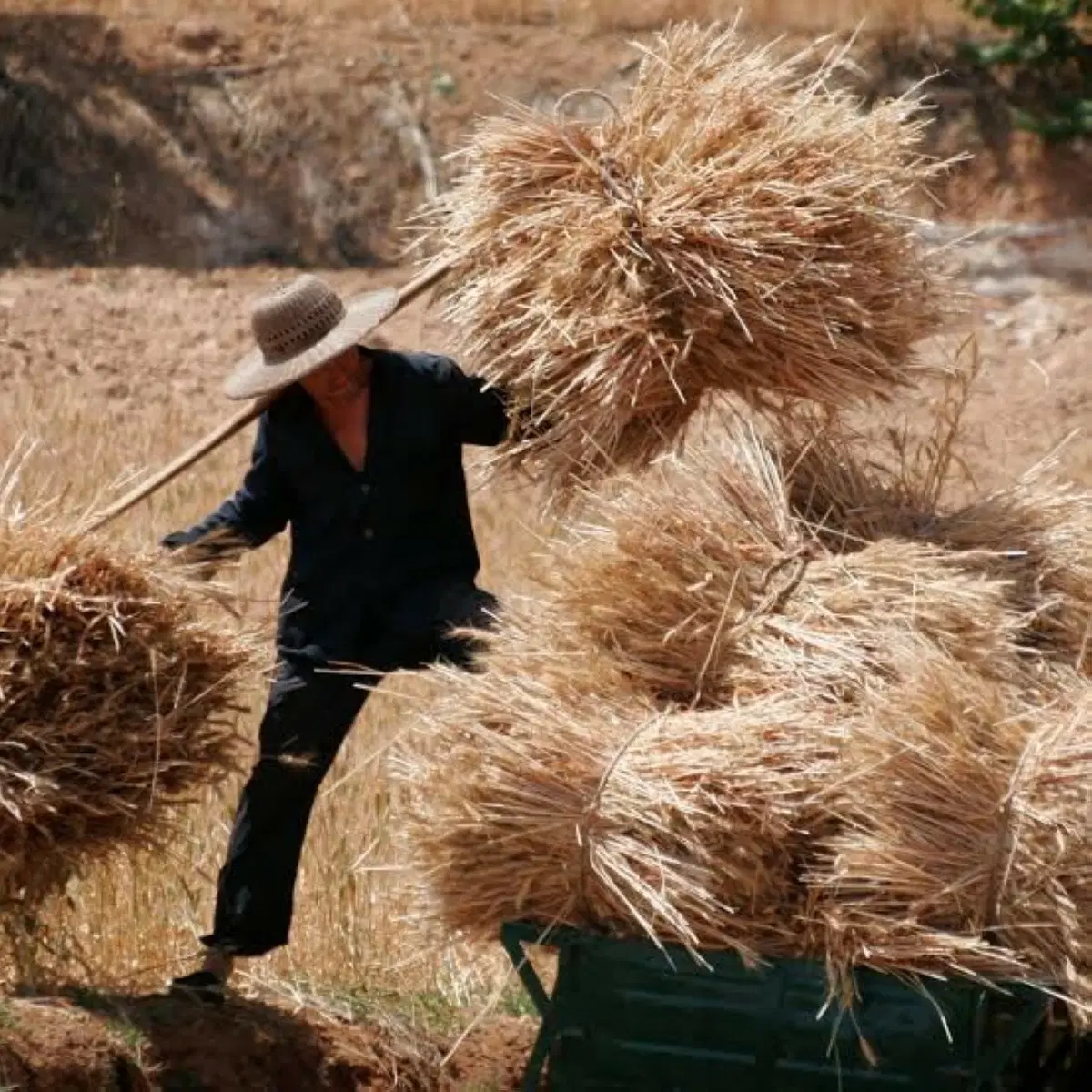
Chinese researchers have devised a method to utilize wheat straw in the production of biochar, known as "black gold," with the aim of enhancing soil nitrogen retention and reducing nitrous oxide emissions, a greenhouse gas that contributes to global warming.
Nitrogen is an essential element for plant growth, as it is involved in the formation of proteins and chlorophyll; however, microorganisms in the soil can convert nitrates into nitrogen gases that leak into the atmosphere, leading to the loss of some of the nitrogen needed by crops and increasing greenhouse gas emissions.
To address this problem, researchers from the Chinese Academy of Sciences worked on developing a new material from wheat straw biochar, after loading it with manganese compounds, according to a study published in the journal "Biochar".
The idea is not limited to adding biochar to the soil, but relies on modifying its chemical properties to enhance its ability to transfer electrons, which helps direct microbial reactions toward pathways that keep nitrogen within the soil instead of converting it into gases released into the air.
Promising results in the laboratory
The researchers tested the developed material on samples of rice paddy soil under controlled laboratory conditions, compared its results with untreated soil, and measured the biochar's electron exchange capacity before and after loading it with manganese.
The results showed that the modified material's electron exchange capacity increased by about 80% compared to unmodified biochar, which enhances its potential role in the chemical and microbial reactions responsible for nitrogen transformations in the soil.
The experiments also revealed an increased tendency for nitrates to follow the pathway of reduction to ammonium, rather than pathways that produce gaseous nitrogen compounds. The researchers also recorded a significant decrease in nitrous oxide emissions from soil samples treated with the new material.
Microbial analyses indicated an increase in the activity of the pathway associated with the "nrfA" gene, which is linked to the conversion of nitrate to ammonium, as well as the role of organic carbon in providing the electrons necessary for these reactions.
Will the innovation reach the fields?
Despite the encouraging results, the technology still needs further testing before it can be adopted on a wide agricultural scale. It is necessary to ensure its effectiveness in open fields, where temperatures, humidity, and irrigation conditions vary.
Researchers also need to determine the extent to which this material contributes to improving crop growth and reducing reliance on fertilizers, as well as evaluating the potential effects of manganese on soil organisms and water quality.
Furthermore, the long-term sustainability of the results and the cost of production remain critical factors in determining the feasibility of its commercial use.
If field trials prove the success of this technology, it could represent a promising means of transforming agricultural waste into a useful resource that combines improved nitrogen management in the soil with the reduction of greenhouse gas emissions.