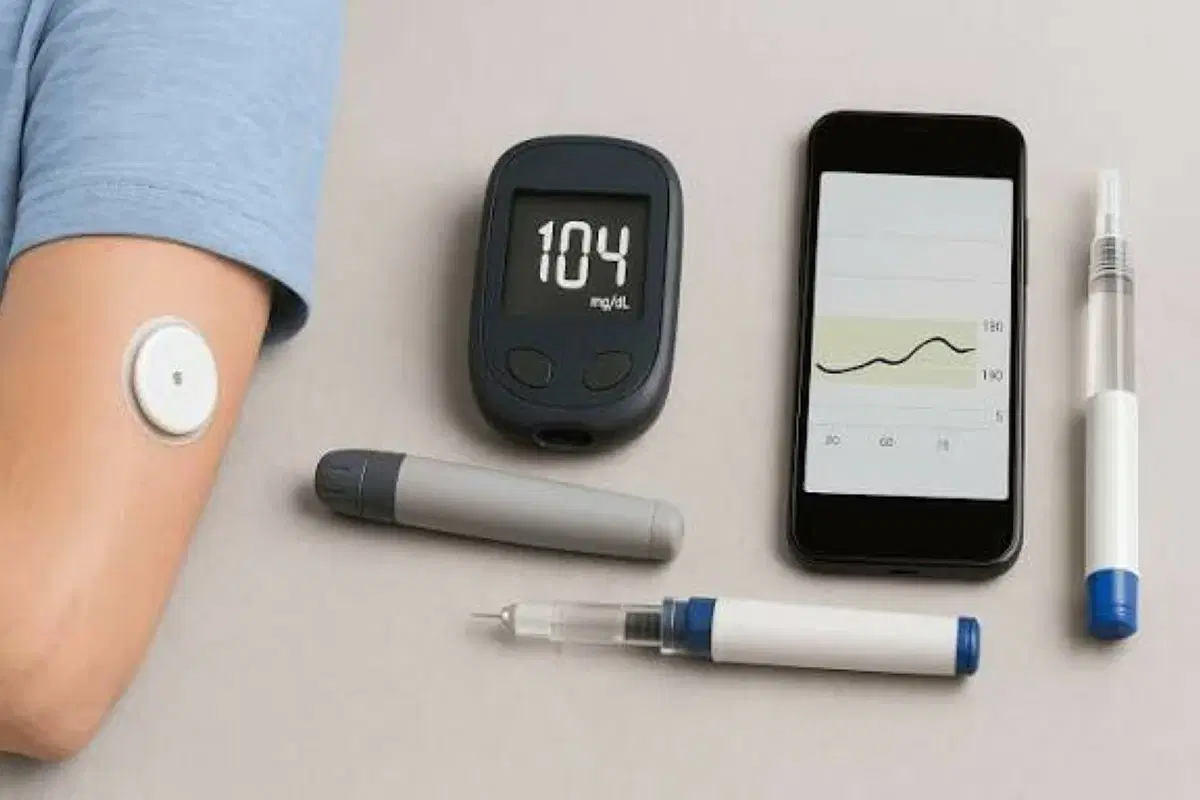
Instead of medication.. an innovative electrical technology targets excess blood sugar
Amman3 min read
Share
In a remarkable scientific step, researchers at the Swiss Federal Institute of Technology in Zurich (ETH Zurich) have developed an implantable electrical device aimed at lowering blood glucose levels by converting excess sugar into a substance that is excreted from the body through urine.
The research team is led by scientist Martin Fussenegger, who seeks to develop a new therapeutic approach for type 2 diabetes that relies on electronic glucose control rather than relying solely on medication. The results of the study were published in the scientific journal Science.
The innovation relies on an electrical catalyst that converts glucose into a substance known as "gluconate," with the aim of helping to eliminate a portion of the excess sugar in the body.
The device consists of a nano-catalyst made of graphite, gold, and platinum, an electronic control unit, and a wireless power transmission system, which allows it to operate without the need for a wired power source or the use of living cells and enzymes.
The device is connected to a sensor to monitor glucose levels, and when sugar rises after eating, a wireless signal can be sent to activate the catalyst, then turn it off when levels return to the target range.
This automated control aims to reduce excess sugar while limiting the risk of it dropping excessively.
The researchers tested the technology in the laboratory and on diabetic mice, and the experiments demonstrated the catalyst's ability to convert glucose in a solution of five liters, which is a volume close to the blood volume of an adult human.
The device also helped regulate sugar levels in the animals, and a decrease in their weight was recorded during the experiment. It continued to function reliably for six weeks, without showing clear signs of tissue damage due to electrical or thermal effects.
However, these results remain preliminary and are not sufficient on their own to prove the effectiveness or safety of the technology in humans.
Despite the encouraging results, it is still too early to talk about replacing medication with this device. The technology has not yet been tested on humans, and additional studies must be conducted to evaluate its long-term safety, its effectiveness in controlling sugar levels, and its impact on weight and patient health.
The researchers hope that this innovation will pave the way for a new generation of medical devices that combine continuous sensing and electronic control of vital processes within the body.
Conclusion: The implantable electrical device may open a new door in diabetes treatment, but it is still in the research and development stage and is not currently considered an approved alternative to medication or insulin.