Fatal injury reveals new evidence of violence and care among Neanderthals
Amman3 min read
Share
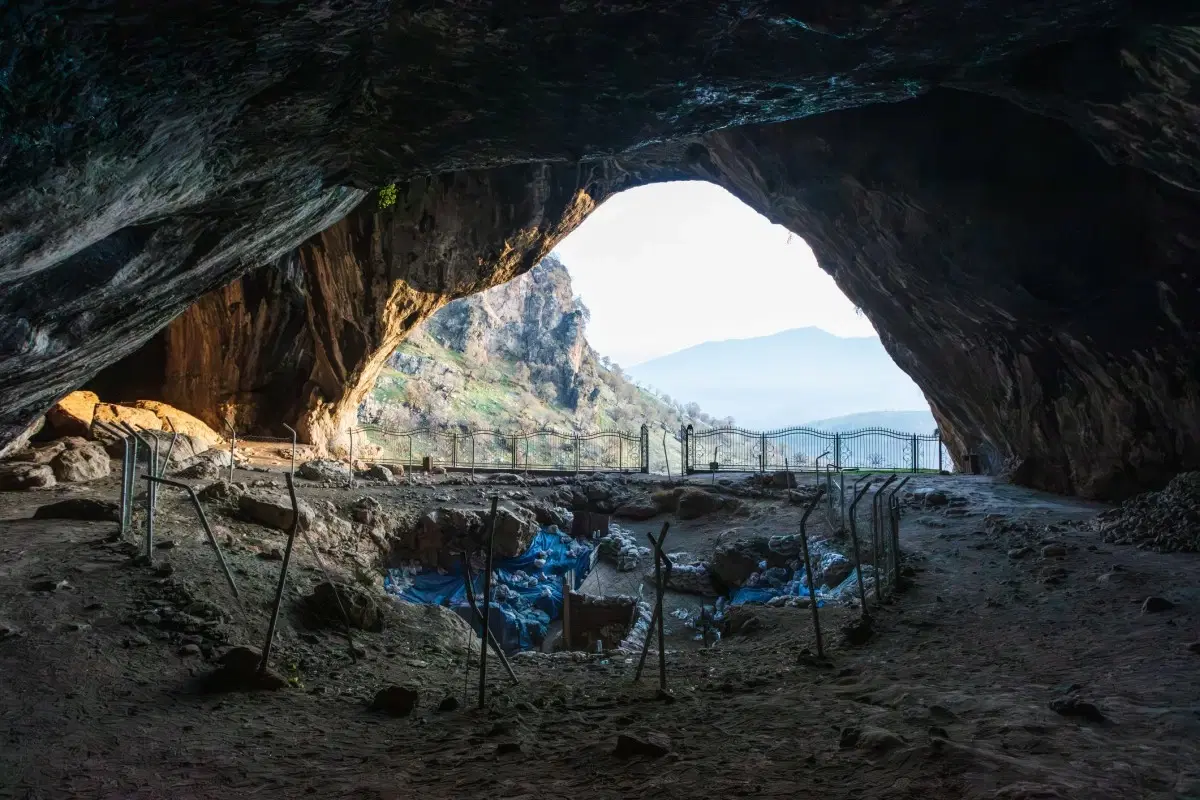
The skeletal remains, which researchers named "Shanidar A," were found at a depth of about 7.5 meters inside the cave, beneath layers of rock and sediment. The remains included the left shoulder blade, which featured a circular hole 15 millimeters wide, along with parts of the ribs, a nearly complete right hand, and seven teeth. Researchers were unable to determine the sex of this individual.
Researchers suggested that the injury resulted from a powerful thrust with a sharp wooden spear, rather than a spear with a stone tip. The nature and trajectory of the injury indicate that the weapon entered from above and penetrated the left thoracic cavity, passing through tissues, muscles, ribs, and the lung before reaching the shoulder blade. Researchers believe the injury likely led to rapid death.
Emma Pomeroy, a bioanthropologist at the University of Cambridge and lead author of the study published in the journal "Scientific Reports," said the position of the stab wound might resemble the heart-targeting technique used by hunters to kill animals quickly, but she emphasized that this interpretation remains hypothetical.
Researchers do not rule out that the stab wound was the result of violence between members of the same group or between competing groups, while the possibility of an attack by Homo sapiens or an accidental injury remains less likely. The available evidence does not allow for a definitive conclusion regarding the circumstances that led to the injury.
The teeth reveal another aspect of "Shanidar A's" life, as traces of a previous facial injury indicate that they suffered a blow that shattered their front teeth and caused some to be lost or displaced at least a year before their death. Researchers suggest that this injury made eating and drinking more difficult, and may have forced them to consume soft foods and receive assistance from members of their group during the recovery period.
"Shanidar A" was one of five Neanderthal individuals, including four adults and an infant, whose remains were found behind a rock pillar inside the cave, under circumstances suggesting their bodies were placed with care over similar time periods. Shanidar Cave, overlooking the Great Zab River valley, is considered an important site for studying the life of Neanderthals, who used it over tens of thousands of years.
Neanderthals lived in vast areas of Eurasia before disappearing about 40,000 years ago, with evidence of their interbreeding with Homo sapiens, whose DNA is still carried in parts by many contemporary human populations.
The study concludes that Neanderthal life was not devoid of violence, but at the same time, it reveals indicators of cooperation and care within the group. Pomeroy believes that the story of "Shanidar A" provides a more complex picture of this human, moving away from stereotypes that depict them as a primitive creature lacking social behavior.