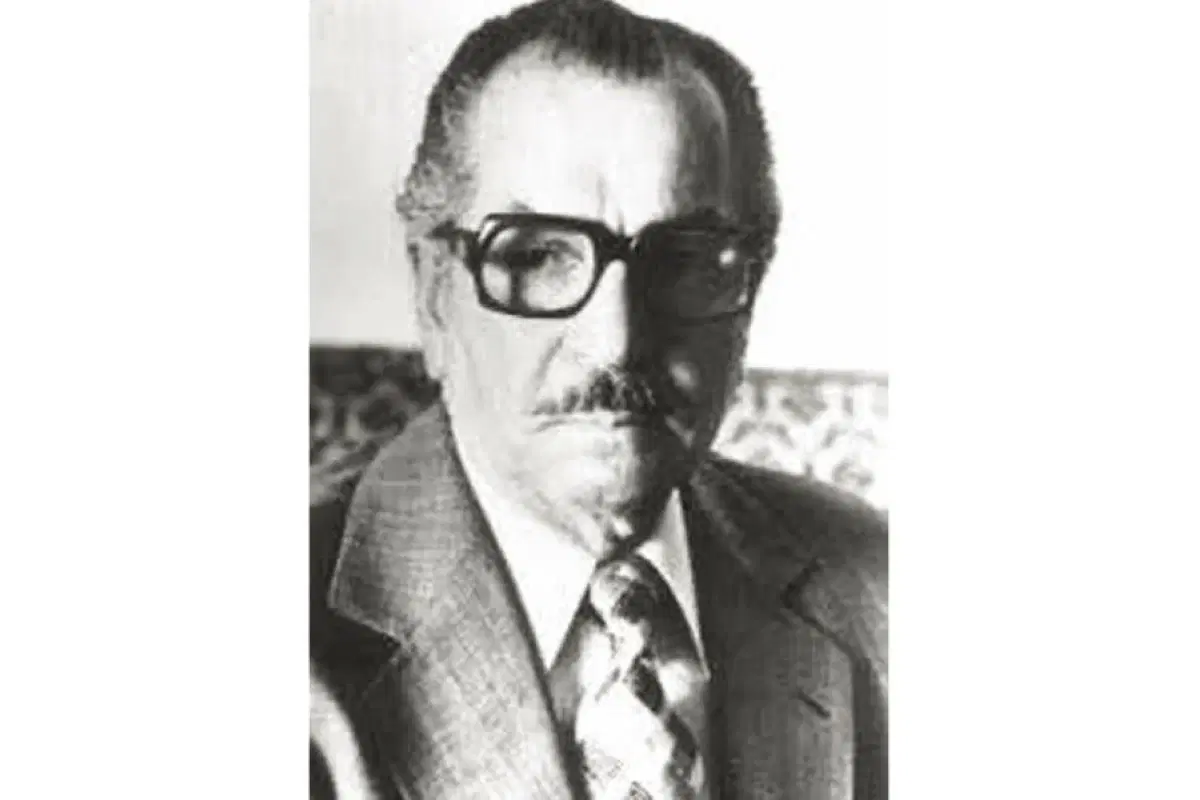
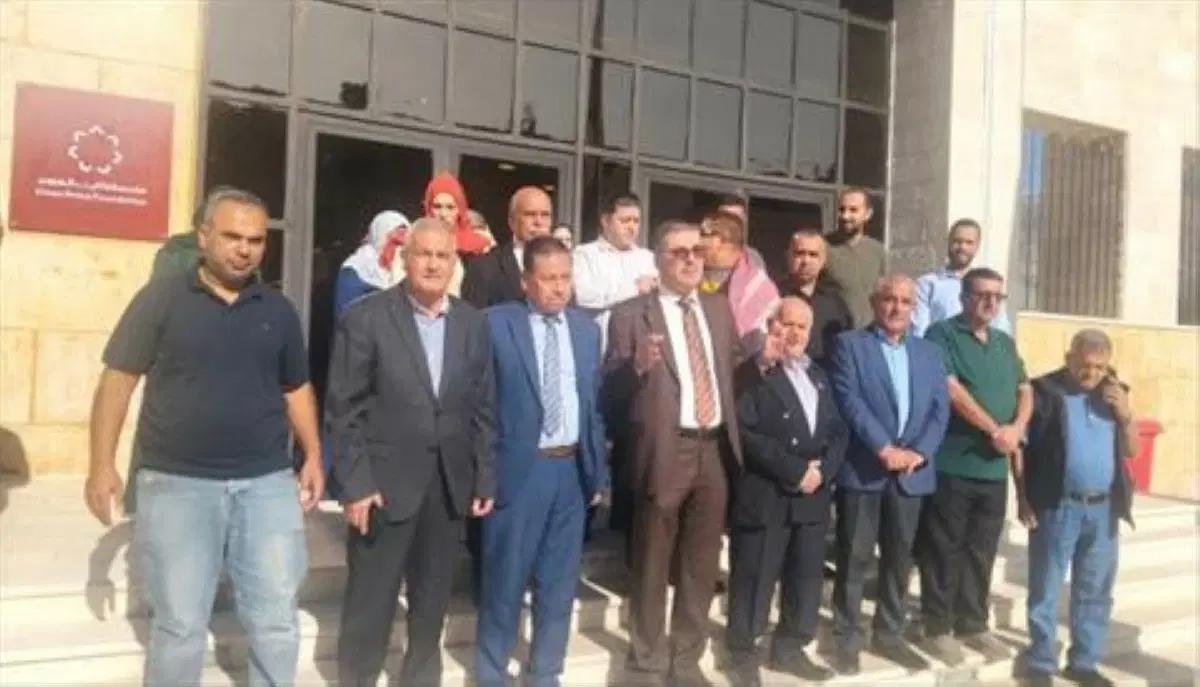
Dr. Obaidallah lectures at the Writers' Union on protecting "Arabic"
Amman5 min read
Share
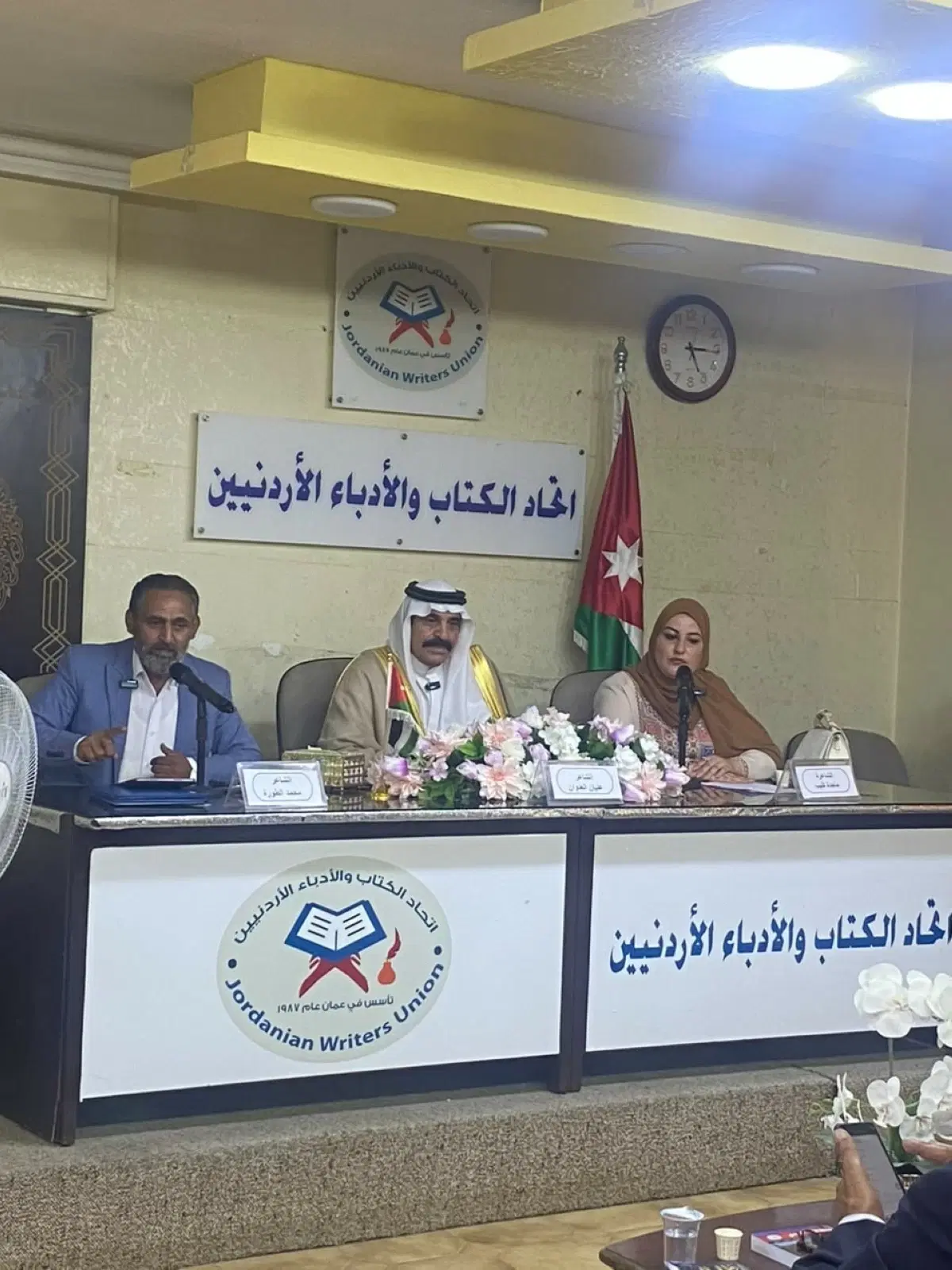
Dr. Mohammad Obaidallah spoke last Wednesday evening in a lecture titled "Protecting 'Arabic' Begins with Uncovering the Origin of its Emergence," hosted by the Jordanian Writers and Literati Association at the Rox Al-Azizi Hall.
Dr. Obaidallah discussed the jurisprudence of names and the origin of their emergence in this lecture, which was introduced by Mr. Zaid Zaydeh.
He spoke about a number of issues related to the origin and development of the Arabic language, relying on verses from the Holy Quran and linguistic and phonetic examples that he believes offer new starting points for researching the emergence and characteristics of Arabic.
Dr. Obaidallah emphasized that "the Arabic language enjoys a special status because the Holy Quran was revealed in it in a clear Arabic tongue," pointing out that researching the origin and emergence of the language requires further scientific study, especially in light of the linguistic indications and connotations he sees in the Quranic text.
In this context, he cited the Almighty's saying:
﴿Indeed, the first House [of worship] established for mankind was that at Bakkah - blessed and a guidance for the worlds﴾,
And the Almighty's saying: ﴿And that you may warn the Mother of Cities [Makkah] and those around it﴾,
Dr. Obaidallah explained that "Makkah and the Mother of Cities represent, within his research vision, an entry point for contemplating the primary geography of the Arabic language and its spread in its surroundings."
Dr. Obaidallah also addressed the concept of preserving the Holy Quran, explaining that his vision is not limited to memorizing the meaning, but rather views the Quranic text in its literal and verbal structure as a precise text. He believes that the regularity of letters, words, and root terms in an integrated structure represents one of the aspects of caring for the preservation of the text and its linguistic components.
Regarding the axis of sounds and letters, he pointed out that Classical Arabic—according to his research conception—is based on twenty-nine sounds, and cited Surah Al-Fath, verse 29, which he believes encompasses the Arabic letters, pausing at the significance of the convergence of the number 29 with the subject of letters and sounds in the Quranic text.
• Names between the Quran and Language
Dr. Obaidallah moved on to the issue of the emergence of names and the evolution of linguistic signification, citing the Almighty's saying:
﴿And He taught Adam the names - all of them﴾,
And comparing it to the Almighty's saying:
﴿Do you dispute with me concerning [mere] names which you have named, you and your fathers, for which Allah has sent down no authority?﴾.
He explained that comparing the two verses leads, within the framework of his research project, to questioning the early stages of the emergence of names, and how linguistic signification evolved until the maturity of Arabic and its stabilization in its Qurayshi form.
Obaidallah believes that the Arabic noun is not based on the utterance alone, but possesses a phonetic and semantic structure that can be studied through Arabic letters and characteristics, and that understanding this structure may open a new field in studying the origin of language and word formation.
He also pointed out that this vision is part of his broad research project in the encyclopedia "Subu'iyat and Tusu'iyat of the Quran," in which he investigates a number of numerical, verbal, and structural patterns and relationships in the Quranic text.
• Indications of Arab Taste and Hashemite Sentiment
In another axis, Dr. Obaidallah discussed what he describes as Hashemite care for the Arabic language and pride in its eloquence and authentic taste, recalling the personality of the Founding King Abdullah I, and pointing to his choice of the names "Zahran" and "Basman" for two Hashemite palaces as, in his reading, evidence of an authentic Arabic linguistic taste.
He explained that the "Alif and Noon" suffix pattern in both names carries, in his linguistic and phonetic vision, a significance worthy of contemplation, and that understanding such characteristics requires a precise knowledge of the roots of Arabic and its methods of expression.
• A Call for a National Initiative to Protect Arabic
At the conclusion of the lecture, Dr. Obaidallah called for intensifying national efforts to protect the Arabic language, emphasizing the important role of the media, schools, and universities in preserving the integrity of the Arabic tongue and enhancing the presence of Classical Arabic in public life, education, and culture.
He also called for encouraging researchers and students to study Arabic in a way that combines linguistic sciences and the Quranic text, enabling the development of new research methodologies in issues of sound, utterance, meaning, and the emergence of names.
He suggested that the Hashemite Royal Court adopt a national initiative to launch a permanent royal prize for research in the Arabic language, supervised by specialized scientific and cultural authorities, to be awarded to distinguished research and studies that contribute to serving the language of the Holy Quran, protecting it, and uncovering its characteristics.
He affirmed that such a prize could constitute an incentive for researchers in Jordan and the Arab world, enhance the presence of Arabic in the academic and cultural fields, and open the way for a new generation of researchers to contribute to serving the language of the Holy Quran.
Dr. Obaidallah concluded his remarks by emphasizing that "protecting the Arabic language is not merely preserving inherited words, but rather protecting a linguistic structure deeply connected to the Quranic text and the history of Arab culture," expressing his hope that the Jordanian role in serving Arabic and safeguarding its status will be enhanced, as it is, according to his research vision, the mother of languages in reality, not metaphor.