The Arabic Language Academy Discusses the Reality of Arabic and Its Future Prospects
Amman4 min read
Share
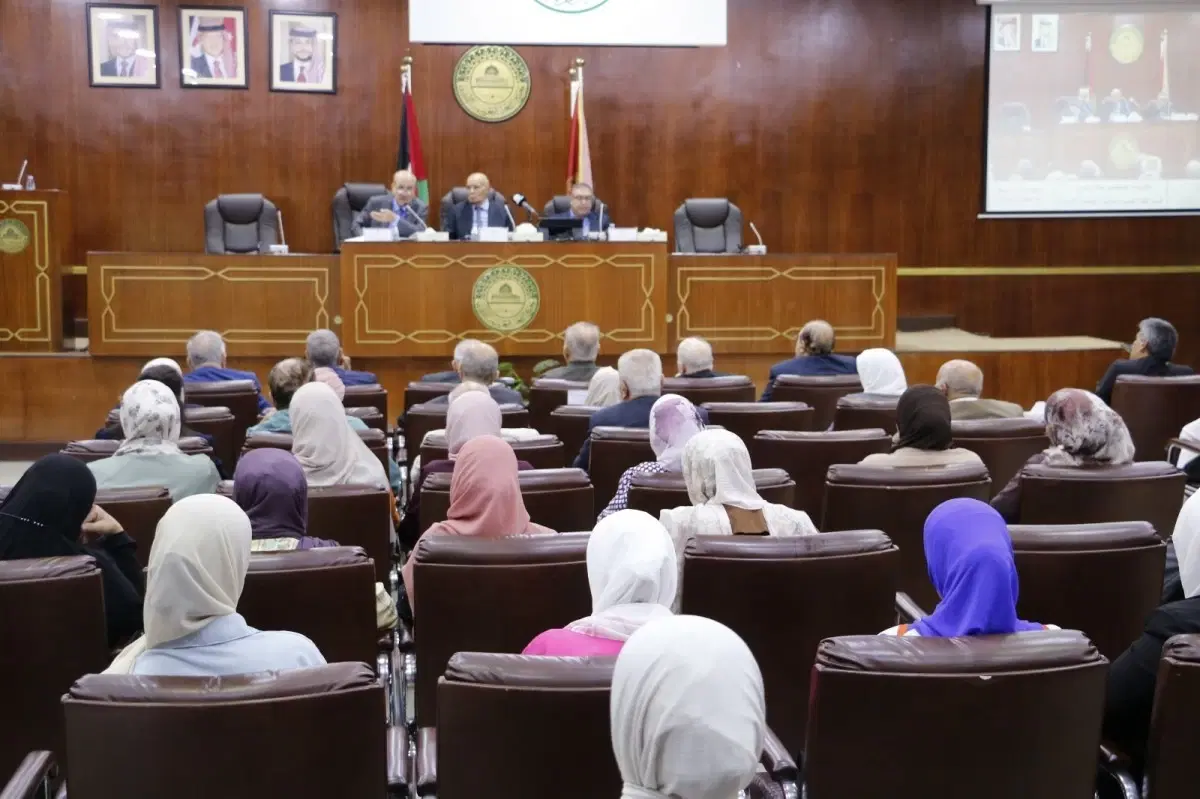
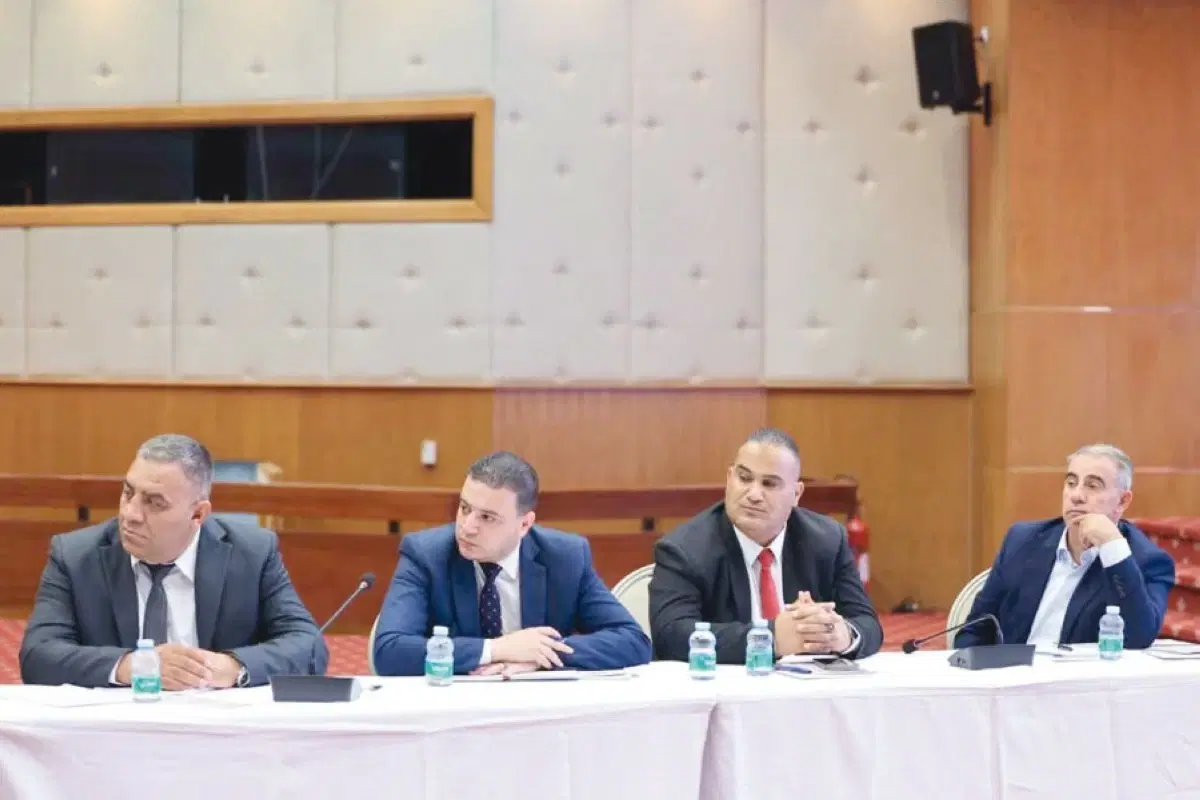
The Jordanian Arabic Language Academy continued the activities of its forty-fourth cultural season by holding the third seminar of the season, titled 'The Reality of the Arabic Language and Foreseeing Its Future', today evening, in the presence of the President and members of the Academy, and the participation of a group of academics, researchers, and those interested in cultural and linguistic affairs.
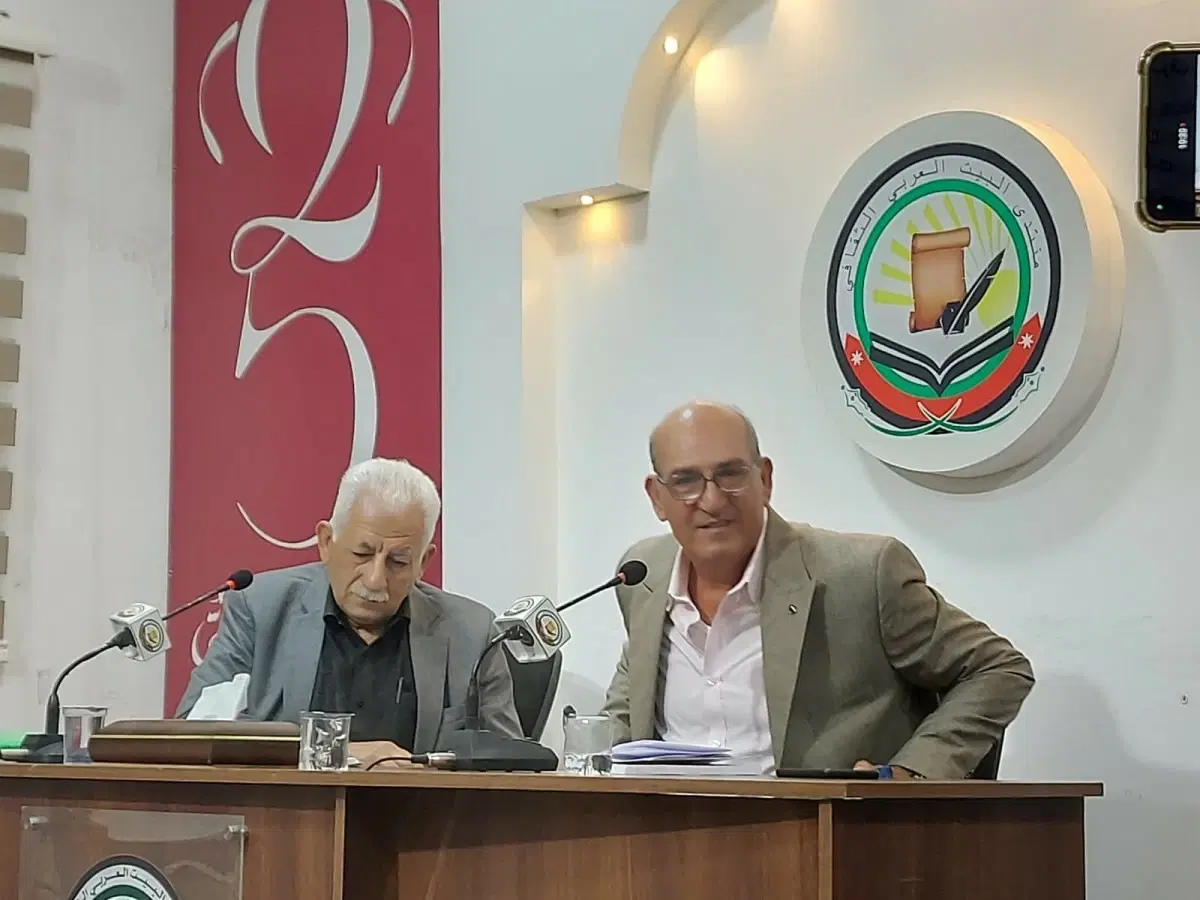
Dr. Salah Jarrar, from the Department of Arabic Language and Literature at the University of Jordan, and Professor Dr. Yasin Abu Al-Hija, from the Department of Arabic Language and Literature at Ajloun National University, participated in the seminar, while member of the Academy, Professor Dr. Muhammad Hawwar, moderated the seminar.
Jarrar addressed the reality of the Arabic language and the criteria governing its development, stopping at the phenomenon of duality between classical and colloquial Arabic, considering it an old historical issue, emphasizing the importance of narrowing the gap between the two levels through policies in which the efforts of educational, media, and social institutions are integrated, which contributes to protecting classical Arabic and enhancing its presence.
He pointed out that improving the level of expression and linguistic safety will enhance affection, social peace, and national identity, noting that colloquial Arabic is more rapid in change and disappearance compared to classical Arabic, which enjoys greater stability, and its rules are linked to the Holy Quran and Arab heritage.
Jarrar touched on manifestations of the dominance of foreign languages on linguistic life, including the introduction of their vocabulary into Arabic speech spontaneously or out of pride, and their adoption in teaching science, in addition to writing the names of commercial establishments in Latin letters.
He stressed the need to deal with the rapid influx of technical terms and subject them to Arabic rules, while warning against importing foreign concepts with meanings that may not be compatible with the Arab context.
In his foresight for the future of the Arabic language, Jarrar pointed to a number of components that enhance its ability to continue and spread, foremost of which is the growth of the Arab population, the interest of non-Arabic speakers in learning it, in addition to the necessity of simplifying the language and facilitating dealing with it, and enhancing its presence in artificial intelligence techniques, machine translation, and digital dictionaries, which contributes to bridging the gap between classical and colloquial Arabic.
For his part, Abu Al-Hija addressed the reality of teaching Arabic and scientific research, relying on a number of statistical and bibliometric studies, pointing to the absence of what he described as 'exemplary' heritage texts from school curricula, the prevalence of colloquial Arabic in the educational environment in schools and universities, in addition to the existence of imbalances in university study plans.
Abu Al-Hija criticized a number of practices related to publishing and scientific research, including weak adherence to scientific integrity, chasing some international classifications that do not necessarily suit the nature of humanities, in addition to phenomena of scientific theft, reliance on 'dossiers' and summaries, and the decline in the level of some university theses.
He warned of the limited Arabic content available digitally on the Internet, and the impact of social media and artificial intelligence technologies on linguistic safety, calling for the adoption of a package of solutions to advance the Arabic language, starting with re-adjusting school and university education tracks, and enhancing adherence to teaching in classical Arabic.
He also proposed opening sub-specializations in the fields of linguistics and literature to students of scientific specializations, controlling the mechanisms of forming committees to discuss university theses, in addition to establishing a real partnership between Arabic language departments and computer departments, which allows for a more effective integration of the Arabic language in artificial intelligence applications and modern technologies.
The seminar concluded with an open dialogue with the attendees, addressing a number of challenges facing the Arabic language in the fields of education, media, scientific research, and the digital space, in addition to discussing solutions and proposals to enhance the presence of Arabic and raise the level of its use in public life.