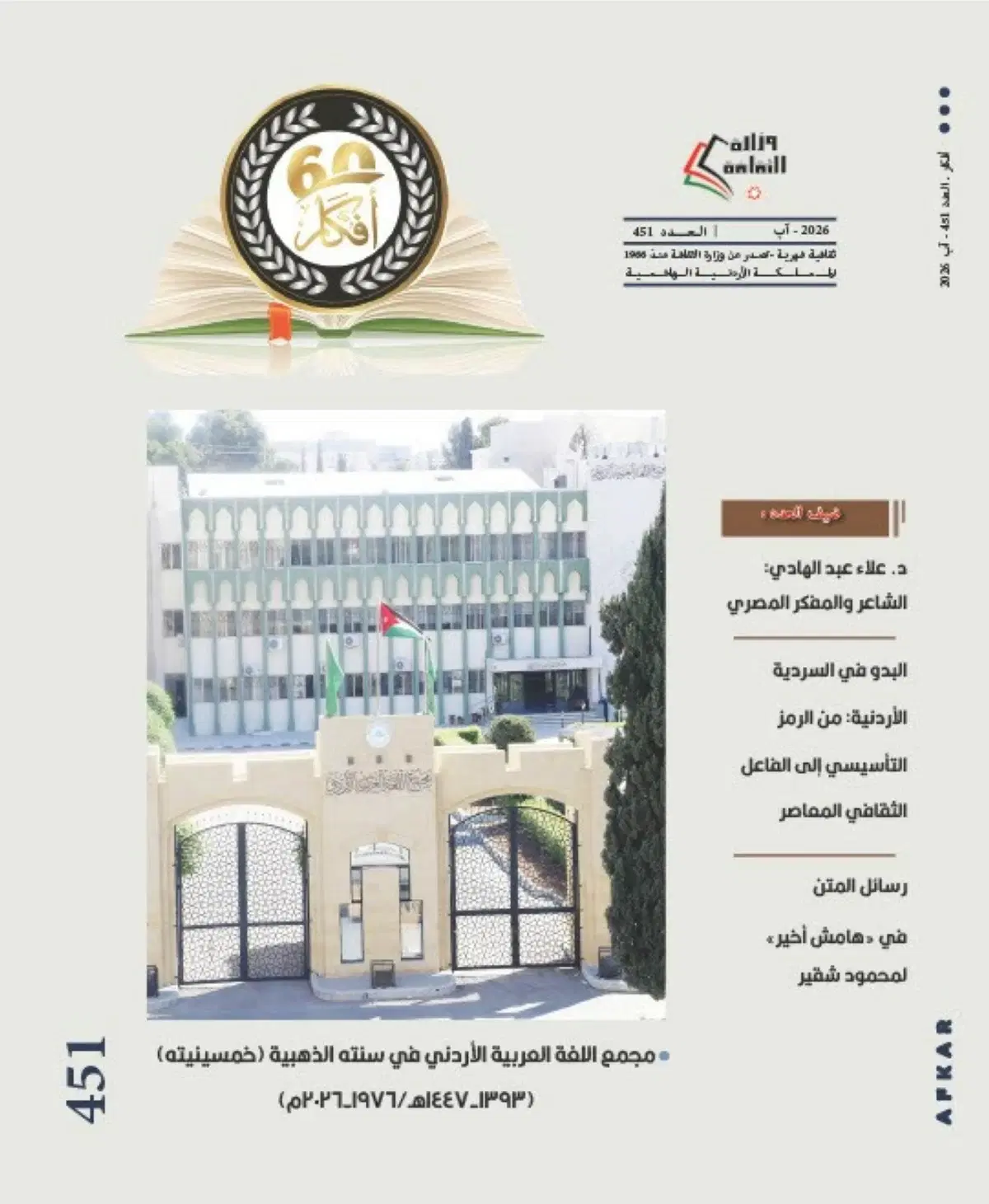
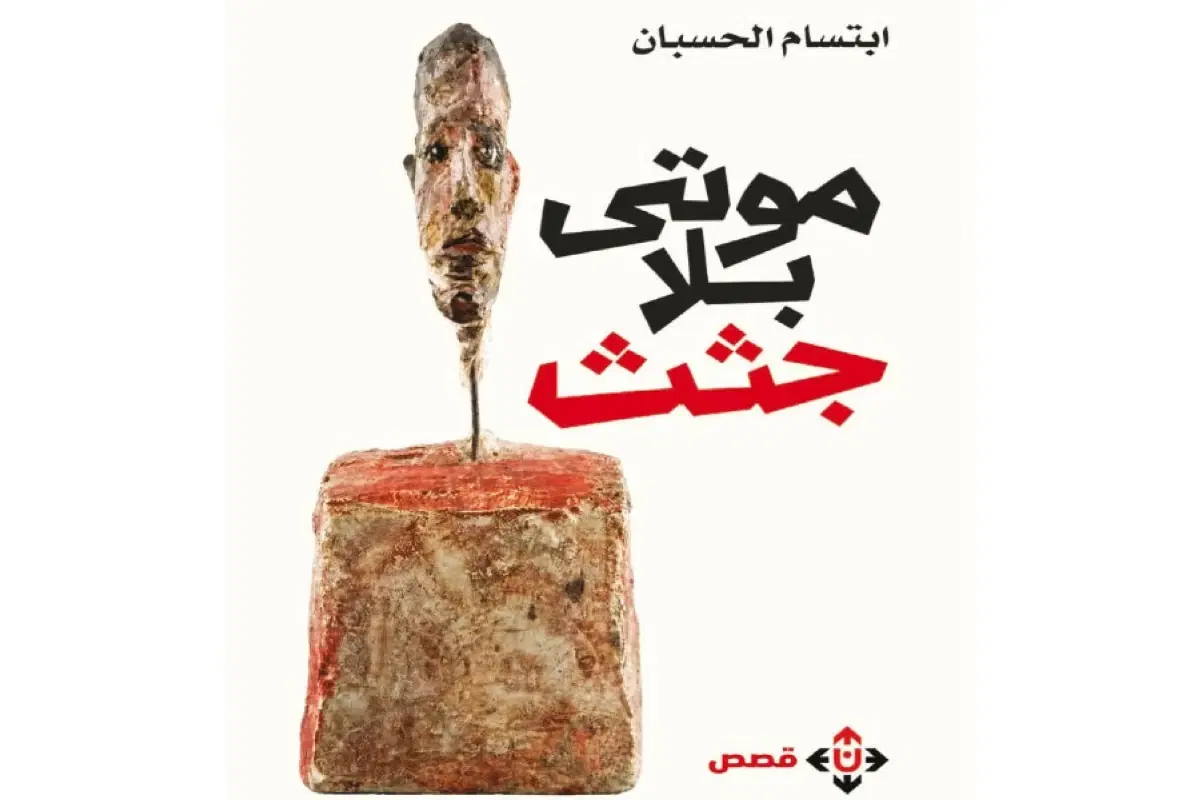
Al-Droubi began the file by talking about the roots of the Academy, which date back to almost half a century before the issuance of the royal decree to establish it in 1976, noting that the early beginnings were represented by the 'Arab Scientific Academy in the East', which was established by royal decree on July 23, 1923, under the chairmanship of Sheikh Saeed Al-Karmi and the membership of a number of scholars and intellectuals, and it started its work in Amman, and contributed to the renaissance of education, antiquities, press, printing, and the language of administration in government institutions, before its work was suspended at the end of 1925.
Al-Droubi also addressed the experience of the 'Jordanian Committee for Arabization, Translation, and Publishing', which was established in the Ministry of Education in 1961 by a decision of Minister Muhammad Al-Amin Al-Shinqiti, in implementation of the decisions of the Arabization Conference in Rabat, and included a group of men of science and education, including Qadri Hafez Touqan, Abdul Karim Khalifa, Issa Al-Naouri, and Mahmoud Saif Al-Din Al-Irani.
He explained that the Committee played important roles in the field of Arabization, translation, terminology, and heritage for 15 years, and contributed to helping the Maghreb countries in their Arabization efforts, before the baton was passed to the Jordanian Arabic Language Academy in 1976.
He pointed out that the meeting of the Fiftieth Arabization Committee on October 14, 1971, was a pivotal station, when Dr. Abdul Karim Khalifa called for the development of the Committee to be the nucleus of a scientific linguistic academy, where delegations were sent to learn about the experiences of linguistic academies in Syria, Egypt, and Iraq, and the efforts ended with a recommendation to convert the Committee into a linguistic academy.
According to the file, the Royal Decree was issued on September 5, 1976, appointing the first batch of members of the Academy, including Abdul Karim Khalifa, Mahmoud Al-Sumara, Saeed Al-Tal, Mahmoud Ibrahim, and Issa Al-Naouri, and the Council started its work on October 1 of the same year, and Dr. Abdul Karim Khalifa was elected President, Mahmoud Al-Sumara Vice President, and Issa Al-Naouri Secretary General.
After that, a number of members joined the Academy, bringing the first generation to 13 members, including Ahmed Saidan, Ishaq Al-Frehan, Dhuqan Al-Hindi, Abdul Rahman Bashnaq, Abdul Karim Ghraibeh, Muhammad Saeed Al-Nabulsi, Sheikh Ibrahim Al-Qattan, and Nasser Al-Assad.
Legislation and protection of Arabic
Al-Droubi stopped at the legislation governing the work of the Academy and its objectives, explaining that the Academy's law defined its objectives in preserving the integrity of the Arabic language and keeping it abreast of science and literature, promoting it to keep pace with the knowledge society, developing terminology dictionaries and unifying them, and reviving the Arab-Islamic heritage.
The law also specified the means of achieving these objectives through research, authorship, translation, holding conferences and cultural seasons, publishing and disseminating terminology through media means, and issuing a peer-reviewed periodical journal, in addition to cooperation with institutions and universities within and outside the Kingdom.
The file reviewed the Academy's most prominent achievements over half a century, foremost of which is the legal protection of the Arabic language through Law No. (35) of 2015 on the protection of the Arabic language, which includes 18 articles related to the use of Modern Standard Arabic in institutions, companies, educational institutions, and municipalities, in addition to the requirement of passing a language proficiency exam for employment.
It also addressed the project for the Arabization of scientific university education, where the Academy translated 23 volumes of major university curricula in the fields of calculus, engineering, geology, biology, chemistry, and medicine.
In the field of Arabization of scientific symbols, Al-Droubi referred to the formation of an Arabization committee in 1978 under the chairmanship of Abdul Karim Khalifa and the rapporteur Hammam Ghasib, and the issuance of the 'Jordanian Arabic Language Academy's Project for Arabic Scientific Symbols' in 1985, in addition to holding an expanded Arab conference in 1987 that resulted in the adoption of a methodology based on comprehensiveness in the Arabization of symbols with Arabic letters.
Scientific journal, cultural seasons, and revival of heritage
The file pointed to the issuance of the 'Jordanian Arabic Language Academy Journal' as a peer-reviewed scientific periodical since 1978, which reached 113 issues, and attracted research by a number of senior scientists and researchers.
It also reviewed the Academy's hosting of 43 annual cultural seasons since 1983, and its hosting of two Arab linguistic conferences in 1985 and 2008, in addition to organizing annual international conferences since 2017.
In the field of modern Arabic lexicography, Al-Droubi addressed the issuance of the 'Dictionary of Common Vocabulary in Jordan' in 2005, and the 'Economic Dictionary of the Arabic Language' by Professor Abdul Razzaq Bani Hani in seven volumes.
In the field of publishing Arab and Islamic heritage, he referred to reference publications, including 'Al-Muqni' in Agriculture' by Ibn Hajjaj Al-Ishbili in 1982, 'Andalusian Agriculture' by Ibn Al-Awwam in 2012 in seven volumes, and 'Knowledge of the Trial of Oculists' by Yuhanna Ibn Masawaih in 2018, in addition to publishing six books for cataloging manuscripts in Palestine.
The file also addressed the issuance of the 'Arab Statement' cultural magazine aimed at the general public, chaired by Eid Al-Dahyat since 2019, which reached its seventh issue in 2025.
The file did not overlook the technological transformation in the work of the Academy, as it referred to the introduction of computers since the mid-1980s, linking the library to global databases, and issuing the 'Guide to Arabic Computer Terminology' edited by Ja'far Abbabneh, in addition to organizing seminars and specialized training workshops in artificial intelligence and search engines.
Arab relations and scientific cooperation
In the context of Arab relations, Al-Droubi monitored the Jordanian Arabic Language Academy's accession to the Federation of Arab Scientific Language Academies in 1977, and its hosting of a number of the Federation's seminars and conferences, in addition to its scientific relations with the linguistic academies in Damascus, Cairo, Iraq, and Sharjah.
He pointed to the scientific relations that arose between the Jordanian Academy and the Damascus Academy since 1976, which witnessed the exchange of lectures, correspondence, and terminological notes, in addition to cooperation with the Arabic Language Academy in Cairo, the exchange of publications and scientific messages, and participation in its celebrations.
He also highlighted cooperation with the Iraqi Scientific Academy, which in 1979 decided to consider the members of the Jordanian Academy as supporting members, while the Jordanian Academy initiated the appointment of four members of the Iraqi Academy as supporting members.
He also stopped at the cooperation with the Arabic Language Academy in Sharjah in preparing the 'Historical Dictionary of the Arabic Language', with the participation of more than 60 Jordanian researchers, noting that this cooperation was crowned by the Jordanian Academy's President congratulating the Sharjah Academy's President on the entry of the dictionary into the Guinness Book of World Records, and Jordan donating the complete version of it, which amounts to 127 volumes.
Figures who made the presence of the Academy
Al-Droubi dedicated a section of the file to a number of assembly figures, through interviews that addressed their experiences and contributions to the service of the Arabic language.
In his interview with the President of the Academy, Professor Dr. Muhammad Adnan Al-Bakhit, he discussed issues of Arabization, the challenges facing the adoption of Arabic terminology by universities, and the need to activate the law on the protection of the Arabic language.
He also presented the experience of Professor Dr. Abdul Majeed Nasir, a member of the Academy since 1981, and his efforts in teaching mathematics in Arabic, authoring books, and calling for the revival of the Arab scientific heritage.
He also addressed the experience of Professor Dr. Hammam Ghasib, a member of the Academy since 1984, and his methodology in the Arabization of sciences and translation, and his supervision of the translation of the book 'Classical and Modern Physics'.
He also touched on the contributions of Professor Dr. Ibrahim Badran, Deputy President of the Academy, in linking the Arabic language with technology and sustainable development, and the efforts of Professor Dr. Ja'far Abbabneh, Chairman of the Committee on Origins, in developing the Arabic dictionary and enriching words and terms to keep pace with the requirements of the age.
Community presence and communication with institutions
The file concluded with a section titled 'The Jordanian Arabic Language Academy and Jordanian Society: Communication and Interaction', in which Al-Droubi addressed the field, community, and awareness role of the Academy, through communication with educational, media, and university institutions, organizing seminars and annual competitions for children and youth, training media professionals, and verifying signs and inscriptions in various regions of the Kingdom.
The file confirmed that the Academy's journey over half a century formed a continuous presence in the Jordanian scientific and cultural scene, through working to preserve, develop, and Arabize sciences and terms, and serve heritage, and enhance the presence of the Arabic language in community institutions, coinciding with its celebration of its golden jubilee.