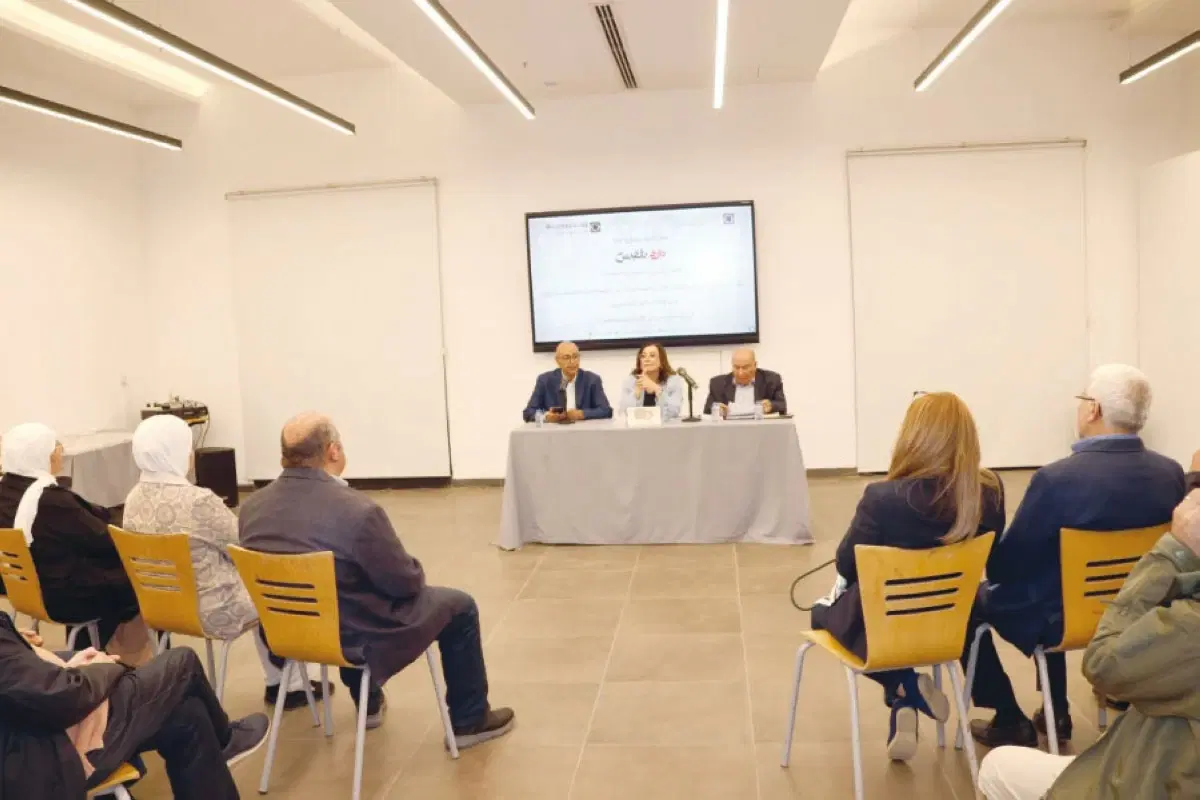
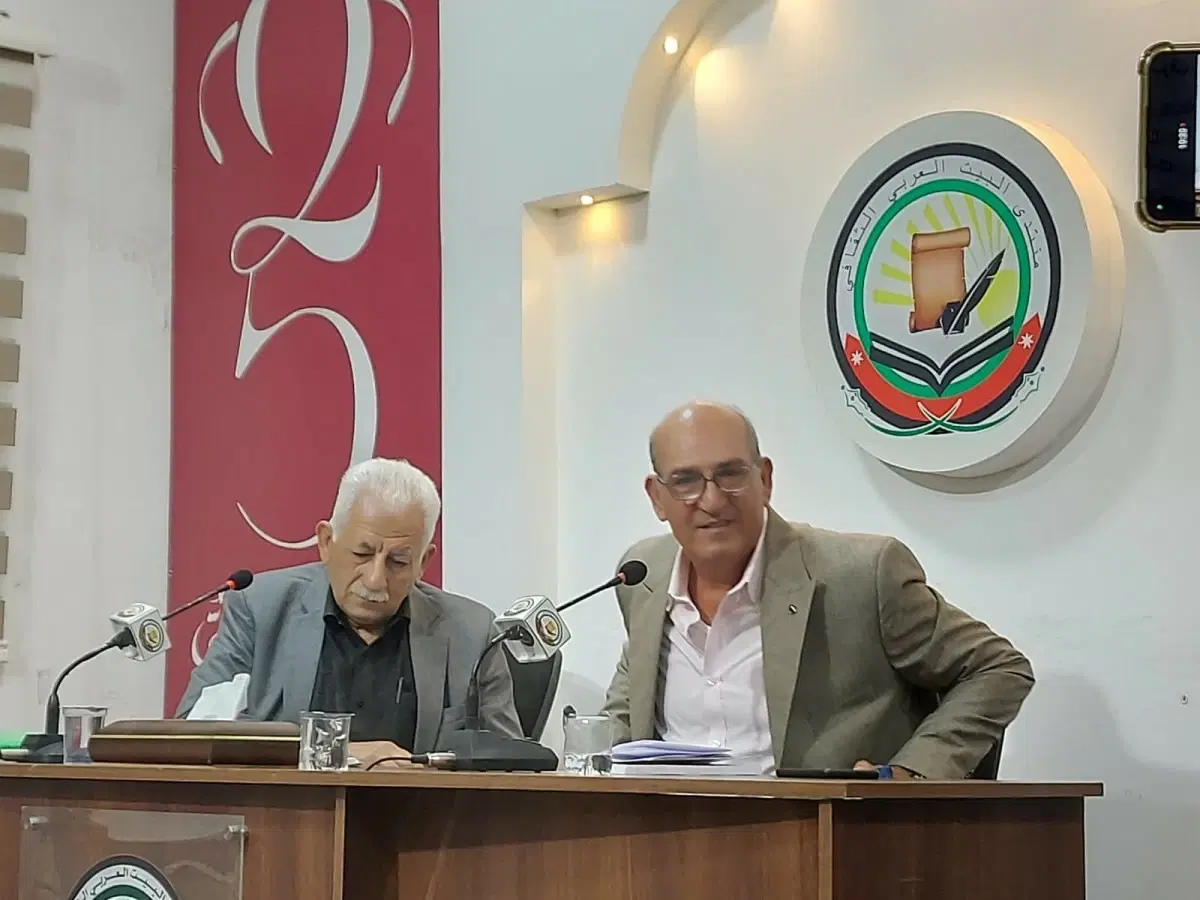
Khreis affirmed the Jordan National Gallery of Fine Arts' rejection of such acts and its commitment to continuing its role in spreading culture and awareness and rejecting extremism and ignorance. He and the participants also extended their sincere condolences to the families of the martyrs, wishing a speedy recovery to the injured.
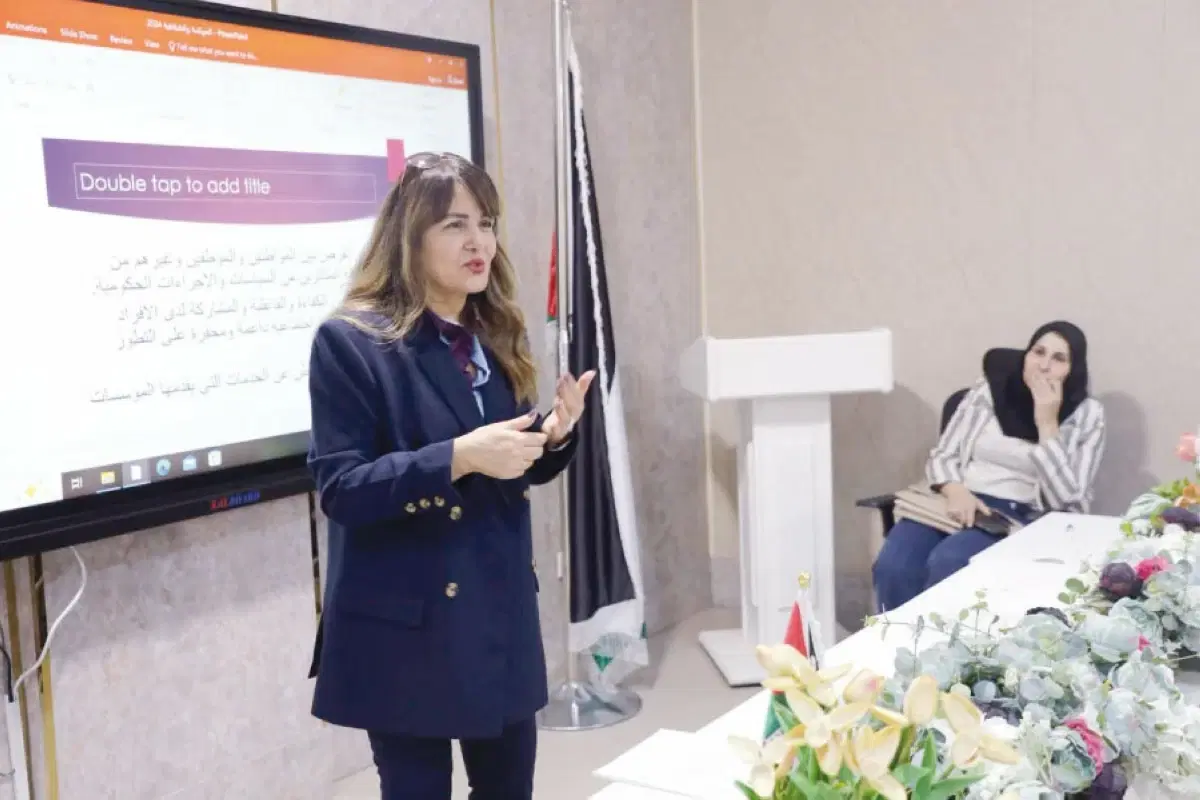
Dr. Razan Ibrahim, Professor of Modern Literature and Criticism at Petra University, presented a critical reading of the novel, addressing a number of themes, analyzing its characters and their connotations and the philosophical symbolism they carry, and pointing to the writer's narrative ability and his mastery in evoking place and identity.
The novel takes Jabal Al-Weibdeh and the "Jihan 4" building on Sharia College Street as the main space for its events, as the stories and memories of the residents intersect with real estate investment attempts aimed at changing the features of the neighborhood, raising questions about the relationship between humans and place, the value of memory, and the conflict between preserving urban identity and the requirements of expansion and investment.
The novel also combines human narrative and philosophical reflection through characters with varying visions of life, destiny, and the unknown, and addresses themes of desire, helplessness, and the search for meaning, alongside the presence of astrology as an attempt to understand what humans cannot control.
It is noteworthy that Al-Madadha is a Jordanian novelist and writer who holds a bachelor's degree in pharmacy. He has published a short story collection titled "The Fortune Teller Told Me," a political study titled "On the Embers of Al-Ghada... A Reading of the History of Jordanian Governments," and the novels "Margins of the Red Carpet," "Karak Moba... City Letters," "Guardian," and "City Tremor."