Israel enters election silence on the eve of Tuesday's vote
Agencies3 min read
Share
Election silence began on Monday evening ahead of the Israeli elections scheduled for Tuesday, and will continue until the last polling station closes on voting day.
Article 129 of the Knesset (Parliament) Election Law prohibits, from 7:00 PM on the day before the elections (17:00 GMT) and throughout the polling day, election campaigning during rallies and marches, or using loudspeakers, as well as via radio and television broadcasting, according to the official Knesset website.
Polling stations will be open from 7:00 AM (05:00 GMT) until 10:00 PM (20:00 GMT). In towns where the number of eligible voters does not exceed 350, polling stations will be open from 8:00 AM until 8:00 PM.
Vote counting begins immediately after the polls close at 10:00 PM, while Hebrew media outlets will publish the results of exit polls they conducted as soon as the polls close, according to Hebrew Channel 12.
According to Article 11 of the Basic Law of the Knesset, the Central Elections Committee has eight days from the election date to publish the official results in the Official Gazette, meaning the deadline for publishing the final results is November 4, 2026.
37 parties and coalitions are contesting the Israeli elections on Tuesday, with expectations that 13 of them will be able to enter the Knesset.
Leading these parties are the "Likud" party, led by Prime Minister Benjamin Netanyahu, and the "Yeshar" party, which is running for the first time under the leadership of former Army Chief of Staff Gadi Eisenkot.
Opinion polls show that "Yeshar" could become the largest party in Israel, after "Likud" dominated the party scene for many years.
7,331,981 Israelis are eligible to vote in the 26th Knesset elections, according to the Central Elections Committee.
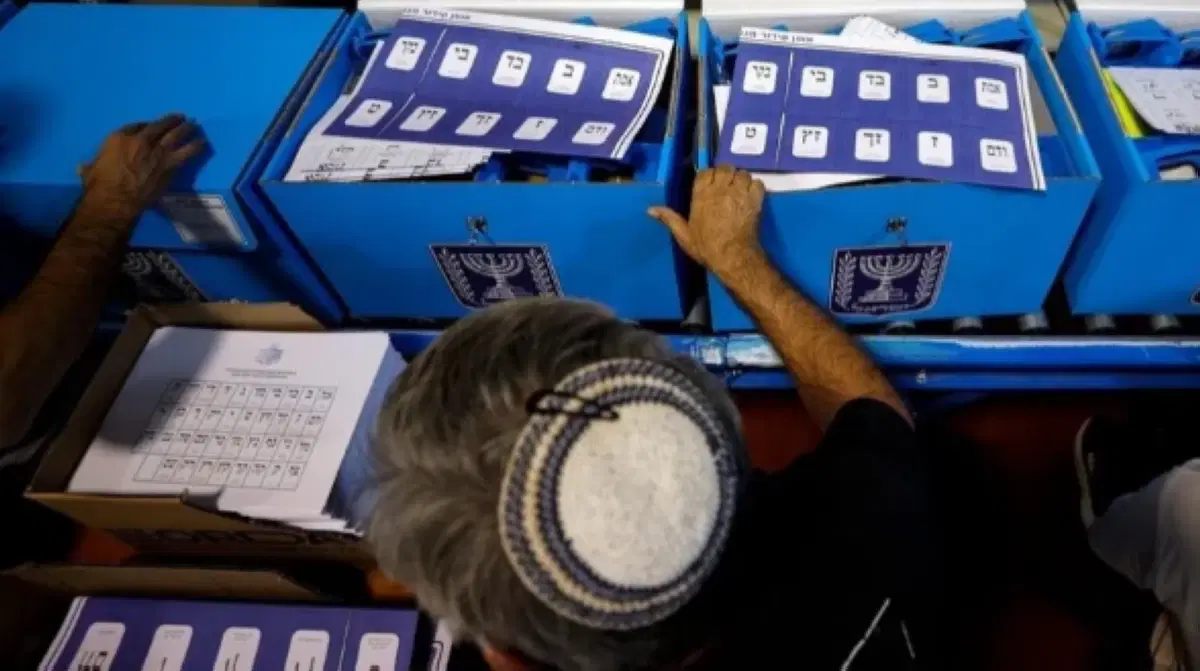
The elections will be held in 12,018 polling stations, across 18,000 ballot boxes nationwide, while about 100,000 employees will work on voting day.
Among the polling stations, 6,209 will be accessible to people with disabilities, according to the committee's data.
20 regional election committees will operate across the country, responsible for preparations and managing the voting process in their respective jurisdictions.
To facilitate voters' access to polling stations, 660 intercity public transport lines will operate for free on election day, along with all Israel Railways lines, according to the Elections Committee.
Forming a government requires the confidence of at least 61 members of the 120-member Knesset.
The Knesset concluded its work on July 17, after approving its dissolution in preparation for holding elections on the scheduled date.
Netanyahu has headed the current government since late December 2022, a government described as the most right-wing in Israel's history.
Netanyahu faces corruption charges, and the International Criminal Court has issued an arrest warrant for him over accusations of committing war crimes in the Gaza Strip.