Economic crises and fears of political deadlock
Eisenkot: Likud leader puts the integrity of the vote at risk
Follow Al Rai

Netanyahu faces a survival test
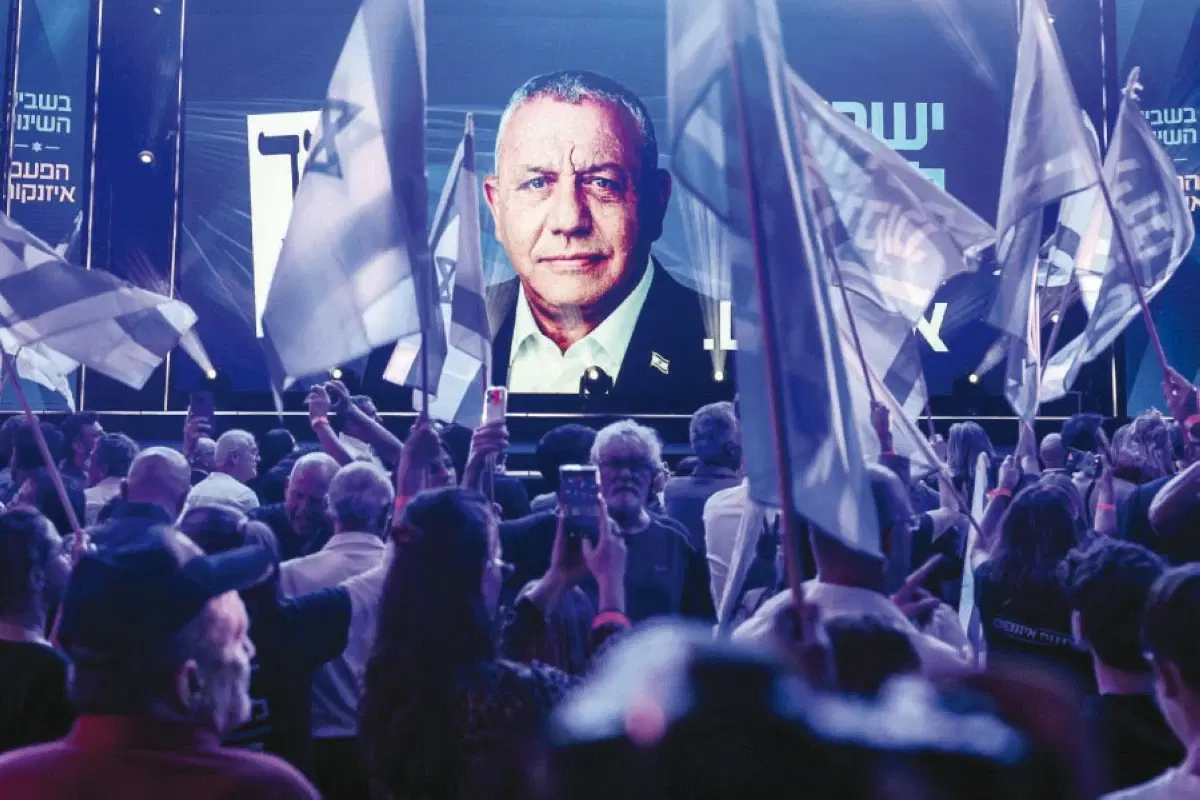
Economic crises and fears of political deadlock
Eisenkot: Likud leader puts the integrity of the vote at risk
«Axios»: 52 - 56 seats for the opposition camp
Tel Aviv: Iran seeks to disrupt the election process
Israel is heading to the Knesset elections scheduled for tomorrow, Tuesday, amidst sharp political division and intense competition over forming the next government, in a vote that comes after years of wars and security and economic crises, and escalating disputes regarding the failures of October 7, 2023, and the government's responsibility for their repercussions.
The confrontation focuses on the future of the Prime Minister, leader of the Likud party, Benjamin Netanyahu, who is seeking to remain in power, and the opposition camp led by Gadi Eisenkot, at a time when opinion polls indicate that both camps may face difficulty in securing the parliamentary majority necessary to form the government, which opens the door to complex coalition negotiations.
In the latest chapter of the electoral confrontation, Netanyahu summoned Police Commissioner Danny Levy on Sunday to discuss the agency's preparations for the elections, a move described by the Israeli Broadcasting Authority as unusual, given that responsibility for managing the electoral process lies with the Central Elections Committee chaired by Judge Noam Sohlberg.
The move sparked an objection from the opposition "Yashar" party, led by former Israeli Chief of Staff Gadi Eisenkot, who submitted an urgent request to the government's Attorney General Gali Baharav-Miara and the head of the Central Elections Committee, demanding to stop what he described as Netanyahu's interference in the elections and to cancel the meeting, in the absence of representatives from the committee.
The party said that Netanyahu is a candidate in the elections and does not bear the responsibility for ensuring their integrity, noting that the Police Commissioner is not under the authority of the Prime Minister regarding this file.
It expressed its fear that the goal of the meeting might be to raise concerns about the integrity of the elections without basis, which could undermine public confidence in their results in advance.
Eisenkot escalated his criticism, saying that Netanyahu is working to sabotage the elections and put their integrity at risk, and that summoning the Police Commissioner immediately before the vote represents dangerous interference and a violation of the rules of proper administration.
He called on the Prime Minister to stop any interference by him or his associates in the electoral process, warning against compromising its integrity, and also sent a message to public servants, calling on them to adhere to their loyalty to the state and its institutions, not to the ruler.
In contrast, the Central Elections Committee said that there is, in principle, nothing to prevent the meeting from being held, but it stressed that the Prime Minister has no right to interfere in the police's plans related to the elections.
Israel's Channel 12 reported that the meeting was held by phone, with the participation of National Security Minister Itamar Ben-Gvir, after reaching a settlement with the head of the Central Elections Committee, who rejected the petition based on Netanyahu's pledge that the call would not address preparations for the elections or their integrity.
Ben-Gvir had tried, last week, to summon the entire police leadership to discuss the same issue, but the Police Commissioner decided to settle for a briefing provided by a single officer, given the sensitivity of the subject and the proximity of the voting date.
These developments come at a time when pressure on Netanyahu is increasing as the elections approach, as final opinion polls published by three Israeli television networks on Friday showed that his camp is far from achieving the majority required to form the government in the 120-seat Knesset.
According to the American website "Axios", the three polls gave Netanyahu's bloc about 50 seats, compared to between 52 and 56 seats for the opposition camp led by Eisenkot, while the share of two Arab parties ranged between 14 and 16 seats. It also predicted a decline for the "Likud" party, which is led by Netanyahu and currently holds 32 seats, to about 20 seats.
In contrast, a poll by Israel's Channel 14, known for its support for Netanyahu, gave his camp 60 seats and the Likud party 30 seats, in estimates that contradict the results of other polls, but which also do not clearly guarantee reaching the 61-seat threshold necessary to form the government.
In an attempt to strengthen his position, Netanyahu asked US President Donald Trump to show more public support for him during the final days of the election campaign, according to what "Axios" reported, citing two American and Israeli sources familiar with the matter.
The website said that Netanyahu spoke with Trump twice within three days, after the US President announced his public support for the Israeli Prime Minister last week, and asked him to strengthen this support, including suggesting formulas for additional statements, in addition to making contacts with Israeli journalists to express his support.
Axios quoted an American source as saying that the White House views Netanyahu's intensification of his contacts to obtain additional support as a "sign of desperation," and an indication of his belief that he is behind in the electoral race.
In contrast, Likud party spokeswoman Neta Molcho denied that Netanyahu asked Trump to support his campaign during the final days or before announcing his support for him, while the White House did not respond to the website's request for comment on this information.
Trump had indicated, in previous statements, that Netanyahu's loss might have repercussions on US-Israeli relations, and he also said in an interview with the "Newsmax" network that people in Israel asked him to intervene to support the Prime Minister.
According to "Axios", an American official believes that Trump's support for Netanyahu could achieve gains for Washington in both cases; if Netanyahu remains in power, or continues as head of the caretaker government, Trump may take credit for saving him politically, and use that to strengthen his influence over him in subsequent files. But if Netanyahu loses and his opponents form the next government, it is likely that the new Israeli leadership will seek to maintain good relations with the US President.
In parallel with his political moves, Netanyahu intensified his security rhetoric, warning Iran and its allies against trying to disrupt the Israeli elections, in statements that come as part of his campaign's focus on the Iranian threat and the war that Israel, along with the United States, launched on Iran last February.
Netanyahu said, in a video clip on Sunday, that Israeli agencies have intelligence indicators that Iran and its proxies may try to launch attacks with the aim of disrupting the elections, confirming that the Israeli army is prepared to carry out defensive and offensive operations, and warning that any attempt to target Israel will be met with a response that exceeds expectations.
Netanyahu had previously posted, earlier on Sunday, an AI-generated image showing a huge fiery cloud resulting from a nuclear explosion over Tel Aviv, accompanied by text describing Iran as an existential threat, in a move that reflects the continued use of security fears in the electoral discourse.
Last Wednesday, he announced that he had issued directives to the security services to overthrow the ruling regime in Iran, while on Tuesday he posted a video clip showing him in front of a fighter jet talking on the phone with Trump, saying that they would work together to "get the job done."
In an economic file that in turn sparks political controversy, the Bank of Israel criticized statements by Netanyahu in which he hinted at the possibility of developing an alternative economy based on digital currencies and "blockchain" technology, allowing Israel to continue its economic activity in the event of being subjected to international sanctions.
The Central Bank said, in a statement on Saturday evening, that cryptocurrencies cannot be used as a means to circumvent the sanctions imposed on Israel, confirming that the interest of the Israeli economy lies in maintaining its economic relations with its main trading partners, and working to prevent the imposition of sanctions and limit their negative effects.
It added that addressing this issue falls within the responsibility of the political leadership, calling for it to be dealt with in a way that preserves Israeli economic interests.
The Bank's position came following statements by Netanyahu in an interview with the Israeli Channel 10, in which he acknowledged the increase in international pressure, including from the United States, saying that Israel might face sanctions including the banking sector, and that he had instructed the preparation of plans for an alternative economy capable of operating under these conditions, based on blockchain technologies.
The statements sparked criticism from his political opponents, who considered them an indication of the potential economic repercussions of his government's policies, especially after Britain and other countries imposed sanctions targeting Israeli settlement goods in the occupied West Bank, against the backdrop of the escalation of settler attacks on Palestinians and the government's approval of a new settlement project.
These files coincide with the intensification of internal competition and divisions regarding the management of wars, economic conditions, and foreign relations, as well as the government's responsibility for the security failures associated with the October 7, 2023 attack.
Netanyahu, who is considered the longest-serving Israeli Prime Minister, has led a government since late 2022 that political and media circles describe as the most extremist in Israel's history.
Tuesday's elections place him before a decisive political test, in light of the difficulty of determining the identity of the next government, the continued competition for voters' votes, and the increasing controversy regarding the use of security and economic files in the electoral battle.
Know more about this story?Send us a tip
Ask about this report — answers stay grounded in its text.