Trump and Netanyahu.. Strategic calculations linked to Iran
Amman7 min read
Share
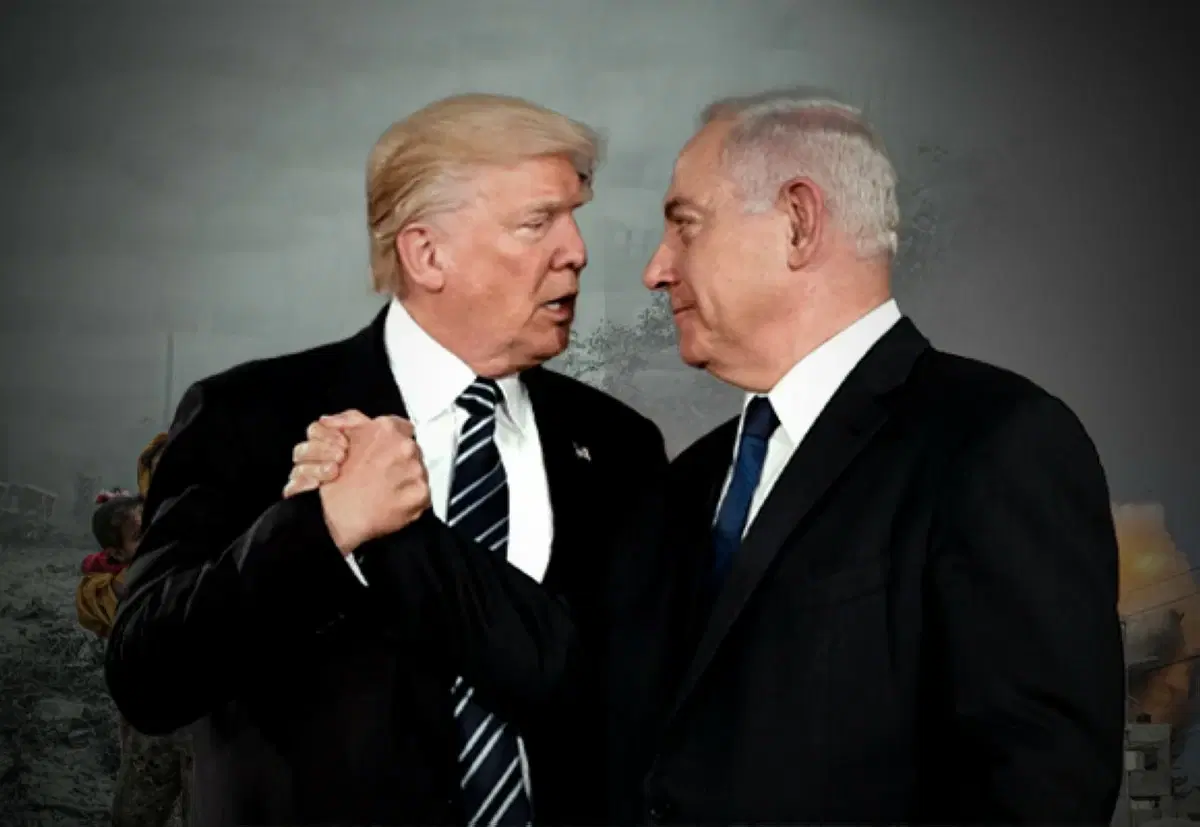
Days before the Israeli parliamentary elections scheduled for October 27, US President Donald Trump announced his full and absolute support for Prime Minister Benjamin Netanyahu, in a move that exceeded customary diplomatic norms and shed light once again on the nature of the relationship between the two men, in which strategic calculations related to Iran overlap with political and electoral interests.
Trump's announcement came via his "Truth Social" platform, where he wrote: "If Israel has the wrong leader, which is anyone other than Bibi, America will have to do the job itself, and I am not inclined to do that."
According to the reading of "Israel Hayom" newspaper writer Amnon Lord, this phrase reveals a fundamental aspect of Washington's calculations, represented by Trump's desire for Israel to take on part of the military mission against Iran, thereby reducing the need for direct American involvement, which makes Netanyahu's continued premiership an American interest in his view.
Lord believes that the relationship between Trump and Netanyahu differs from the traditional relations that linked the White House to Israeli prime ministers, describing it as an unprecedented partnership that, according to his analysis, led to waging two wars against Iran and established a joint agenda based on the necessity of preventing Tehran from possessing a nuclear weapon and eliminating its nuclear capabilities.
This trend intersects with American media reports that addressed the nature of military coordination between Washington and Tel Aviv. CBS News reported, in a report cited by the "Apa.az" agency in February 2026, that the Trump administration pledged to support Israel if it decided to launch strikes on Iran following the failure of nuclear negotiations.
Officials in the Pentagon and US intelligence agencies discussed possible forms of operational support, including refueling Israeli aircraft and securing overflight permits over third-party countries, in addition to covering expenses related to the operations.
These arrangements raise questions about the nature of the Israeli role in the American strategy toward Tehran, and whether Israel is acting as a partner in formulating goals and decisions, or whether it is bearing the brunt of the military risks in confronting an adversary whose nuclear capabilities Washington seeks to contain.
In this context, Lord rejects describing Israel as merely a fighting force working for the United States, emphasizing that it is a partner in a joint agenda, not a "mercenary fighter."
According to the writer's reading, this agenda is not limited to Iran, but is also linked to a broader vision of reshaping the international political landscape by supporting right-wing forces and strengthening their presence in a number of Western countries.
However, the Iranian file remains at the forefront of the shared calculations between Trump and Netanyahu, in light of the security and military repercussions it carries, and the domestic political cards it provides for each of them.
The American endorsement announcement gains additional importance due to its timing, as it came a few days before the Israeli elections, in a move that raised questions about the limits of American interference in Israel's internal affairs.
This announcement is seen as a remarkable precedent in relations between the two countries, given that a US president has explicitly announced his support for an Israeli prime minister before an imminent vote.
Axios correspondent Barak Ravid quoted Trump as saying that he had intended to announce his support for Netanyahu from the beginning, but did not want to do so too early.
According to Lord, Trump may be less concerned with the results of the Israeli elections themselves than he is with the presence of an Israeli leadership willing to proceed with the confrontation with Iran.
The writer acknowledges that Netanyahu does not enjoy wide popularity in the United States, but he believes that Trump does not find many partners in the international arena willing to bear the risks of military confrontation in this manner.
Conversely, Israeli calculations overlap with American domestic policy considerations, especially with the approach of the midterm congressional elections next November. The Trump administration is facing pressure to show progress on foreign files, while the Iranian file represents one of the most prominent challenges that could affect voters' assessment of the administration's performance in foreign policy and national security.
In this framework, an Axios report stated that Trump and Netanyahu discussed, five days before the endorsement announcement, the possibility of launching a new round of broad military operations against Iran, based on Israeli intelligence information that spoke of Iranian efforts to rebuild the nuclear program.
Although the White House denied the existence of plans to launch an attack before the midterm elections, reports indicated that the state of military alert continues, keeping the possibility of escalation present.
Trump's position sparked reactions within Israel, where Netanyahu's rival candidate and former Chief of Staff Benny Gantz rejected American interference in the elections, saying: "I respect the American president, but Israel is a democratic state, and only Israeli citizens decide who will be prime minister."
Israeli readings were also divided regarding the electoral impact of this endorsement. Tamar Hermann, a researcher at the Israel Democracy Institute, believes that the American position might help Netanyahu win over some undecided voters, but she rules out that it alone would lead to a broad change in voter trends.
Opinion polls mentioned in the reports indicate that Netanyahu's camp is struggling to secure 61 seats, the number needed to form a government, which keeps the electoral scene open to multiple possibilities.
In the background of this scene, the relationship between the two men goes beyond the limits of mutual political support to include calculations related to Netanyahu's political future and the judicial cases he faces. Lord points out that a segment of Israeli public opinion wants Trump to intervene in favor of the prime minister regarding the pardon request, while he sees that other sectors insist on holding those responsible for the failures witnessed by Israel during the war accountable.
For Trump, his support for Netanyahu can be read as a political and strategic investment in an Israeli leadership willing to bear the risks of military confrontation with Tehran, at a time when Washington seeks to achieve its goals regarding the Iranian nuclear program without bearing all the burdens of war directly.
As for Netanyahu, the American endorsement gives him political support at a sensitive electoral time, in addition to confirming the continuation of strategic coordination between the two sides.
But the American bet remains linked to the result of the Israeli elections, and whether Netanyahu will retain the ability to form the next government.
If he loses, Trump will face a test of his ability to maintain the same path with a new Israeli leadership, and the extent of that leadership's willingness to adopt the same goals in dealing with Iran.
Trump summarized this possibility in his talk to Axios, when he said: "Maybe I can deal with another, and maybe not. Who wants to take the risk?". This is a phrase that reflects the size of the bet the US president is placing on Netanyahu, and opens the door to a fundamental question: Is the support related to the person of the prime minister, or to the continuation of an Israeli approach willing to bear the military burden in confronting Iran on behalf of Washington?