Life under fire.. How are Iranians rearranging their priorities amid the war?
Amman2 min read
Share
Economic pressures, soaring prices, and the decline of the local currency's value are imposing changes on consumption, entertainment, and travel patterns in Iran, as living costs rise and the repercussions of war and the US blockade impact economic conditions.
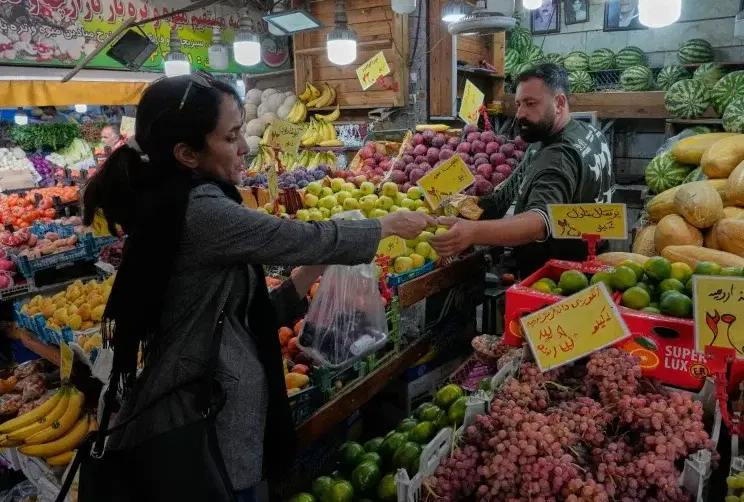
In the capital, Tehran, vendors' complaints are mounting over inflation that devours profits, at a time when consumers find it difficult to balance their incomes with living costs, prompting them to rearrange their priorities and seek less costly options.
One vendor said that the rise in prices does not necessarily reflect an increase in profits, as profit margins erode with rising costs; thus, the vendor does not achieve a sufficient return, nor does the buyer find any benefit in the high prices.
Faced with high prices, some Iranians are turning to consumer options that better suit their incomes, without radically changing their lifestyle.
Food trucks and coffee stations are seeing high turnout, especially among youth, due to their lower cost compared to restaurants.
An Iranian female student said she prefers buying food from mobile carts because their prices are much lower than restaurants, while Kasra, a food truck owner, believes his work provides him with a source of income and allows his customers to obtain meals at reasonable prices.
He added that most of his customers are construction workers, delivery service workers, and housewives, due to the readiness of the food and the speed of obtaining it.
Decline in travel movement
In the tourism sector, economic pressure has led to a decline in the turnout for travel, and pushed Iranians to look for less costly means of transportation, according to Sharareh Roshan, a booking officer at a tourism company.
Roshan pointed out that economic conditions and the war have significantly affected the sector, with a decline in demand for tourist destinations, including the southern regions of Iran, and rising plane ticket prices, in addition to restrictions that have limited the numbers of travelers inbound and outbound.
These changes reflect the attempts of Iranians to adapt to the rise in living costs, by cutting back on certain expenses and resorting to less costly alternatives, amid ongoing economic pressures and unclear prospects for improving living conditions.