4 parliamentary blocs agree on the distribution of the House of Representatives’ Permanent Office positions for its third session
Amman6 min read
Share
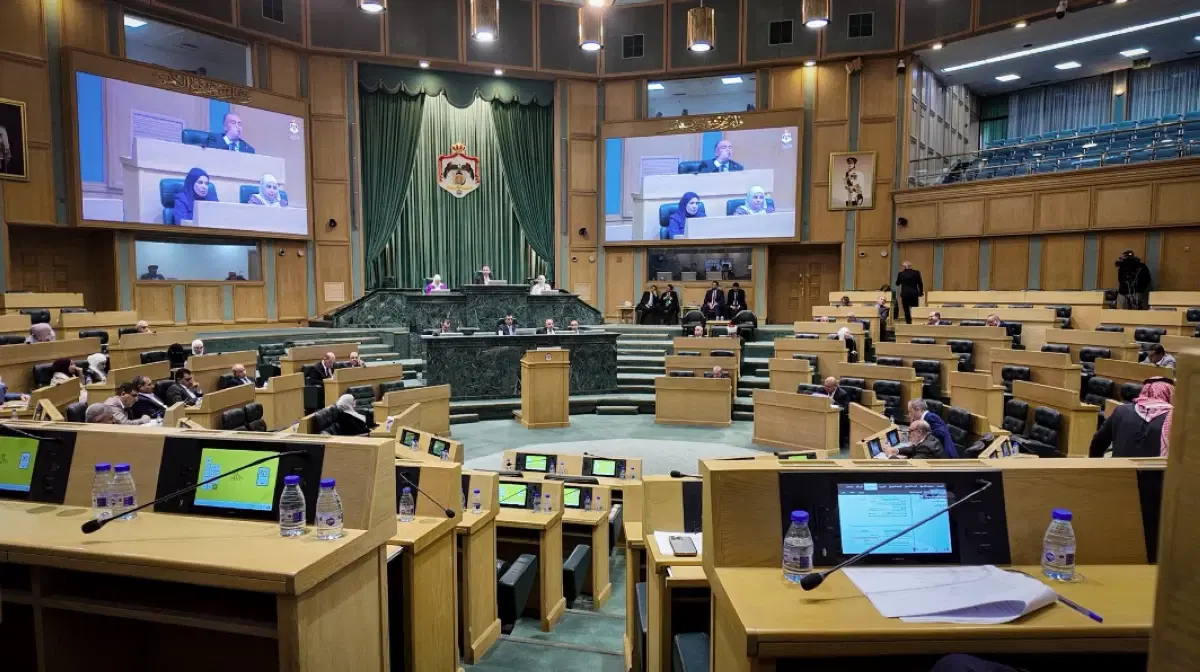
The 20th House of Representatives enters its third ordinary session, scheduled for Monday, with an understanding between four parliamentary blocs regarding the distribution of the five positions in the Permanent Office. The agreement allocates the speakership of the House to the Mithaq bloc, the First Deputy Speaker to the Mubadara bloc, the Second Deputy Speaker to the Azm bloc, and the two Assistant Speaker positions to the Centrist and Reformist parties bloc.
The understanding announced on Thursday, October 29, comes before the start of the Permanent Office election procedures, which are held at the beginning of the ordinary session in accordance with the Constitution and the House's Rules of Procedure.
According to a statement issued by the four blocs, the understanding was reached following meetings and political and parliamentary dialogue that included heads of negotiation committees and secretaries-general of the parties, with the aim of addressing disputes over leadership positions in the House.
The statement explained that initial negotiations faced an obstacle represented by the presence of candidates for the House speakership from three different blocs, which required expanding the scope of dialogue by holding a meeting that included the secretaries-general of the four parties and the heads of the negotiation committees.
It pointed out that the candidates for the House speakership agreed, at the request of the secretaries-general and the heads of the negotiation committees, to place their nominations in the hands of these parties to allow for a comprehensive understanding to be reached regarding the Permanent Office positions.
Distribution of the five positions
According to the understanding, the Mithaq parliamentary bloc will name its candidate for the House speakership, while the Mubadara bloc will name its candidate for the First Deputy Speaker position, and the Azm bloc will name its candidate for the Second Deputy Speaker position.
The Centrist and Reformist parties bloc will also name its candidates for the two Assistant Speaker positions.
The four blocs emphasized that the understanding represents a political and parliamentary framework and does not replace the electoral procedures stipulated in the Constitution and the Rules of Procedure, stressing the necessity of completing the election of the Permanent Office members under the House dome.
This understanding comes after the head of the Mubadara parliamentary bloc, Ahmad Hmeisat, announced on October 22 that the bloc had decided to nominate Mustafa Al-Khasawneh for the House speakership, while expressing readiness to negotiate with the rest of the blocs regarding the positions.
However, the subsequent understanding allocated the speakership to the Mithaq bloc and the First Deputy Speaker position to the Mubadara bloc, while leaving the naming of candidates to the concerned blocs in accordance with their internal mechanisms.
How is the Permanent Office elected?
According to Article Seven of the Rules of Procedure, the Permanent Office consists of the House Speaker, the First and Second Deputy Speakers, and two assistants.
Article 69 of the Jordanian Constitution stipulates that at the beginning of each ordinary session, the House of Representatives shall elect a Speaker for a period of one solar year, with the possibility of re-election.
At the beginning of the first session, the oldest member present shall preside, assisted by the two youngest members present, until the House Speaker is elected.
The session chair selects a committee of three representatives to supervise the voting process and the counting of ballots, while allowing candidates' representatives to observe the process.
The winner of the House speakership is the one who obtains the absolute majority of those present if the number of candidates exceeds two. If the competition is limited to two candidates, the one with the relative majority wins, and a draw settles any tie between them.
In the event that no candidate obtains the required majority when there are more than two candidates, the voting is repeated between the two who received the highest number of votes, and the one who obtains the relative majority wins.
After the Speaker is elected and assumes the chair, the House completes the election of the First and Second Deputy Speakers, each separately and in the same manner, while the two assistants are elected as a single list, and the two candidates receiving the relative majority win.
The Rules of Procedure require the presence of at least one woman in the Permanent Office, as the right to run for one of the two Assistant Speaker positions is restricted to female representatives if no woman wins the speakership or one of the First or Second Deputy Speaker positions.
All election operations are conducted by secret ballot on papers prepared by the House General Secretariat, bearing the names of the candidates, the House seal, and the signatures of the committee supervising the voting.
Powers of the Permanent Office
The Permanent Office assumes organizational and administrative powers, including reviewing objections to session minutes and voting results, supervising the implementation of the annual budget of the House, forming parliamentary delegations, and approving the organizational structure of the House General Secretariat.
As for the House Speaker, they represent the House, speak on its behalf, prepare the agenda for sessions, preside over them, manage discussions, announce decisions, and follow up on their implementation.
The First Deputy Speaker assumes the powers of the Speaker in their absence or inability to perform their duties, while the Second Deputy Speaker takes their place in the absence or inability of the Speaker and their First Deputy to perform their duties.
The two Assistant Speakers, under the Speaker's supervision, oversee the preparation of session minutes, record voting results, organize requests to speak, and assist in maintaining order during sessions.
Understandings from the previous session
The House of Representatives witnessed similar understandings between the parliamentary blocs before the opening of its second ordinary session on October 26, 2025, which resulted in the election of Deputy Mazen Al-Qadi as Speaker of the House by acclamation.
The third session renews the entitlement to elect the House leadership, in light of the new understanding between the four blocs, provided that the elections scheduled under the dome determine the names of the Permanent Office members for the new session.