The Vatican announces the successful completion of lung surgery for Pope Leo XIV
Amman4 min read
Share
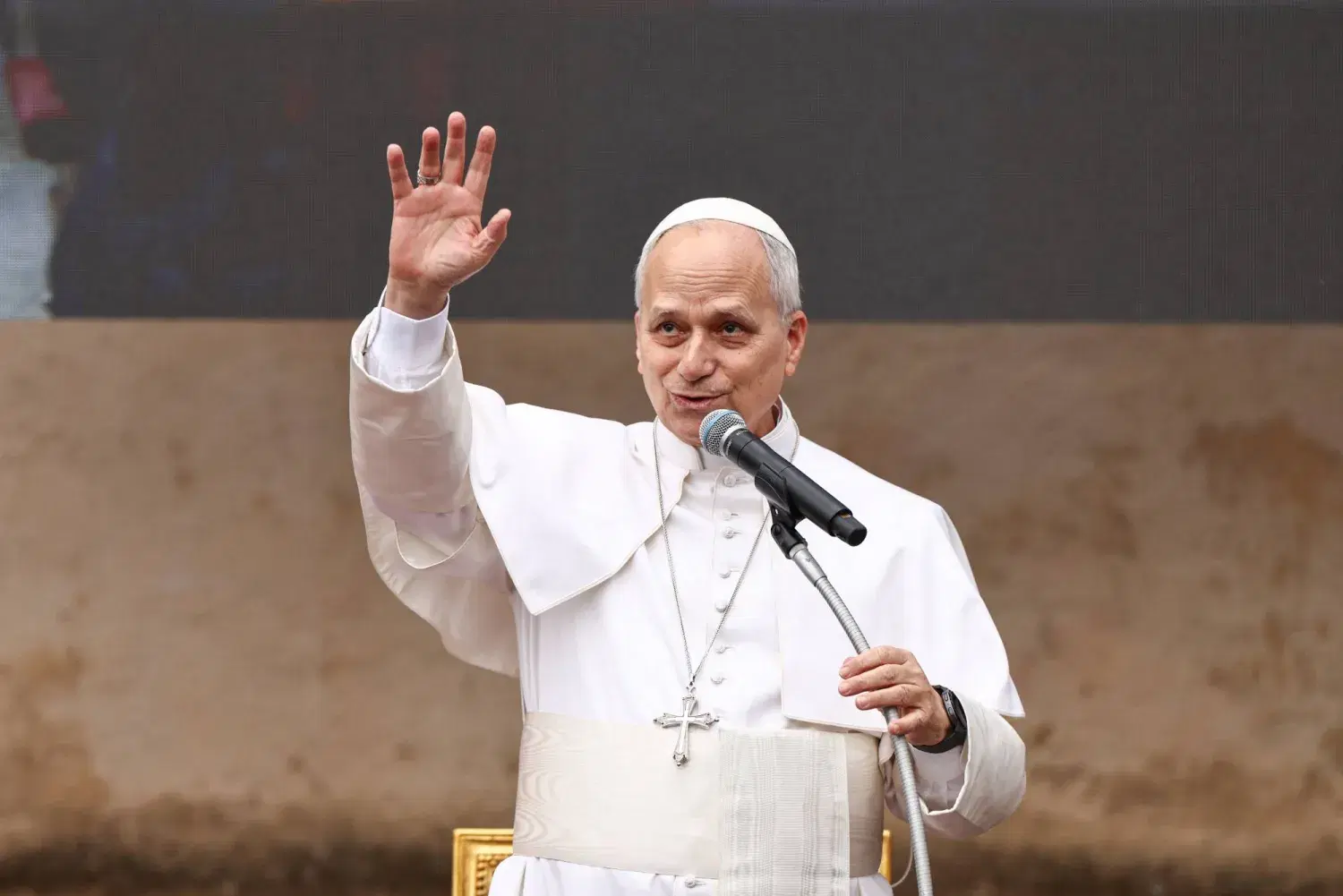
The Vatican announced on Tuesday that the surgery undergone by Pope Leo XIV at the Gemelli Hospital in Rome to remove a tumor from his lung "was performed successfully."
The Holy See Press Office stated via Telegram that "the operation was completed successfully, within the expected timeframe and as scheduled, and the Holy Father has returned to his room."
The Vatican later clarified that the operation "confirmed the diagnosis of pulmonary glandular cancer, which was likely based on the tests conducted before the surgery."
In response to a question about whether there were any indications of the cancer spreading further, a Vatican source said that additional tests are currently being conducted.
With this operation, the Pope has entered the hospital for the first time since assuming the Papacy on May 8, 2025.
The Pope of the 1.4 billion Catholics greeted the crowd upon his arrival at Gemelli Hospital shortly after 1:00 PM, where he will stay for about a week.
During his Sunday sermon in St. Peter's Square at the Vatican, the Pope announced that doctors had discovered the tumor "at a very early stage" during recent medical examinations.
The Pope added, "The doctors saw that surgical intervention was the most appropriate option, and based on their advice, I decided to undergo surgery to remove a tumor" in the lung.
This transparency is unusual in the Vatican, where information regarding the health of popes is traditionally kept strictly confidential, despite the efforts of his Argentine predecessor, Francis, who passed away in April 2025, to establish greater openness.
The Holy See announced that the Supreme Pontiff's recovery period may take about a week.
All his appointments until October 20 have been canceled, including a major mass that was scheduled for Wednesday at the conclusion of a global meeting on the family, and he will be represented by the new Dean of the College of Cardinals, Cardinal Luis Antonio Tagle.
The American Pope will stay in a special suite on the top floor of Gemelli Hospital, equipped with a small chapel, a kitchen, and a meeting room for the medical staff.
The Chicago-born Pope is generally in good health and is a sports enthusiast, especially tennis, which he continues to play regularly.
The Pope is scheduled to make a long official trip to Latin America next month, where he intends to visit Uruguay, Argentina, and Peru between November 6 and 17.
Canon law does not provide for any special measures in the event that the Pope, who is elected for life, faces a health problem.
- Positive Speculations -
The Vatican Secretary of State, the second-in-command at the Holy See, Cardinal Pietro Parolin, indicated that he was surprised by the announcement.
He told reporters in Rome on Tuesday, "No one expected this," but "it was discovered immediately, thank God," adding that he found the Pope "reassuring" on Monday evening.
Japanese Cardinal Tarcisio Isao Kikuchi, who also met the Pope on Monday, told the newspaper "La Repubblica" that the Supreme Pontiff was "very relaxed as usual, and inclined to joke."
Most pulmonary tumors are benign, meaning non-cancerous, but a small percentage of them may be an early sign of lung cancer.
A small tumor is called a "rounded lesion" because it resembles a circular metal piece in X-ray images, as explained to Agence France-Presse by Professor Federico Venuta, head of the Thoracic Surgery Department at the Policlinico Umberto I hospital in Rome.
Small tumors usually do not cause any symptoms, but larger tumors may lead to shortness of breath, chest pain, and a persistent cough, sometimes accompanied by blood.
The Vatican explained to Agence France-Presse that the tumor in the Pope's lung was discovered during routine examinations, not following the appearance of symptoms.
Venuta explained that these tumors "may be caused by a wide range of benign lesions, whether inflammatory, infectious, autoimmune, or congenital, and they may be malignant."
The tumor is removed under general anesthesia, with the patient being supplied with oxygen via a breathing tube.
Venuta said, "Often, the tumor can be accessed from the outside or from the inside, for example, through image-guided biopsy or endoscopy."
Regarding the trip to Latin America, Venuta said, "As a general rule, it is advised to avoid air travel for approximately twenty days after such surgeries, with the possibility of adopting some flexibility in this regard."