Putin agrees to resume trilateral peace talks with Ukraine and the US
Amman4 min read
Share
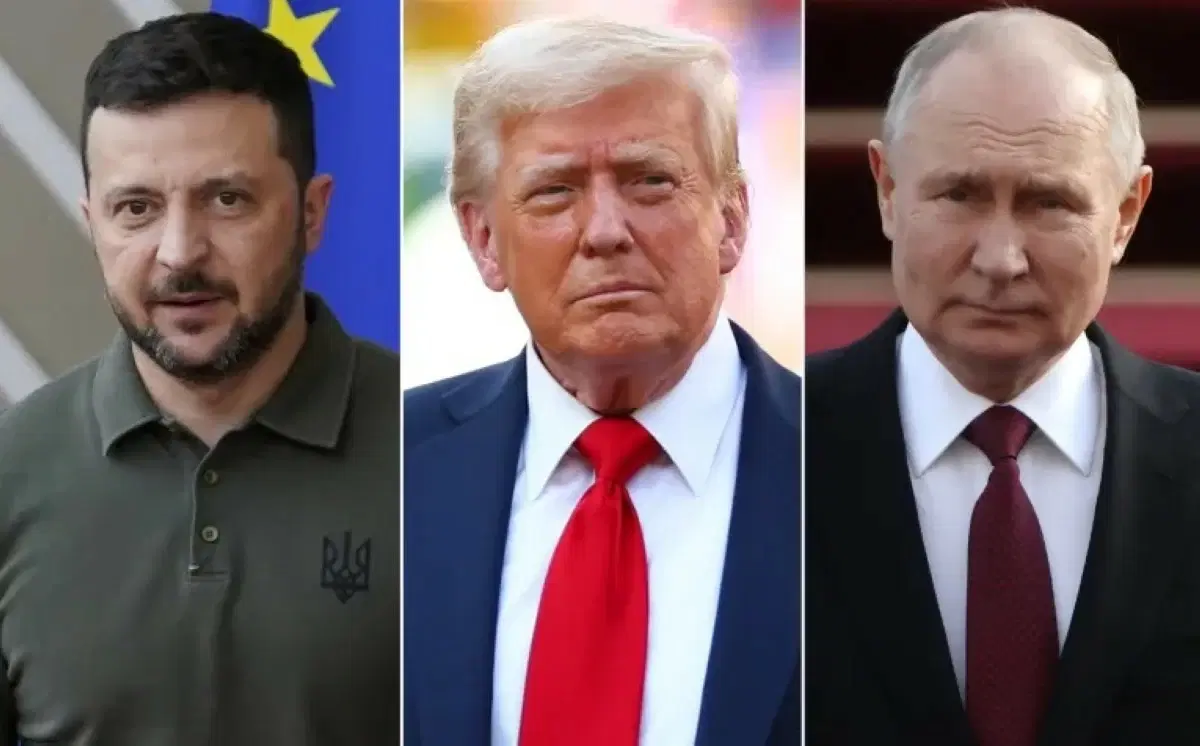
The Kremlin announced on Wednesday that Russian President Vladimir Putin has agreed to resume peace talks with Ukraine mediated by the US next month, after Putin met with US envoy Steve Witkoff as part of Washington's latest push to halt Europe's deadliest war since World War II.
The negotiations, held in a lavish palace in St. Petersburg, began with a goodwill gesture from Russia: the release of Stephen Hubbard, a retired American teacher who had been detained in Russia and whose release was previously requested by US President Donald Trump from the Kremlin leader. This marks the ninth time Witkoff has met face-to-face with Putin.
Today's meeting comes amid concerns in Kyiv and among its allies that the United States is backtracking on its support for Ukraine, as it sometimes withholds real-time intelligence on Russian attacks and hampers Ukrainian military communications.
The latest talks also come more than two years after Trump promised in his successful presidential campaign to end the war in Ukraine within 24 hours.
The Kremlin said the new trilateral peace talks, which will be at the technical level, could be held in Abu Dhabi and will focus on how to guarantee the security of both Ukraine and Russia once the war ends.
It added that the talks may begin on November 10 or thereafter. Previous US-mediated peace talks were held in February before the United States and Israel launched a war on Iran.
However, the Kremlin was less optimistic about the outcome of talks held the previous day by Witkoff in Oslo with Ukrainian President Volodymyr Zelenskyy, the leaders of Finland and Norway, and representatives of the European Union and NATO. Witkoff told Putin that the talks had a "measure of momentum," and a US official said Ukraine put forward new ideas and proposals.
Yuri Ushakov, a Kremlin aide, expressed Moscow's dissatisfaction with the outcome of yesterday's talks in remarks to reporters after the nearly three-hour St. Petersburg meeting.
* Potential meeting between Trump, Putin, and Xi
Ukraine and Russia remain far apart on the terms of any potential peace deal despite Trump's recent intensification of pressure on Ukraine to reach some sort of agreement. On Tuesday, he said it was time for Ukraine to end the war or face "something very bad."
Putin used today's talks to offer Trump help in dealing with Iran, saying Russia has a decades-long relationship with Tehran and has repeatedly offered to leverage it to address US concerns over the Iranian nuclear program. The Kremlin said Putin told Witkoff that an agreement with Iran is possible and even necessary.
* "New ideas"
Putin showed little sign of willingness to compromise on his core war aims, which include full Russian control of the Donetsk region in eastern Ukraine, Kyiv staying out of NATO, and a comprehensive peace deal rather than a temporary ceasefire.
Kirill Dmitriev, Putin's special envoy for investment, attended the talks with Witkoff. The Kremlin said the two sides discussed major joint economic projects, including some nearing implementation.
Witkoff said he brought along documents containing various ideas for a potential peace deal for Putin to review, and that Jared Kushner, Trump's son-in-law, also wanted to convey some ideas to Putin. Kushner later joined the meeting remotely by phone.
* Deterioration of US-Ukraine relations
Relations between the United States and Ukraine have deteriorated sharply since Trump announced a deal this month to export diesel from Russia to help lower prices in the US. Rising fuel costs since Trump launched attacks on Iran have hurt the Republican Party ahead of the November legislative elections.
Since the diesel deal was struck, Ukraine has complained about disruptions to some intelligence sharing and its use of the Starshield military satellite system, although Zelenskyy said yesterday's Oslo meeting reached an agreement to resolve those issues.
The Wall Street Journal reported today, citing US officials and familiar sources, that billionaire Elon Musk ordered authorities last week to slow down the operation of a military version of SpaceX's Starlink satellite service, upon which Ukraine relies to track Russian ballistic missile attacks.