The "Arcif" scientific teams examined more than 5,600 scientific and research journals published in Arabic by more than 2,600 scientific and research bodies. 1,303 scientific journals succeeded in achieving the 32 criteria adopted by "Arcif", which are compatible with the global standards of international impact indices, and issued by 19 Arab countries (excluding Somalia, Djibouti, and the Comoros), and 9 foreign countries: Britain, Turkey, America, Malaysia, India, the Netherlands, Iran, Pakistan, and South Africa, in which scientific journals are published in Arabic.
The "Arcif 2026" report included a review of the data and results of 413,000 Arab authors, whose research was included in 1,070,000 reviewed scientific articles, showing that more than 135,000 Arab authors were cited for their scientific and academic production, representing 32.57%, reflecting the high rates of coverage of the "Arcif" index of a large proportion of Arabic research production.
The growth rate in the data of the current report 2026 compared to the first annual report 2016, in terms of approved journals, amounted to 379% per scientific journal. As for the articles examined and studied, the growth rate reached 978%. The growth rate in the number of Arab authors cited was 8282%, compared to the first report in 2016. The number of references and citations examined in the "Arcif" reports amounted to more than 30,140,000 references and citations, with a growth rate of 979% compared to the first report issued in 2016.
The "Arcif" index is a methodological tool for measuring the relative importance of scientific research and journals and comparing them in their field of knowledge and measuring their scientific impact, and it is extracted according to strict standard equations based on global measures.
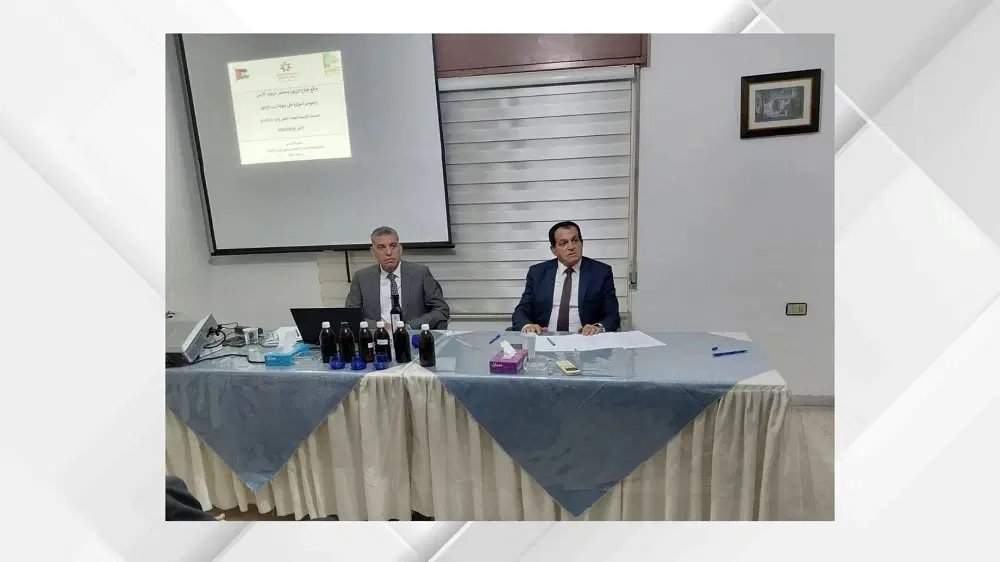
During the launch of the annual results, Prof. Dr. Al-Khaznadar explained that the 2026 report, as in last year's annual report, reflects a broad awareness and growing interest among the Arab scientific community in the need to rely on research and scientific publishing in the Arabic language. He also pointed to an increase in confidence in the Arab scientific mind and support for the scientific efforts of Arab researchers, and that scientific research and publishing are an Arab necessity for producing knowledge and technology instead of relying on importing them. The "Arcif" index also contributed to moving Arab scientific production from an unseen realm to globally recognized production.
Regarding the distribution of the results of the volume of scientific production from scientific journals in the Arab world, the Arcif 2026 report showed that Algeria maintained the first place and the largest share of approved journals that successfully passed the criteria, with 425 journals, representing 32.6% of the total journals in the report, followed by Egypt with 381 journals at 29.2%, Iraq third with 135 journals at nearly 10.4%, Saudi Arabia fourth with 73 journals at 5.6%, and Jordan fifth with 45 journals at nearly 3.5%.
On the other hand, the Arab Republic of Egypt alone obtained the top ten places in the Arab world in terms of the results of the Arcif general impact index, which compares all Arab scientific journals from various disciplines.
Regarding the number of cited authors index, Algeria came first with 31,554 authors, representing 23.4% of the total number of Arab authors cited, while Egypt maintained second place with 29,127 authors at 21.6%, Iraq remained in third place with 24,621 authors at 18.2%, then Saudi Arabia in fourth place with 13,181 authors at 9.8%, and Jordan in fifth place with 7,122 authors at 5.3%, noting that there was a significant increase of approximately 22% in the number of Arab authors cited for their scientific production in all Arab countries compared to last year's report.
In terms of sectoral distribution of specializations, Egypt topped the Arab scene in many scientific disciplines, and the results of this report according to the sectoral distribution showed that in the field of literature and humanities (interdisciplinary), which includes 263 journals, Yemen came first with the "Journal of Educational Sciences and Humanities" issued by Taiz University, Saudi Arabia came in second, third, and fifth places, while Algeria came in fourth place.
Egypt topped the field of economic, financial, and business administration sciences, which includes 192 journals, through the "Journal of the Faculty of Economics and Political Science" issued by Cairo University, and Egypt also obtained third, fourth, and fifth places.
Egypt maintained first place in the field of social sciences (interdisciplinary), which includes 150 journals, through the "National Criminal Journal" issued by the National Center for Social and Criminal Research, followed by Saudi Arabia in second place, then Egypt again in third, fourth, and fifth places.
Egypt also topped the first five places in the field of educational sciences, which includes 151 journals, with Egypt in first place with the "International Journal of Artificial Intelligence in Education and Training" issued by the Association for Technological and Human Development, and Egypt also obtained second, third, fourth, and fifth places.
In the field of law, which includes 125 journals, Egypt obtained first place with the "National Criminal Journal" issued by the National Center for Social and Criminal Research, and also obtained second, third, fourth, and fifth places.
Egypt achieved first place in the field of Islamic studies, which includes 121 journals, through the "Egyptian Fatwa Journal" issued by the Egyptian Fatwa House, and Egypt also achieved second, third, and fourth places, while Qatar came in fifth place.
Saudi Arabia obtained first place in the field of Arabic language and literature sciences, which includes 105 journals, through the "Teaching Arabic as a Second Language" journal issued by the King Salman Global Center for Arabic Language, while Yemen and Egypt obtained second and third places, respectively.
Egypt achieved first place in the field of political science, which includes 71 journals, through the "Journal of the Faculty of Economics and Political Science" issued by Cairo University. Egypt also obtained second, fourth, and fifth places, while Iraq came in third place.
Also in the field of media and communication, which includes 38 journals, Egypt obtained the first three places, with the "Media Research Journal" issued by Al-Azhar University achieving first place.
In the field of mathematics and physical education sciences, which includes 39 journals, Egypt obtained the first three places, with the "Scientific Journal of Research and Studies in Physical Education" issued by Port Said University achieving first place.
In the field of library and information science, which includes 18 journals, Egypt achieved first place through the "Scientific Journal of Libraries, Archives, and Information" issued by Cairo University, in addition to second and third places.
Egypt also achieved first place in the field of arts, which includes 21 journals, with the "Arts and Applied Sciences Journal" issued by Damietta University, followed by Saudi Arabia and Libya in second and third places, respectively.
Qatar topped the field of engineering and technological sciences, which includes 17 journals, through the "Information and Technology Studies" journal issued by Hamad Bin Khalifa University Press.
Regarding the top five journals in the immediacy index, which 706 Arabic journals succeeded in achieving, which is an index that reflects the size of the follow-up and immediate impact of the journal, by monitoring the volume of citations achieved by the journal's articles immediately after their publication, and the publication of cited articles during the same year in which the journal's articles were published,
Egypt achieved first place in this index with the "Egyptian Journal of Mass Communication Research" issued by Beni Suef University, and Egypt also obtained second and fourth places, and the League of Arab States obtained fifth place.
All the results of the 2026 report, including the rest of the disciplines, are available in the Arcif Impact Index digital database and through its electronic portal, on its website http://emarefa.net/arcif.
A digital version of this report in PDF format will be issued and made available to researchers, stakeholders, and decision-makers in the field of Arab scientific research and publication before the end of this year.
It is worth mentioning that the "Arsif" Impact Factor is subject to the Supervision and Coordination Council, which consists of representatives from several Arab and international entities, including: (UNESCO Regional Bureau for Education in the Arab States in Beirut, the United Nations Economic and Social Commission for Western Asia - ESCWA -, the Bibliotheca Alexandrina, and the "Maarifa" Digital Database). In addition to a scientific committee of Arab experts and academics with a leading scientific reputation from several Arab countries and Britain.