Opposition accuses Netanyahu of manipulating "electoral consciousness"
Eisenkot: Likud leader stirs fear and anxiety ahead of the polls
Follow Al Rai

Israeli Prime Minister presents "updated national security" concept
Opposition accuses Netanyahu of manipulating "electoral consciousness"
Eisenkot: Likud leader stirs fear and anxiety ahead of the polls
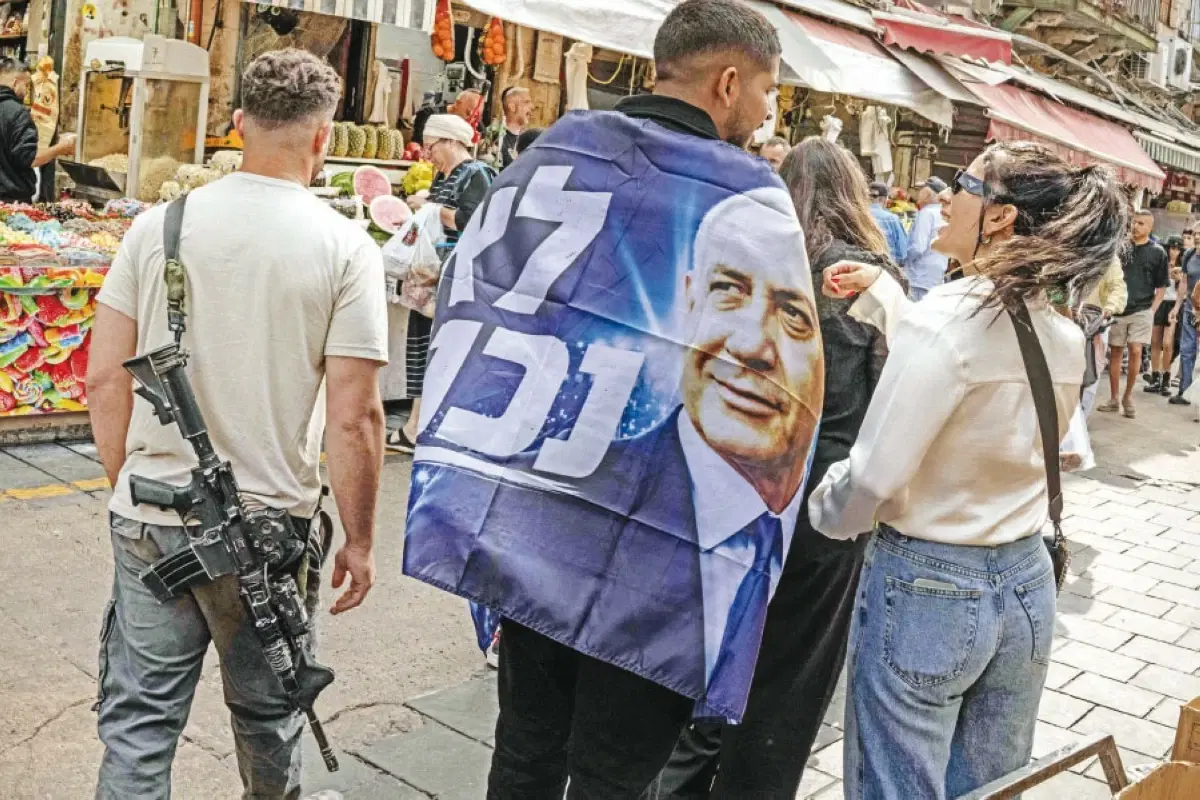
A week before the Israeli elections scheduled for October 27, Israeli Prime Minister (Likud party leader) Benjamin Netanyahu presented what he described as an updated "national security concept," a move that sparked widespread criticism from the Israeli media and opposition. They described the document as "empty slogans" and "manipulation of electoral consciousness," arguing that it lacks actionable plans and offers no clear answers on how to deal with the burning fronts. The criticism reveals that what Netanyahu presents under the title of a "security doctrine" does not go beyond, according to his opponents, reproducing the same military and political promises without specifying their cost, implementation timelines, or chances of success, at a time when Israel faces simultaneous challenges on the fronts of Iran, Gaza, Lebanon, Syria, and the West Bank.
The concept proposed by Netanyahu is based on shifting from "containment and defense" to "prevention and attack," including launching preemptive strikes against threats that Israel perceives as targeting its security.
The document includes ten main principles, most notably preventing adversaries from possessing nuclear weapons, strengthening deterrence and early warning capabilities, achieving greater military independence and reducing reliance on US aid, as well as establishing buffer zones on the borders with Lebanon, Syria, and the Gaza Strip.
However, these principles faced sharp criticism due to the lack of operational details. Avi Ashkenazi wrote in an article for the newspaper "Maariv" that presenting the document as an academic work at a university would have made it reasonable to refer it to a disciplinary committee for suspected plagiarism from artificial intelligence.
Ashkenazi pointed out that Netanyahu did not provide practical plans or clear timelines, nor did he clarify how to deal with security challenges on various fronts, which raises questions about the document's ability to transform from political rhetoric into an applicable strategy.
Regarding Iran, Netanyahu raised the ceiling of his threats, announcing that his strategic goal is to topple the regime in Tehran, claiming that 90% of the work against Iran has already been accomplished. He affirmed Israel's readiness to carry out a preemptive strike against Iranian nuclear facilities even without US support, and said during a briefing to Israeli journalists that his plan is based on pushing the Iranian regime to collapse, an order he said he issued to the security services.
But these statements contrast with what Israeli media reports conveyed about security and military estimates that do not see an urgent need to launch an attack on Iran before the elections. Lilach Shoval wrote in an analysis for the newspaper "Israel Hayom" that high-level security sources do not consider an urgent attack a priority at the current stage, despite Chief of Staff Herzi Halevi's belief in the necessity of returning to combat at some point.
According to the analysis, the military establishment prioritizes ensuring stability and holding elections on time, while reports in "Maariv" indicated that Netanyahu asked the United States to delay a potential strike against Iran, fearing that the war would lead to postponing the elections or harming the Likud party's chances.
A paradox emerges here between Netanyahu's public rhetoric, which presents him as ready to act alone against Iran, and the political and military calculations that impose restrictions on the timing of any broad confrontation, as well as the position of Washington, which, according to "Israel Hayom," does not wish to engage in a new war with Iran before the US midterm elections, especially with rising oil prices.
On the Gaza and Lebanon fronts, Netanyahu's statements reflect a commitment to continuing military operations, as he announced his intention to continue targeting Hamas and Hezbollah to prevent them from rebuilding their capabilities, stressing that he will not allow the reconstruction of Gaza before it is completely disarmed.
He also emphasized the continued Israeli military presence in the security zone in southern Lebanon, linking withdrawal from it to ending the existence of Hezbollah's weapons.
However, Netanyahu acknowledged that Hezbollah still retains its capabilities and that the goals of the war in Gaza have not been fully achieved, which raises questions about the extent to which the approach based on continuous military pressure can achieve the declared goals, in the absence of a clear vision for the end of operations or the political and security arrangements that will follow.
On the peace file, Netanyahu's vision, according to his statements, does not include a clear political path to end the Palestinian-Israeli conflict.
As for the Palestinians, Netanyahu attacked his rival Gadi Eisenkot in an interview with Israel's Channel 14, claiming that the opposition coming to power would lead to Israel's withdrawal from Lebanon, Gaza, and Syria and the establishment of a Palestinian state, which he described as the "beginning of the end for Israel."
In contrast, the Israeli opposition described the national security document as an attempt to employ security fears in the electoral battle without providing a comprehensive strategy to face existing challenges.
Opposition leader Yair Lapid said the document looks like it was written using a free version of "ChatGPT," considering it not a national security document, but a collection of exaggerated slogans.
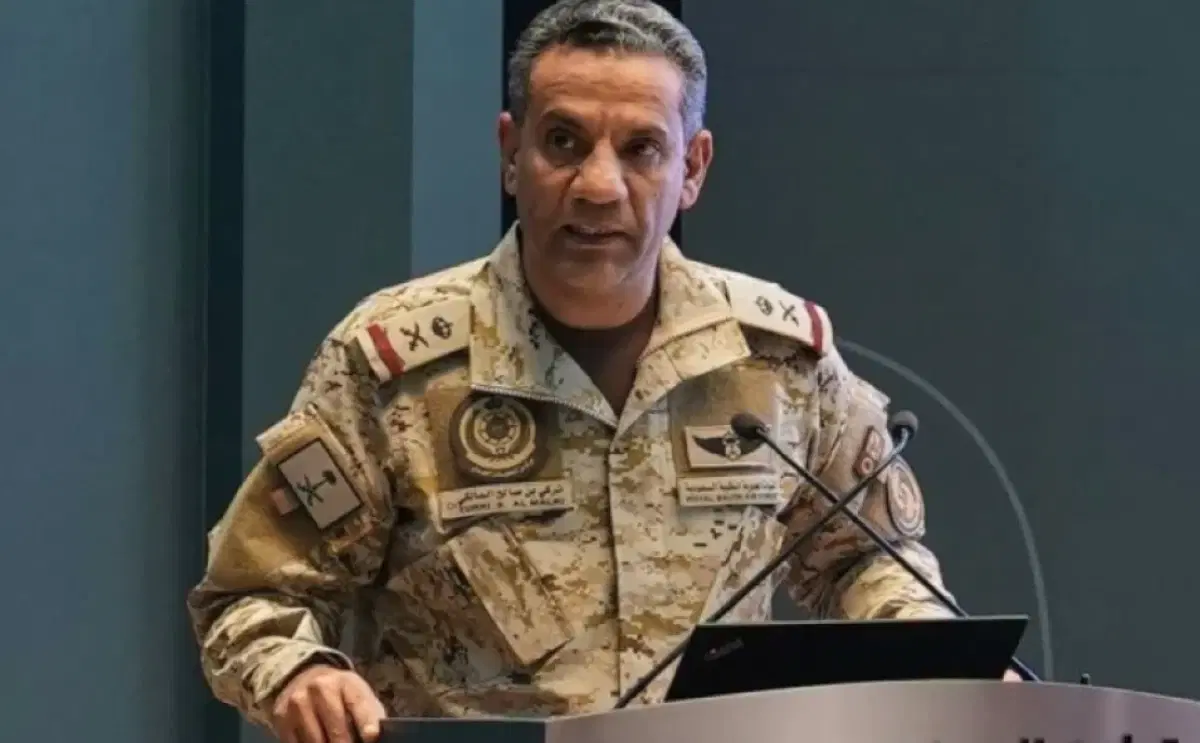
For his part, Eisenkot, head of the "Yashar" party belonging to the center-right, accused Netanyahu of exploiting fears and stirring anxiety ahead of the elections to divert attention from security failures, saying that the Prime Minister, after three years of the worst disaster in Israel's history, chooses to manipulate consciousness instead of providing clear answers.
The dispute between Netanyahu and his opponents centers on the feasibility of relying on military force alone to ensure security. While the Prime Minister insists on continuing military pressure and refusing to withdraw from areas he considers necessary for Israel's security, parties in the opposition, especially Eisenkot and Lapid, emphasize the need to link military operations to a clear political goal and criticize the absence of an actionable plan to end open conflicts.
In this context, writer Nahum Barnea, in an article for the newspaper "Yedioth Ahronoth," linked Netanyahu's security failures to the nature of his political alliances with far-right forces, considering that satisfying these parties contributed to perpetuating chaos.
He wrote that chaos, under Netanyahu's rule, has become an end in itself, in a critique of the government's policies and their security and political repercussions.
Netanyahu's opponents also doubt his government's ability to convince Arab countries to expand the Abraham Accords, in light of far-right policies toward the Palestinians and continued tension in the region. Conversely, Netanyahu accuses his opponents of being prepared to make concessions to the Palestinians, although the opposition itself does not propose the establishment of a Palestinian state as a clear electoral program, nor does this goal top the agenda of its leaders, which focuses more on rebuilding trust with the United States and ending settler attacks in the West Bank. The comparison between the two sides' positions reveals a gap between the intensity of electoral rhetoric and the scale of the political alternatives proposed. Netanyahu offers promises to topple the Iranian regime and eliminate the capabilities of Hamas and Hezbollah without clarifying the expected cost, the timeline, or the limits of the ability to act in light of the American position. As for the opposition, despite criticizing the lack of strategic planning, it does not in turn offer a comprehensive vision that settles the future of the occupied Palestinian territories or defines an alternative political path to end the confrontations.
Accordingly, the "security doctrine" proposed by Netanyahu on the eve of the elections seems closer to an electoral speech that mixes military goals with political promises, without explaining how declared victories can be turned into lasting stability. Furthermore, the peace he speaks of does not include a fundamental shift in the position on Palestinian rights, but is limited to the possibility of expanding Arab normalization within political and security conditions determined by the Israeli side.
Know more about this story?Send us a tip
Ask about this report — answers stay grounded in its text.