Warnings Without Details.. Netanyahu Puts Security at the Heart of the Electoral Battle
Lapid: Army rules are not a backdrop for election videos
Amman7 min read
Share
Eisenkot calls for not mixing Israel's security with public policy
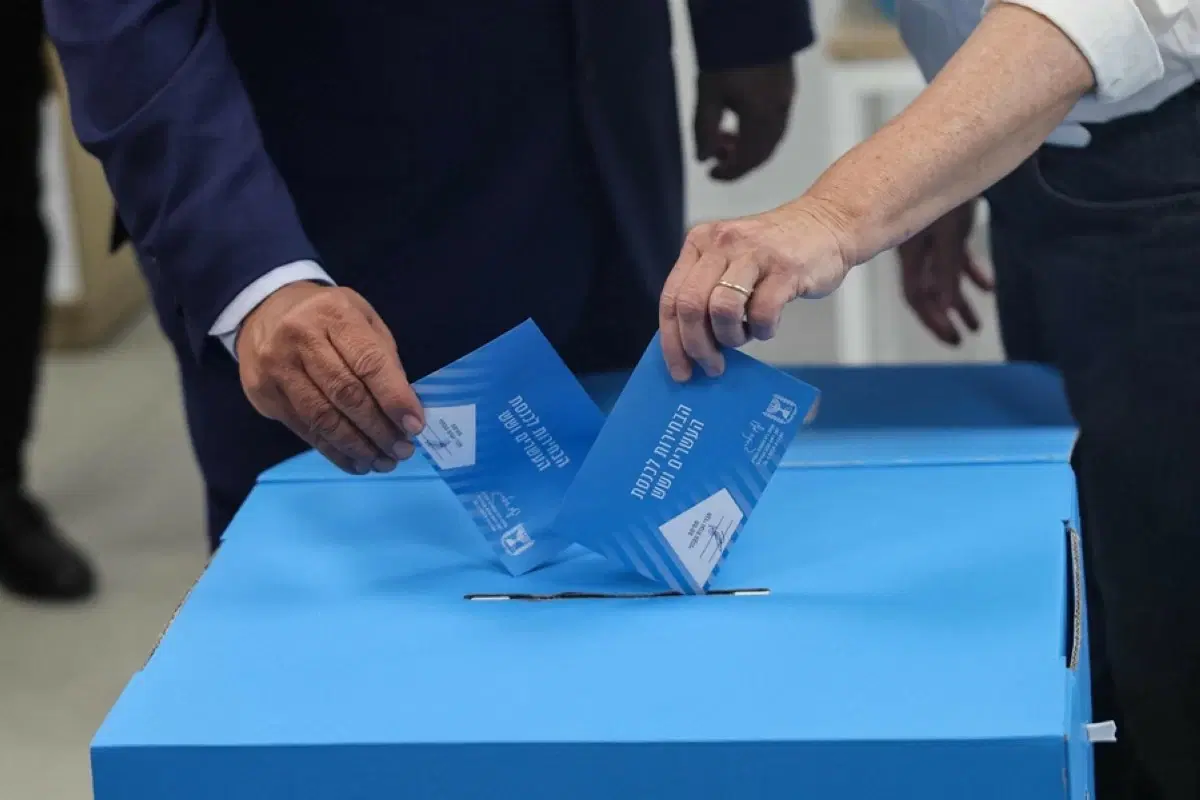
Less than a month before the Knesset elections scheduled for October 27, Israeli Prime Minister Benjamin Netanyahu made a statement from the "Tel Nof" air force base that Hebrew media outlets described as "surprising" and "unusual," saying: "We have indications that our enemies will try to attack us around the time of the elections.. Do not mess with us, not now and not ever.. Our long arm will reach you everywhere and at any time."
Netanyahu did not provide details about the nature of these "indications" or the party that might be behind any potential attack, but his message carried a clear hint that Israel might face hostile military action coinciding with the elections, stressing that Israel will respond to any threat.
However, the gap between the political statement and the security assessment quickly emerged after Israeli media outlets, including Army Radio, the "Kan 11" public broadcaster, and Channel 13, reported that military and Shin Bet officials were surprised by Netanyahu's statements, confirming that there is no new intelligence information or specific warnings linking the election date to a potential escalation.
Army Radio stated that Netanyahu's statements, delivered with a fighter jet in the background, "tried to create a sense of emergency and urgent information about an imminent attack against Israel," pointing out that there has been no new warning information during the past few days indicating an actual change in the security situation, and that the state of alert during the Jewish holidays was not raised or changed.
In the same context, the "i24NEWS" website quoted a military source as telling ministers: "We recognize that there is a threat, and this does not mean we are in a battle tomorrow morning, but we must be prepared," in a description that reflects the difference between the existence of a general security threat and receiving a specific intelligence warning regarding an imminent attack.
Hebrew sources reported that the security meeting held by Netanyahu with the Defense Minister and heads of the security agencies was not an emergency meeting, but rather was pre-scheduled about a week ago, while its location was changed at the last minute to a more fortified and unusual site, raising questions among informed officials, especially after the meeting had earlier been described as "routine."
According to Ynet reports, the army leadership did not take exceptional operational measures beyond the usual, but rather forces on the Lebanese border were reduced, the main effort was directed toward the West Bank, soldiers were granted leave at bases where situation assessments permitted, and the Home Front Command did not change its instructions to the public.
Politically, Netanyahu's statement provoked sharp reactions among the opposition. Opposition Leader Yair Lapid initially mocked the statement, saying that Netanyahu "before October 7 did not take any warning seriously, and when the elections come, he suddenly takes warnings seriously."
However, Lapid returned to demand an urgent security briefing to find out if the threats are real and how the government is preparing to hold the elections without hindrance, calling for a quadripartite meeting involving Netanyahu, the head of the Shin Bet, and the chairman of the Central Election Committee.
Following the meeting, Lapid's position changed, as he no longer questioned the existence of the threats themselves, but rather focused his criticism on the way they were presented, saying that "security threats must be handled with professionalism and responsibility," and that "Israel's security and army rules are not a backdrop for election videos," stressing that the army, Shin Bet, and police are ready for the elections, and there is no justification for panicking the public.
As for "Yashar" party leader Gadi Eisenkot, he was more explicit, saying that if Netanyahu's words are true, the opposition leader should be briefed to ensure that this is a real threat and not a political move aimed at influencing the electoral battle, stressing that "it is strictly forbidden to mix Israel's security with the electoral battle, even in appearance."
On the other hand, Channel 12 writer and political analyst Amit Segal believed that the opposition "fell into the trap set for it by Netanyahu," considering that announcing the existence of security warnings immediately shifted the public debate to the question of whether there are actually warnings and what their nature is, instead of keeping the election campaign focused on other issues that the opposition sees as more damaging to Netanyahu, such as Haredi conscription, the shortage of soldiers, and the government's responsibility for the failures of October 7.
This analysis goes on to say that Netanyahu wants the elections to revolve around "security," while the opposition seeks to turn it into a referendum on Haredi issues, troop shortages, and the events of October 7, files that constitute political pressure points against him.
As soon as Netanyahu launched his warning, the opposition found itself forced to enter his arena, namely the security arena, and defend its position on the threats instead of imposing the campaign agenda it wanted.
Segal also pointed out that Iran may not be interested in escalation before the elections, because any confrontation could politically serve Netanyahu's interest, while Hamas might be more inclined to de-escalate, especially if any major security development in Gaza or Lebanon could affect the message Netanyahu seeks to present regarding what he considers achievements on these fronts.
In the right-wing camp, eyes are also turning to Ofer Winter, whom "Haaretz" describes as one of the most prominent political challenges facing Netanyahu within the right. According to people close to him within Likud, Netanyahu has not yet decided how to deal with him, while it is believed that the return of "winds of war" might prompt some right-wingers who joined Winter to reconsider their political options.
Conversely, estimates within the Israeli political establishment indicate that the issue of "warnings" itself may not change voting trends, given that a large segment of voters has already made up its mind, but the controversy surrounding it may achieve another political goal for Netanyahu, which is redirecting the election campaign agenda toward security.
This controversy comes at a time when the issue of the warnings preceding the October 7, 2023 attack still haunts Netanyahu, following reports published by the New York Times, The Atlantic, and the Wall Street Journal regarding warnings the Prime Minister allegedly received before the attack.
On September 29, Netanyahu filed a lawsuit against Israeli media outlets that published these reports, along with a number of journalists, at a time when his public collision continues with former Shin Bet chief Ronen Bar, who in turn threatened to take legal action against Netanyahu.
Thus, Netanyahu's statement at the "Tel Nof" base does not look like a mere passing security warning, as it came from a military platform with a clear symbolic background represented by a fighter jet, and at a highly sensitive timing before the elections.
While the security establishment avoided issuing a direct official stance, hints leaked through the media about reservations and questions regarding the nature of the threat and the level of intelligence information associated with it.
As for the opposition, despite its objection to employing security in the election campaign, it found itself engaged in the debate opened by Netanyahu, demanding security briefings and discussing the reality of the threat, instead of focusing on the files it sought to make the axis of the campaign.
Thus, the "election warning" turned into a political battle in its own right, between a narrative stating that Israel faces a security threat requiring preparation, and another seeing that the way the threat was presented and its timing may be part of a broader electoral battle. Between the two narratives, the most sensitive question remains: Was the threat Netanyahu warned about primarily a security one, or were the elections themselves part of the calculations behind launching this warning?