Netanyahu maneuvers to thwart the change government
Amman6 min read
Share
Arab parties outside the coalition and within the decisive equation
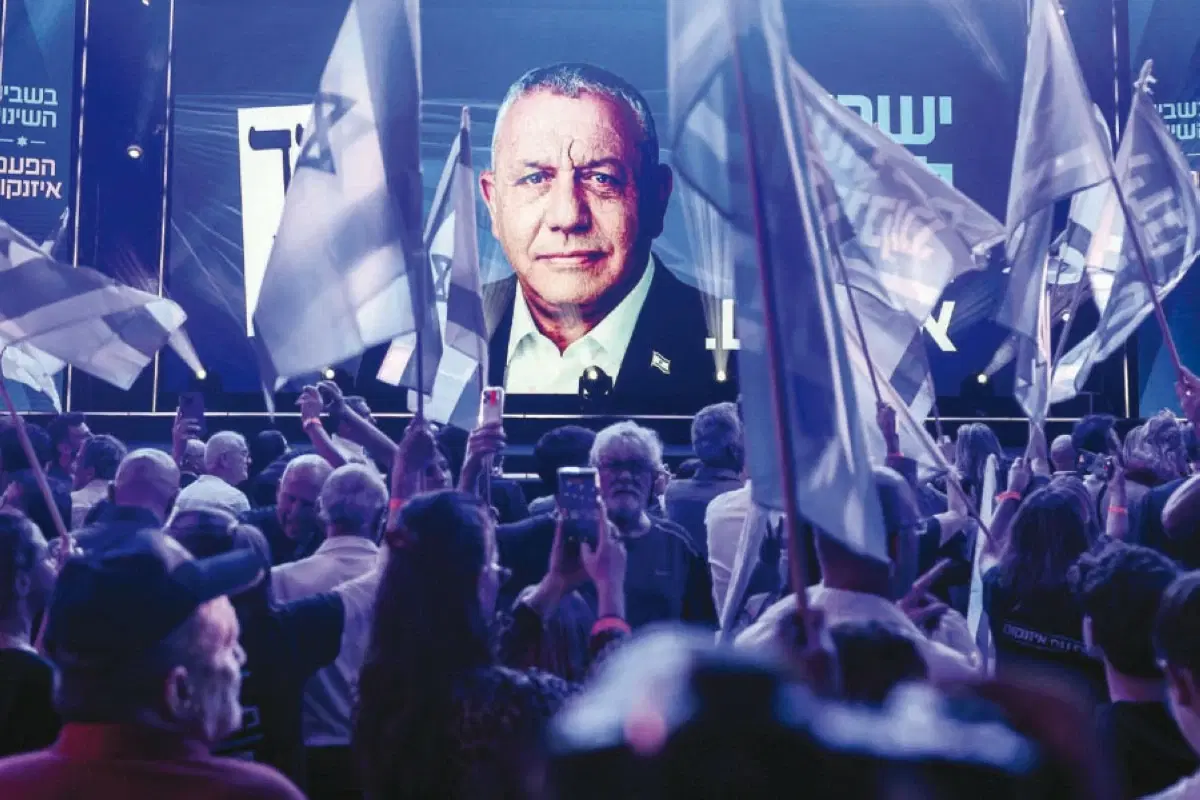
According to informed Israeli political and security sources, Prime Minister Benjamin Netanyahu, in collaboration with a limited team of experts and advisors, is leading intensive efforts to launch a campaign of doubt regarding the integrity and outcomes of the elections, under the slogan "stolen elections," in an attempt to nullify the results of the vote and thwart any potential change in the leadership of the Knesset within the next week.
In contrast, opposition leader Yair Lapid is seeking to attract the Haredi parties to form what he describes as a "Zionist" government, without relying on Arab parties.
These movements coincide with escalating Israeli assessments regarding the possibility of Netanyahu resorting to military escalation against Iran following the U.S. midterm elections, a move that could prolong the state of emergency and delay the opening of the new Knesset, thereby hindering the opposition's efforts to form an alternative government.
Overall, these developments point to a complex political equation, meaning that neither camp, under the current parliamentary map, has an easy path to forming a stable government, and the 19 Arab seats constitute a decisive factor in the calculations of the majority, despite attempts to exclude them from governance arrangements.
The newspaper "Yedioth Ahronoth" quoted high-level sources in the change bloc as saying that Netanyahu, since the announcement of the results, has focused his efforts on sabotaging the formation of a new government and pushing Israel towards early elections, believing that he is incapable of forming a government and that he will not accept a unity government based on rotation in the prime ministership.
According to the sources, his primary goal is to prevent his opponents from forming a government, even if it leads to returning the country to the polls.
The strategy, according to the same sources, is based on launching a broad campaign against Arab parties and casting doubt on their political legitimacy, culminating in accusations of "stealing the elections," thereby raising questions about the results of the vote and undermining the chances of forming a government based on their support.
In this context, the newspaper "Haaretz" indicated in an analysis that Shin Bet chief Ronen Bar and Police Inspector General Kobi Shabtai have transformed into "full political players," considering that the timing of publishing investigations related to allegations of Arab interference in the elections lacks justification and carries political motives aimed at helping Netanyahu cast doubt on the legitimacy of the results.
The newspaper warned, in its editorial, that the continuation of the political crisis and the failure to expedite the formation of a new government exacerbate the risks facing Israel, considering that Netanyahu's remaining in office for an additional day under these circumstances poses a threat to the future of the state.
On the other hand, Lapid is betting on forming a government with a Jewish majority, by attracting Haredi parties and avoiding reliance on the support of Arab parties.
"Yedioth Ahronoth" quoted those close to him as saying that he is making efforts to convince the Haredim to join the government of change, considering this option feasible, while ruling out the establishment of a government based on Arab parties.
However, this path faces a major obstacle in the form of Avigdor Lieberman, leader of the "Yisrael Beiteinu" party, which holds seven seats, after he vowed to refuse joining any government that includes Haredi parties.
The sources revealed that significant pressure is being exerted on him to retract his position, noting that he expected a political offer related to the position of prime minister.
The calculations are becoming more complex due to the division within the Haredi parties themselves; the "United Torah Judaism" party, which holds seven seats, has shown openness to negotiating with the change bloc, while the leader of the "Shas" party, Aryeh Deri, who holds six seats, refuses to join a government that does not include the Likud party, basing his position on political and historical considerations, and considering the Oslo Accords experience sufficient to justify rejecting this option.
Lapid also rejects the idea of forming a unity government with Netanyahu, insisting that he will not accept working under his leadership even if an agreement on rotating the prime ministership is reached, and hinted at resignation if such an agreement is reached.
In a parallel development, "Haaretz" highlighted contacts and pressures exerted by Netanyahu on U.S. President Donald Trump to launch an attack on Iran following the U.S. midterm elections scheduled for November 3, noting that the outbreak of a military confrontation could provide Netanyahu with an opportunity to delay the opening of the 26th Knesset and the swearing-in of its members, and halt the procedures that the change bloc intends to take to seize control of the Knesset presidency and pass legislation aimed at toppling the government.
According to the analysis, postponing these procedures would give Netanyahu additional time to rearrange his political cards and attempt to shorten the life of the new Knesset and push for early elections, especially as the continued operation of parliament may allow the new majority to pass laws and legislation that could undermine his political influence.
For his part, Mikhail Milstein, head of the Palestinian Studies Forum at the Dayan Center at Tel Aviv University, indicated in an analysis published in "Yedioth Ahronoth" that expectations of an Israeli attack on Iran following the U.S. elections are widely spread in the Middle East, either through a joint military operation between Washington and Tel Aviv, or through an Israeli strike with U.S. green light.
Milstein believed that such a step could increase regional instability, without ensuring a complete resolution of the Iranian threat, in addition to its potential impact on preparations for the upcoming Israeli elections.
These scenarios reveal that the confrontation between Netanyahu and Lapid goes beyond the competition for the premiership, extending to the future of the Israeli political system, the boundaries of dealing with election results, and the position of Arab parties in the parliamentary equation.
According to these assessments, Netanyahu is seeking to exploit the political and security crisis to thwart his opponents' chances of forming the government, while Lapid is trying to build an alternative majority by attracting Haredi parties, while keeping Arab parties out of the governing coalition.
Between the two paths, the chances of forming a stable government appear limited; Netanyahu's option may lead to prolonging the political crisis, deepening internal confrontation, and possibly expanding the circle of regional escalation, while Lapid's project faces arithmetic and political obstacles that may make the government he seeks to form fragile and prone to collapse.
While awaiting Israeli President Isaac Herzog's decision on the personality he will task with forming the government, the most prominent question remains: Can Israel overcome the dilemma of the 19 Arab seats and continue to exclude their holders from the governance equation, at a time when these seats have become a decisive factor in determining the identity and fate of the upcoming government?