"Israeli democracy" faces a test of equality and participation
Arab electoral weight.. and Israeli rejection of partnership in government
Follow Al Rai

Arab parties scramble Netanyahu's calculations
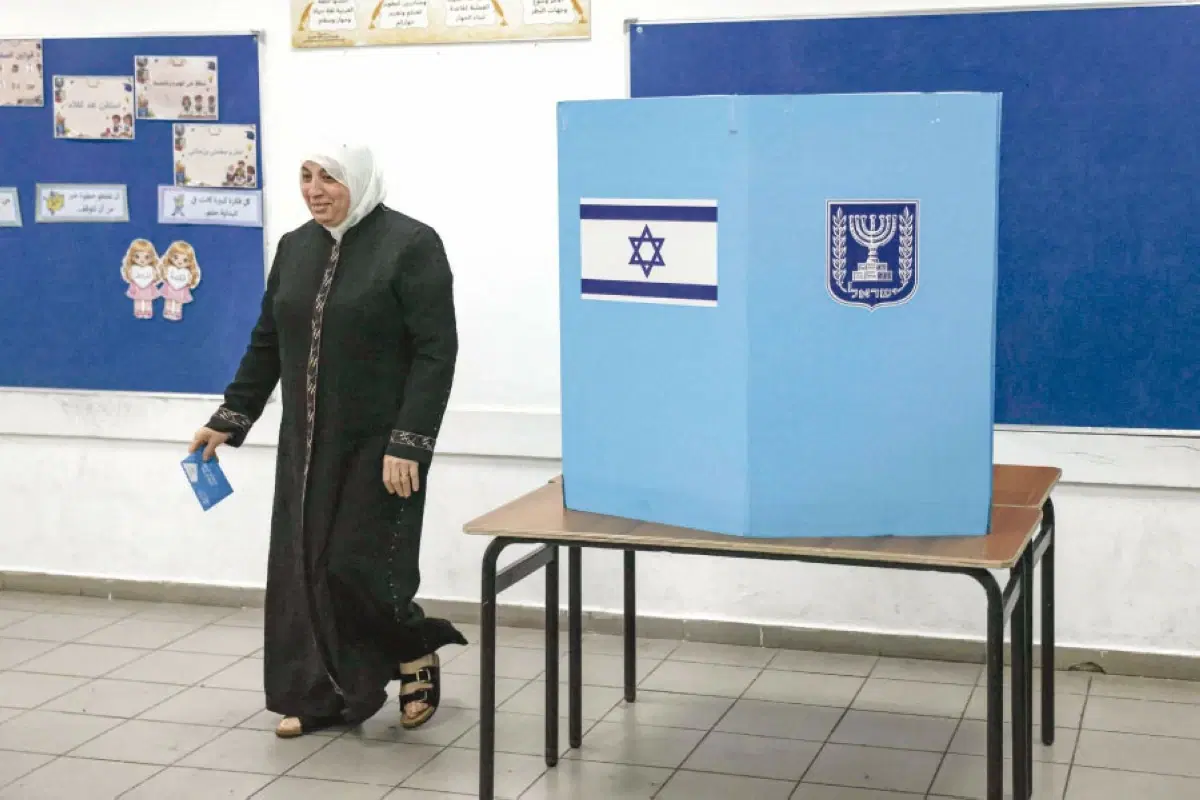
"Israeli democracy" faces a test of equality and participation
Arab electoral weight.. and Israeli rejection of partnership in government
The results of the 26th Knesset elections revealed a deep crisis in the Israeli political system, as Israel moved from the shock of the numbers to escalating accusations, in light of the inability of the two main camps to secure the required majority of 61 seats to form a government.
While Arab parties won 19 seats, according to the reported results, they have become a political force that is difficult to bypass in parliamentary calculations, despite the continued refusal of most Jewish forces to include them in a government coalition.
Between the repercussions of the results and the discourse of skepticism launched by right-wing figures, the paths to forming a government appear highly complex, after electoral calculations collided with political and ideological positions that prevent the construction of a stable coalition.
Instead of discussions focusing on opportunities for consensus between the blocs, accusations escalated regarding alleged foreign interference, with fingers pointed at regional countries for being behind what Israeli officials described as "vote buying" and "stealing the election."
The results, according to the circulated figures, yielded 53 seats for Benjamin Netanyahu's camp, led by the Likud party with 26 seats, compared to 48 seats for the Change bloc led by Gadi Eisenkot, while the Arab parties obtained 19 seats, distributed between the Joint List with 11 seats and the United Arab List "Ra'am" with eight seats.
With this outcome, neither camp was able to reach the majority threshold, amid anticipation of the results of counting the votes of soldiers, prisoners, and the sick, which may affect the final distribution of seats.
This equation brought the Arab parties back to the heart of parliamentary calculations, but it revealed at the same time the limits of their ability to translate their electoral weight into governmental influence, in light of widespread objections within the two Jewish camps to relying on their support to form a government.
As the features of the results became clear, the right-wing discourse shifted from discussing electoral losses and gains to questioning the integrity of the entire process.
The Likud party published a statement saying that what it described as the United Arab List "Ra'am" scandal represents an "earthquake," adding that "the elections in Israel were stolen."
The statement linked this to statements by Judge Solberg regarding suspicions of interference by external parties and bribery of voters in favor of the Arab parties, considering that the matter, if proven, constitutes an infringement on democracy and an attempt to enable external parties to influence the Knesset, "Islamize Israel," and overthrow the right-wing government.
Likud demanded immediate measures be taken, and that the available powers of the General Security Service "Shin Bet" and the police be utilized to investigate these allegations. It also called for no Zionist party to cooperate with the United Arab List or the Joint List, and rejected replacing the Knesset Speaker with votes it claimed were "bought with money."
For his part, Boaz Bismuth, Chairman of the Knesset Foreign Affairs and Defense Committee, said in statements to Channel 14 that he had previously warned of scenarios he described as dangerous during discussions he called for before the elections, demanding that the results of the Arab parties, which he described as "terror parties," not be recognized until the investigations are concluded.
In turn, Energy Minister Eli Cohen accused the Arab parties of coordinating with parties he described as hostile to Israel, saying: "The Muslim Brotherhood parties have joined forces with our enemies in an attempt to overthrow the right-wing government."
As for Finance Minister Bezalel Smotrich, he considered that the doubts regarding the influence of foreign money on the elections represent a decisive test for Israel, demanding that the leaders of the Arab parties be subjected to interrogation by the Shin Bet. The newspaper "Yedioth Ahronoth" quoted National Security Minister Itamar Ben-Gvir as saying that the Shin Bet should issue arrest warrants for the heads of the Arab parties suspected of having links to foreign funds, if legal grounds for doing so exist.
These statements reflect an escalation in the discourse of political skepticism, but the accusations related to vote buying and foreign interference remain allegations that require investigation and proof; political statements alone are not enough to prove them. The employment of these accusations in the context of forming a government also reveals the extent of the tension surrounding the role that the Arab parties have come to play in the parliamentary equation.
At the level of forming a government, the options on the table are distributed between tasking Netanyahu, whose camp, according to the announced figures, has only 53 seats, or giving Eisenkot a chance to form a coalition with the support of the United Arab List, which would raise the total potential seats to 56, according to these calculations, with political obstacles remaining that prevent guaranteeing his success.
Both options face difficulty in securing a stable majority, while the possibility of forming a narrow government seems dependent on attracting deputies from other camps or reaching understandings with the Arab parties.
The option of a national unity government emerges among the alternatives proposed, but it requires consensus between political opponents whose positions differ on fundamental issues, in addition to making concessions that may be difficult to market within their parties.
In the event that an agreement cannot be reached, the possibility of going to new elections remains, which means the continuation of the state of political instability and the reproduction of the same crisis.
But the dilemma does not stop at numerical calculations, but extends to the nature of the Israeli political system and the limits of its acceptance of the participation of Arab citizens in governance.
In a reading published by the newspaper "Haaretz," writer Amos Harel believes that the current scene is based on assumptions he described as racist, which he said Netanyahu worked for a long time to entrench in the media and public opinion.
Harel points out that most of Netanyahu's opponents refused, during the election campaign, to deal with the Arab parties as a legitimate potential partner in any future government coalition.
In the same context, writer Uri Misgav offers a critical reading of the nature of Israeli democracy, considering that the system does not achieve full political equality between citizens, despite allowing Arabs to vote and run for office.
He says that Israel, according to his description, is closer to a "racist democracy," as one-fifth of the citizens are allowed to participate in the elections, while their representatives remain practically excluded from the calculations of forming a government.
Misgav cites the paradox between accepting the participation of the "United Torah Judaism" party, which has seven seats and opposes fundamental aspects of the Zionist project, and refusing to deal with the Arab parties that won 19 seats.
He believes that this comparison reveals that the objection is not exclusively related to the ideological positions of the parties, but also relates to the identity of their representatives and the position of Arab citizens in the prevailing political perception.
As for political analyst Gideon Levy, he argues that dealing with the election results puts the Israeli opposition to a test regarding its position on Arab citizens and the limits of its willingness to accept them as partners in government.
He writes that if the opposition leaders refuse to cooperate with the Arab parties, they will move closer, in his expression, to Netanyahu's positions, preferring the continuation of his rule over overcoming the ideological barriers that prevent Arab partnership.
Levy adds that the options on the table have become, in his view, limited to Netanyahu and Ahmad Tibi, considering that the future of the Israeli political system is linked to the position of Jewish citizens on Arabs and their ability to accept their political representation as part of the democratic equation.
These readings, despite their different starting points, reveal that the current crisis goes beyond the difficulty of gathering 61 seats to a deeper question related to the limits of political participation and equality between citizens. The Arab parties, which have become an influential force in parliamentary calculations, still face widespread rejection to translate their electoral representation into a partnership in government, while the majority of Jewish forces treat their potential support as a political and ideological burden.
Thus, the dilemma of forming a government is no longer linked only to the balance of seats or the ability of one of the camps to attract additional deputies, but also to the contradiction between the rules of parliamentary representation and the positions of political forces on the legitimacy of the participation of Arab parties. If this rejection continues, the options will remain limited to fragile coalitions, a unity government that imposes difficult compromises, or a return to the ballot boxes, without any guarantee of addressing the causes that led to the deadlock.
The election results place the Israeli political system before a clear paradox: the Arab parties possess influential electoral weight, but their ability to participate in executive decision-making remains restricted by ideological and political considerations. While the camps exchange accusations about responsibility for the impasse, the central question remains whether this electoral weight will be translated into a role in government, or whether its influence will remain limited to preventing others from forming a majority, without allowing its owners to actually participate in managing the state.
Know more about this story?Send us a tip
Ask about this report — answers stay grounded in its text.