Conditional US support for Netanyahu contingent on excluding the far-right
«Knesset deadlock» puts the Likud leader's future to the test
Follow Al Rai

Trump reshuffles the political landscape in Tel Aviv
Conditional US support for Netanyahu contingent on excluding the far-right
«Knesset deadlock» puts the Likud leader's future to the test
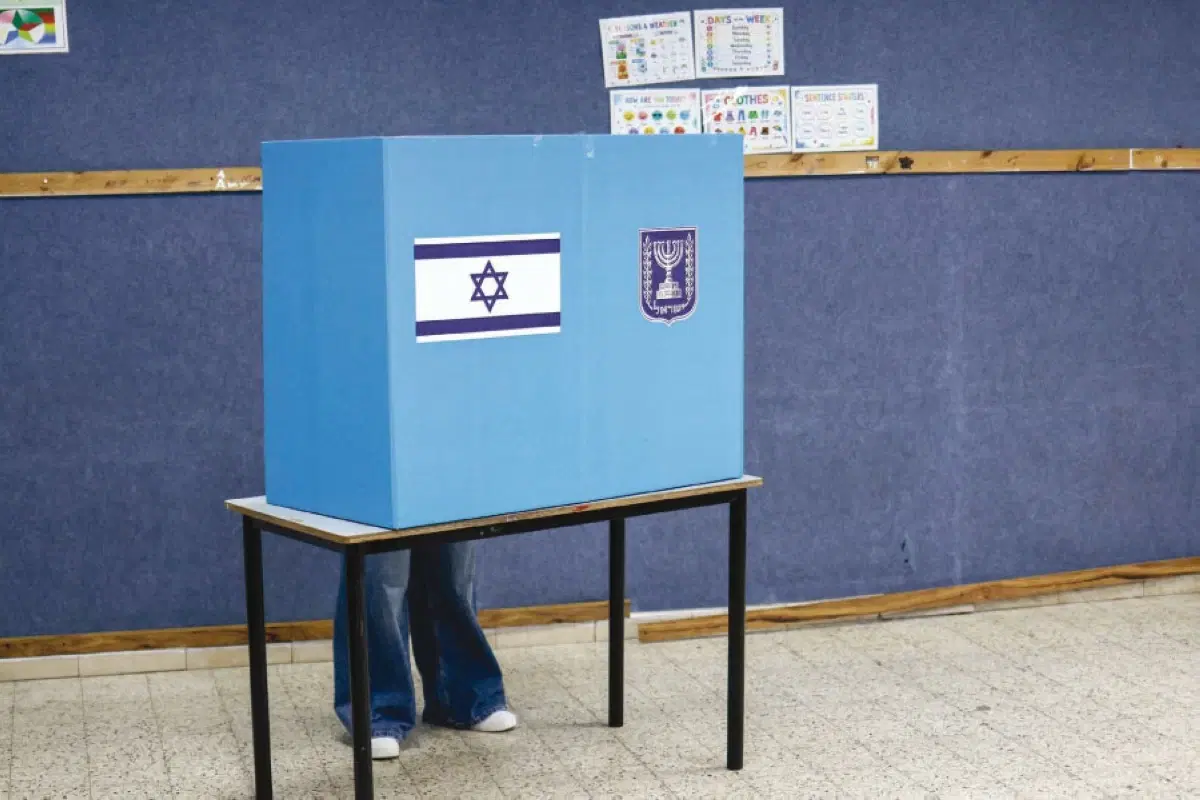
The Israeli Knesset elections do not appear to be merely an internal matter to determine the balance of power between parties; rather, they have turned into an arena where American calculations intersect with political conflicts in Tel Aviv, amid indications of US President Donald Trump's intervention in the process of forming the next government and his attempts to influence its composition in line with Washington's regional priorities.
According to sources close to Trump, cited by the newspaper "Yedioth Ahronoth," the US President is directly monitoring the political consultations in Israel and is seeking to prevent the two far-right pillars, Itamar Ben-Gvir and Bezalel Smotrich, from joining any future government coalition, in a path that could, according to this narrative, lead to the end of Prime Minister Benjamin Netanyahu's political career.
This intervention, if its details are confirmed, reflects the exceptional nature of the relationship between the United States and Israel, where the partnership transcends the limits of political and military support to influence internal calculations and the formation of governments, especially when election results are linked to Washington's regional projects.
It seems that the US administration is seeking to push for a government formula more in line with its orientations, including the exclusion of hardline right-wing figures it believes might hinder regional arrangements that Washington is seeking to advance.
According to the sources cited by the Israeli newspaper, Ben-Gvir's participation in the next government is not an acceptable option for Trump, while his praise for Netanyahu following the start of the vote count comes within a broader political context, which does not necessarily mean unconditional support for his continuation in power.
With the results not confirming the ability of either camp to form a stable government, the possibilities of escalating US pressure toward a national unity government emerge, which could be based on a rotation formula for the premiership, allowing the political deadlock to be bypassed without going directly to new elections.
These moves gain additional importance in light of what "Yedioth Ahronoth" reported about key Arab countries conditioning the expansion of the Abraham Accords on Netanyahu not assuming the premiership.
If these data are correct, the future of the Israeli leadership will not only be linked to partisan balances within the Knesset, but will also become part of broader regional negotiations in which American, Arab, and Israeli interests overlap.
In light of these complexities, five main scenarios emerge to overcome the government deadlock, according to an analysis by Avi Bar-Eli, an economic analyst at the newspaper "TheMarker." The first scenario is Netanyahu's success in attracting defectors from the opposing camp, allowing him to complete the necessary number to form a government coalition.
The second scenario is based on the Haredi parties joining Gadi Eisenkot's camp, which might force this camp to backtrack on its pledge to enact a law for Haredi conscription, a highly sensitive file in the Israeli political and social conflict.
The third scenario is the formation of a minority government led by the Eisenkot camp, receiving support from Arab parties from outside the coalition, an option that also requires Avigdor Lieberman and Naftali Bennett to abandon their pledges refusing to participate in a minority government.
The fourth scenario is the formation of a national unity government under US pressure, which might push some political forces to backtrack on their electoral pledges not to sit with Netanyahu in the same government.
The fifth scenario, and the most straightforward in procedural terms, remains heading to new elections if a formula with sufficient support within the Knesset cannot be reached.
However, these options do not necessarily guarantee an exit from the crisis, given the depth of political and social divisions within Israel.
Nahum Barnea, a political analyst at "Yedioth Ahronoth," believes that the Eisenkot camp cannot impose a comprehensive exclusion of the Likud party led by Netanyahu, the Haredi parties, and the Arab parties, and then form a stable government at the same time, which puts its leaders before difficult choices that may conflict with their pledges to voters.
Barnea warns that any decision taken by the leaders of this camp might be seen as a breach of their electoral promises by a segment of their supporters, noting that betting on a new round of elections might be fraught with risks, because the enthusiasm that drove voters to participate in the current vote might not be repeated a few months later.
He stresses the need to unify the camp's ranks quickly, considering that hesitation and divisions might give his opponents a chance to regain the political initiative.
In parallel, Barnea points out that Eisenkot does not intend to wait for the final picture of the results or the end of consultations at the President's residence, in an indication of his desire to move quickly to establish a new political reality.
The analyst also links the importance of this shift to security developments, amid fears that Netanyahu might seek to resume the war on Iran during the coming weeks, even if he heads a transitional government, a possibility that would further complicate the internal and regional scene.
Although the counting of the remaining votes is not expected to lead to a radical change in the results, the existing indicators reflect a political deadlock that is difficult to overcome easily. The division between the competing camps is not only about the identity of the next prime minister, but extends to issues of security, war, the relationship with Haredi parties, the future of cooperation with Arab parties, and the nature of the relationship with the United States and Arab countries. The failure to form a government would exacerbate the state of uncertainty in Israel, especially if it coincides with a new military escalation or increasing regional tensions.
Furthermore, continued polarization may reduce the chances of reaching internal political settlements and increase the likelihood of resorting to new elections without guaranteeing a fundamental change in the balance of power. Thus, the current crisis seems to be more than just negotiations to distribute ministerial portfolios or agree on a coalition program; it reveals a dual test of the ability of Israeli forces to build a sustainable government and the extent of Washington's willingness to use its influence to affect the shape of the next Israeli leadership.
Between Trump's efforts to reshuffle the political landscape, the calculations of Netanyahu and his opponents, and the pressures related to the Abraham Accords and security developments, the future of the Israeli government remains open to several possibilities, the impact of which may not be limited to the Israeli interior, but extend to the overall political and security balances in the region.
Know more about this story?Send us a tip
Ask about this report — answers stay grounded in its text.