From Mahmoud Saif Al-Din Al-Irani to Today's Intellectual: What Has Changed?
Amman10 min read
Share
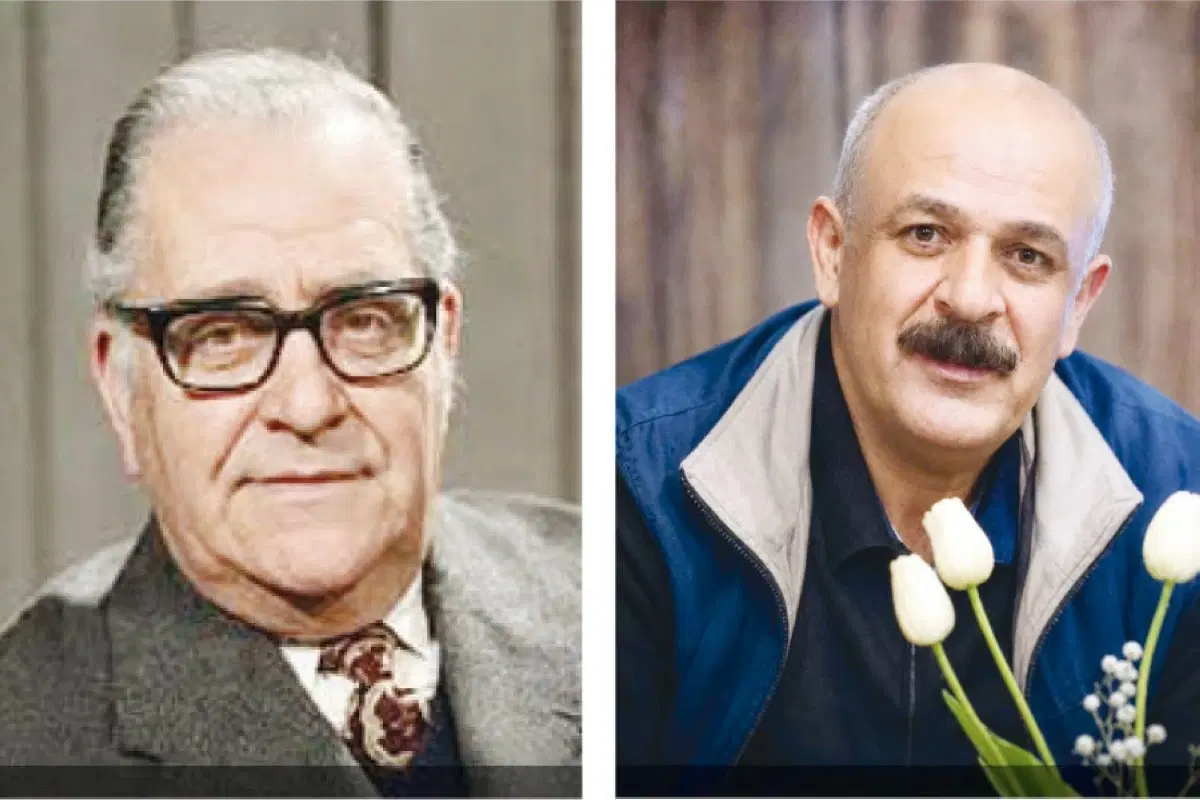
Mahmoud Saif Al-Din Al-Irani was one of those writers who were not content with merely passing through society, but rather left something of its shadow on paper. He wrote stories, literary and social essays, worked in education, journalism, and culture, and at various stages of his life served as editor-in-chief of (Risalat Al-Urdun) and (Afaq). He experienced Amman from within its institutions, its people, and its gatherings. That is why some of his texts today read like small windows opened in the wall of time; looking through them, we see not only major events, but the appearance of the people, the way they spoke, what they wore, how they sat, and what they said when they thought no one was recording anything.
Among those images, he left us in (The Last Bullet) an unforgettable scene. Men in hotels, suits always well-tailored, ties expensive, hair styled, and cigarettes puffing grand words into the air. The setback, the disaster, the shock, history, the future. And in the background, a man carrying a tray, returning every time with empty glasses. Al-Irani did not say: These are the intellectuals, nor did he pass judgment on culture. He did something more eloquent; he left appearance on one side, and the empty glass on the other, and moved on. Since that time, many things have changed, but as for the glass, I am not sure it has ever been filled.
In the Iranian era, culture had a different form. Professors, teachers, writers, and educated men all approached, to varying degrees, a single image: a neat suit, a tie, a white shirt, polished shoes, and hair that knew its place upon the head. Elegance was not an accusation back then; rather, it was a part of modernity. The teacher would enter the classroom as if carrying in his suit a small promise that the world could become more orderly than it was outside the door. And the intellectual, if he wanted to distinguish himself from the people, did so through an exaggeration of neatness.
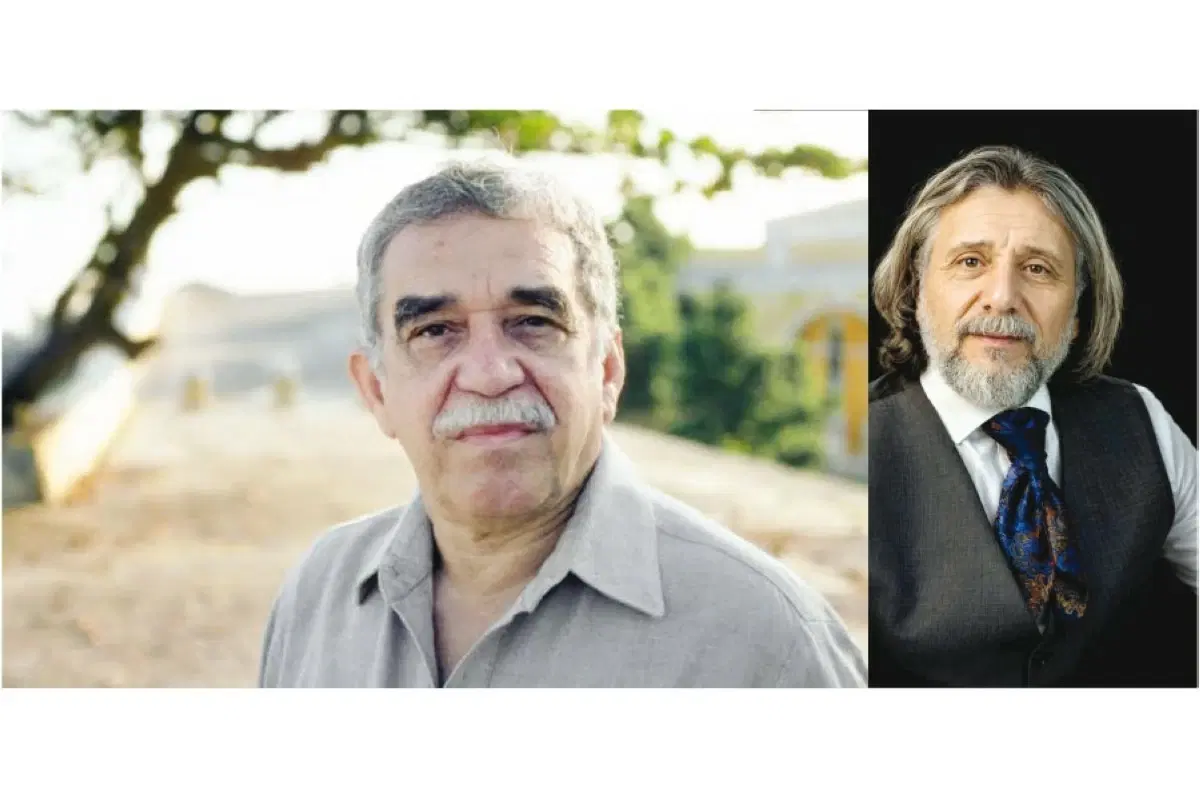
Then something amusing happened. The days made a full circle, and we reached the other shore. The intellectual who today wears a full suit, a tie, and excessively shiny shoes runs the risk of being mistaken for a bank manager, a protocol officer, or a businessman who lost his way to a poetry reading. As for culture, it has chosen different attire for itself. Strangeness sometimes has a share of certification: a bit of chaos in the hair, a touch of indifference in the clothes, a piece that does not quite belong to the season, a hat that requires a different climate, an untimely scarf, and hair that looks as if it woke up before its owner and decided not to wait for him. Even its whiteness can become part of the scene, as if wisdom must be visible from the back of the hall.
In the past, the intellectual dressed up to stand out; today, he might neglect his elegance to stand out. The code has changed, but the need for the code has not. It is as if culture in our lands still fears passing by without an identity card, and as if it must wear something on the head, neck, or face that tells people, before they hear a single word: An intellectual is here.
Decades ago in Beirut, the scene was much noisier. The city was a mecca for Arab ideas and their contradictions. The Iraqi would arrive with a party in his bag, the Palestinian with a homeland in his chest, the Kurdish with a project in his head, along with the nationalist, the communist, the Baathist, the leftist, the rightist, and the internationalist—each convinced to some degree that he carried the key to tomorrow in his pocket. They would meet in an apartment, a hotel, or a café, and then set about fixing the world.
The debate would stretch until dawn; governments would fall at the table, revolutions would rise, the bourgeoisie would collapse, the workers would triumph, Palestine would be liberated, and then morning would break and everyone would sleep. And after waking up, the great call would begin: Oh people, wake up. And a person—not yet twenty and working with his father in stone masonry—could see the irony without needing to read Hegel: Perhaps it would be wiser for us to wake up first.
The problem was not in staying up late, nor in long hair, nor even in the chaos; a person is free to wear his head however he pleases. The problem begins when these things turn into proof of depth, when a lifestyle becomes a cultural certificate, and when it seems the intellectual must not live as ordinary people live because ordinariness itself has become a threat to his prestige. He does not sleep as they sleep, nor dress as they dress, nor speak as they speak, nor enter a place as they enter it. Even silence must have its own special silence, and a cigarette is not quite just a cigarette; it is, sometimes, part of the biography.
Here Ghassan Kanafani comes to mind—not to judge his appearance, but to understand the difference between the image created by the work, and the work the image tries to create. Ghassan had an overwhelming presence; a face recognizable from a distant photograph, and a way of sitting, smoking, and writing that, after his departure, turned into part of his icon. Many imitated him; they imitated the cigarette, the posture, and that famous pose while writing with his head resting on his hand. Admiration for him might even reach the point of a man naming his son Ghassan.
Yet those who imitated Ghassan's appearance could not imitate what gave that appearance its meaning. Because Ghassan did not start with the image; he wrote first, he worked first, he paid with his life first, and in a few years he left enough for his name to outlive his body. It was not the cigarette that made Ghassan Kanafani; rather, Ghassan Kanafani was the one who made the cigarette in his image worth imitating. There is a vast distance between your work making your icon, and your icon making you wait for the work to arrive. Ghassan departed early, and the question remained open as to how far his project might have extended had he lived longer, but what he left behind is enough to say something simple: culture does not need to announce itself when its impact is present.
Perhaps the problem began when culture shifted from being knowledge to being status, and when status began to require distance. Some intellectuals became no longer content with simply knowing more; they needed others to feel that they knew more. From here begins that small distance between the intellectual and the people, and then it grows. He sends you his text and waits for you to read it, talks to you about his book and waits for your opinion, and asks for your attention, taking it as if it were a natural right. And when your turn comes, the miracle happens: he suddenly discovers the value of self-reliance, grants you wisdom, and reminds you that a person must carve out his own path.
That wisdom may be entirely correct, for truth itself can sometimes serve as an apology. How many times has a humble person asked someone older and wiser to show him the beginning of the road, only to be told that the most beautiful roads are those we discover for ourselves? And how many times was that phrase a great lesson, and how many times was it merely a polite way for no one to rise from their chair? Not every refusal is selfishness, but some people have learned how to dress refusal in the garb of wisdom. Here culture becomes very useful; instead of saying: "I don't want to help you," you can say a phrase about independence, and instead of saying: "I don't have time for you," you can lecture the other at length on the necessity of self-made success. Thus, you not only refuse to help, but you also walk away from the situation looking wise.
Yet the real question is not about clothing, nor staying up late, nor the cigarette, nor the tie. The question is much harsher: What has culture done to the intellectual? After all these books, has he become a better listener? After all this poetry, has his heart softened a little? After his lengthy talk about justice, has he become more just toward the person closest to him? After defending freedom, has he been able to tolerate someone who disagrees with him? After writing about the poor, has he learned to respect the worker rather than turn him into a metaphor? And after speaking about humanity, is there anyone left in his home who feels he truly knows humanity?
For family is also a cultural test, work is a test, money is a test, minor authority is a test, and fame is a test. It can be very easy to love humanity; humanity is a vast concept that does not ask you to wash a dish. What is harder is to love a specific human being: to be patient with him, to give him your time, to listen to a story whose ending you already know, and to help him without any personal gain in return. There are those who can weep over the fate of humanity in a poem, yet grow annoyed with someone living under the same roof because his voice is slightly raised. And here the glass begins to empty once again.
The Arab intellectual is not on trial here, nor is this article a court of law. Out of this culture came those who paid with their lives for an idea, those who preserved memory when others wanted it to be lost, translators, teachers, resistors, those who remained poor because they refused to sell their word rather than because they loved playing the role of the impoverished, and those who lived among people to the point where you could not tell from their appearance that they carried an entire library in their head.
Yet the question opened by Mahmoud Saif Al-Din Al-Irani, without writing it in these exact words, remains worthy of our pause: What lies behind the facade? After long decades, the suit changed, the tie fell away, hair grew long, scarves appeared, cafes changed, the bar became a platform, the platform became a screen, and the empty glass took on much newer forms. But the test of culture remained old and simple.
To strip a person of everything that signifies him: his title, his picture, his books, his follower count, the scarf, the tie, the cigarette, the panel chair, his name printed on the cover; and then leave him alone facing another human being who does not know who he is. What will remain? Perhaps this is the question worthy of a full century of culture: not what the intellectual wears, nor what he has read, nor how many times he said the word "awareness," but what happens to a person when culture truly inhabits him? Does he become elevated above the people? Or closer to them?
And perhaps the entire difference between culture and the costume of culture needs no more than this: for culture to be a window through which we see people more clearly, rather than a mirror before which we stand for a long time, infatuated with ourselves.