One of the strongest convictions I have reached is that my luck is stubborn and that I get nothing except with extreme difficulty. Because of the multitude of social media celebrities and television and radio pundits, I have always felt that I am among the few who suffer from this. Nevertheless, among the ironic paradoxes I commit in moments of absent-mindedness, bypassing my stubborn luck, are my occasional gambles on buying a lottery ticket, saving in a prize account, or competing for a "car" prize by buying a bag of chips. One of the bitter facts is the number of times I participated in literary prizes and did not succeed.
"Well... prizes are not for me." This is what the voice of the ego whispers, insisting that it is special and that something great awaits it. There is someone hidden among the recesses of my mind, away from the control of my self, broadcasting its hallucinations from time to time. Sometimes it takes control, and so I follow it, gambling and betting on my sleeping good luck. After the disappointment, I return to lie on the ground, reconcile with humility, and mold a deep understanding of the meaning of life and asceticism regarding its charms.
• Great, a Victim, and Nothing
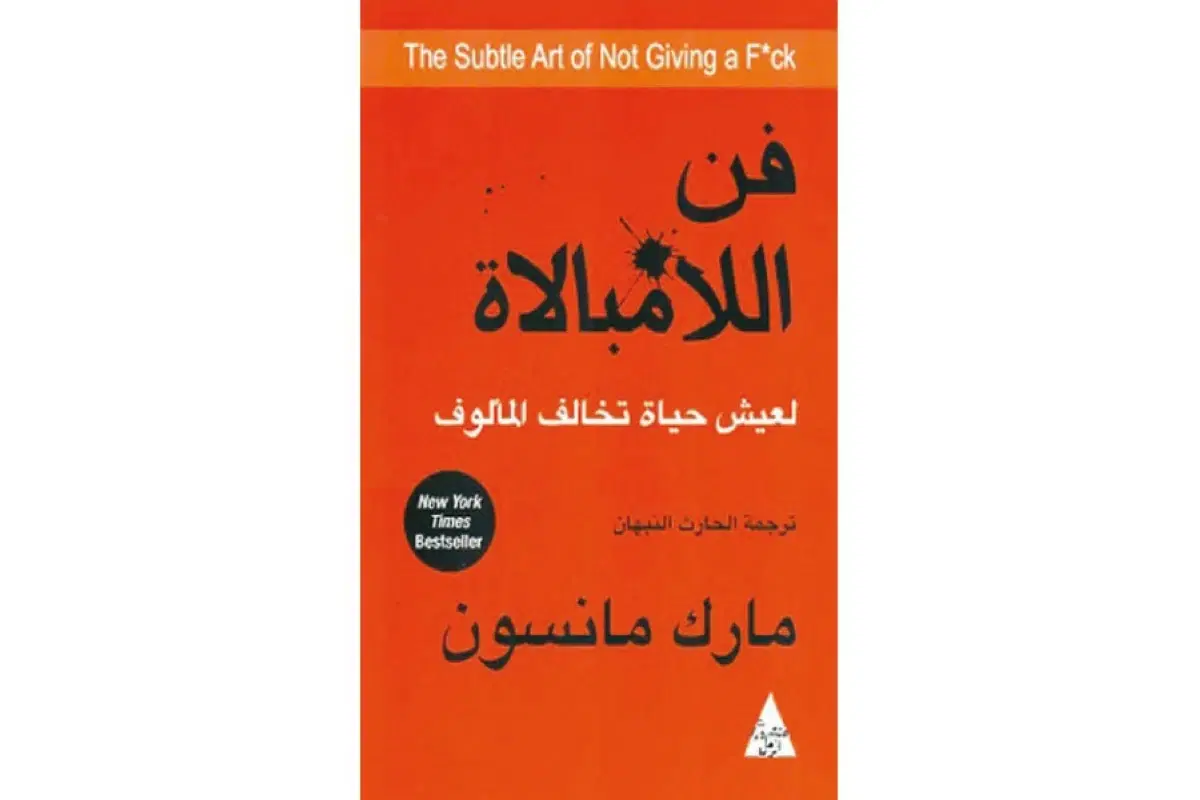
The candor of the author of "The Subtle Art of Not Giving a F*ck" enables him to delve into the depths of his reader, revealing flaws, reconciling with feelings of sadness and anger and everything that stirs the soul. He confronts problems and does not try to bury them; rather, he defies them with lightness and nonchalance. The cornerstone of his book "The Subtle Art of Not Giving a F*ck" is his abstract definition of greatness. In his view, it is the magical, false psychological paradise. It is generated in minds—illusions upon illusions—stealing years of life in pursuit of them, and reality will not be long in revealing its mirage as revenge for ignoring it all those years.
Author Mark Manson believes that the general public falls into specific categories distributed along a bell curve: at its upper end are the peerless, exceptional great ones, and at its lower end fall the victims. In our current era—the age of platforms, numerous pundits, self-development guides, and energy coaches—people have begun distributing themselves beneath the curve, either with the illusion of possessing the qualifications of greatness and distinction, or by wearing the mantle of the victim that was the obstacle to achieving greatness. A person may fluctuate between the two ends due to their current circumstances, and whichever one imposes itself as they see it—not as evaluated by the results of their actions and choices—every person positioned under either end adopts a sense of entitlement. Either they are an unmatched great one who is entitled to what others are not in all material and moral aspects of life, such as veneration and appreciation, or a victim who compels everyone around her to show consideration and kindness toward her without grudging or weariness. But what about the middle? That is, the ordinary ones? Here you must read calmly. Among the remaining ones are those lost in the bustle of success stories—whether in solving a complex mathematical equation or sweeping the fame of triviality—so they felt they were nothing important in this world and that they had to feed one of the two ends of the curve: either through veneration to feel connected, even by a thin thread, to those great ones, which only leads them further astray; or through negative, misplaced giving to ward off feelings of exclusion or shortcoming.
To ensure that you do not fall under any of these categories, the author advises you to abandon false self-confidence and realize that the pain of honest confrontation is what generates the greatest self-confidence and generates your self-respect. To realize your self, you must peel away the layers with which you have covered it over the years and be certain that the pain that will afflict you from confronting your flaws and enduring in suffering is a thread from the fabric of life, and that pulling it out will destroy the entire fabric. All you have to do is learn the art of smart nonchalance and how to choose what is worth suffering for in this life. As Nietzsche said, "He who has a why to live can bear almost any how."
• Good Values, Good Problems
"The desire for more positive experiences is itself a negative experience. And, paradoxically, the acceptance of one's negative experience is itself a positive experience." (From the book "The Subtle Art of Not Giving a F*ck").
The author reviews true stories through which he illustrates the link between values (what matters to you), metrics (the standard by which you measure your success), and the nature of problems. If your value is pleasure, then who better to answer you than a drug addict about where this pleasure led him, or the pleasure of eating, staying up late, and other superficial, instinctual pleasures whose achievement is easy and whose disappearance is rapid? If material values—such as possessing the wealth of Qarun or a luxury car—supersede family and human values and are not balanced by behavior-regulating values like honesty, integrity, and humility, you will end up declaring your misery just like the richest man in the world. If measuring your success is tied to competition and your bet is outperforming the success of others, you will always find yourself in a slippery slope race; the closer you get, the more your breath cuts out and you slip a second after holding onto it if you achieve it, and you return to carve your path toward it until years and all other true values that would have filled your days and memory with family and human moments imbued with tranquility and permanent satisfaction are lost from you.
• The Philosophy of Nonchalance
The author's philosophy was imbibed from multiple sources, and Stoic philosophy stood out when he explained the fallacy of responsibility and blame. No human being possesses the ability to control what befalls them, but they bear responsibility for their reaction and response to their affliction. He likens the stations of life to a card game, where the winning cards vary in their rounds among all players, and the decisive difference in the end depends on the player's ability to make decisions and take appropriate risks in each round. The pillar of this philosophy is defining personal values and understanding the extent to which the nature of the problems that life will throw before you is linked with the nature of the values you have chosen for yourself. Therefore, make sure they are values whose nobility heaven and earth agree upon, and be certain that reaching perfection is impossible. All you can do is stop repeating today's mistakes tomorrow, become less wrong, and face problems with an agile approach that cares only about what is important to values, enabling you to rise after every setback and cross through all crises—an approach that takes failure as steps you climb toward the true values that warm your deathbed.