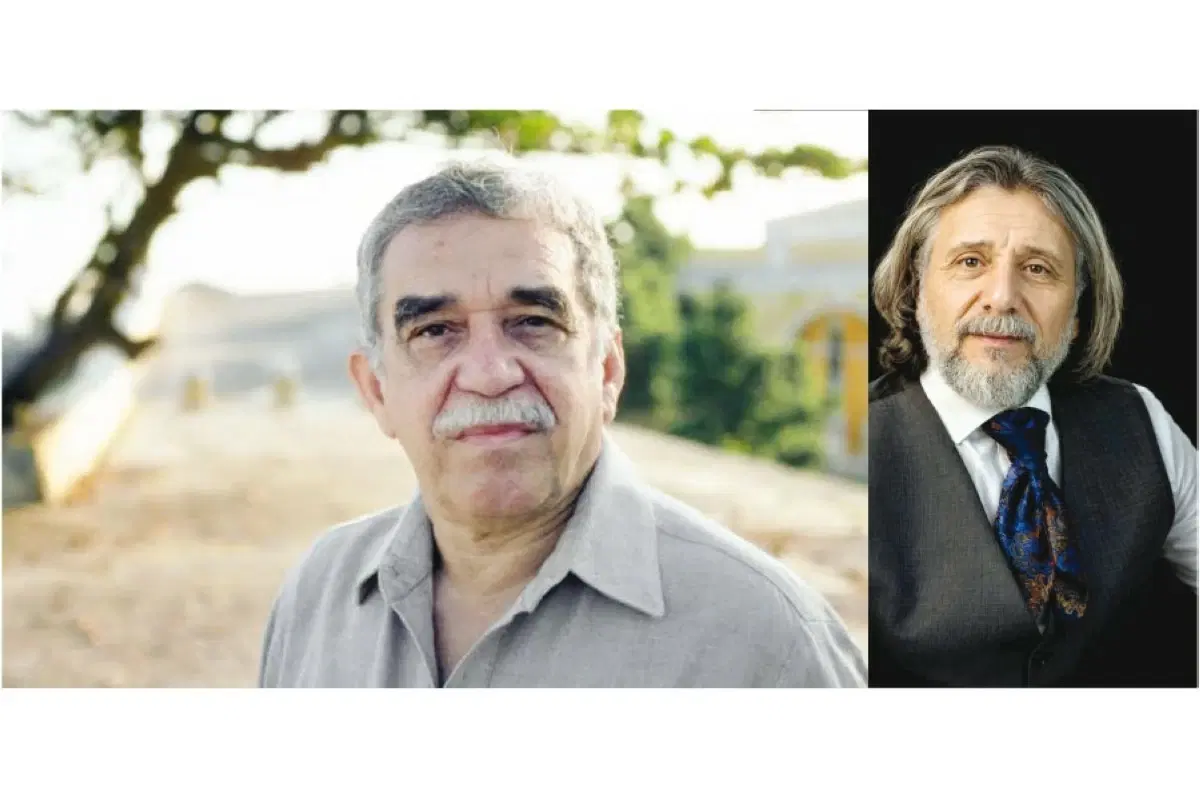
And after about three decades of Marquez’s famous speech about journalism entitled "The Best Profession in the World" before the 52nd General Assembly of the Inter American Press Association in Los Angeles, USA, on October 7, 1996, the issue is no longer the entry of the computer into the newsroom. The newsroom itself has become inside the computer, and here invoking Marquez becomes necessary.
• The news that arrives first and the news that arrives at the truth
One of Marquez's most important ideas in journalism is his rejection of the sacralization of the scoop. A good news story, in his view, is not necessarily the one that arrives first, but the one that arrives best. We find that behind this idea lies a complete philosophy of the profession. Journalism is not just a time race, because shortening time may mean shortening verification, context, and understanding.
Yet what used to be a race between two newspapers has today become a race between humans and algorithms.
The minute is no longer considered the yardstick for the unit of journalistic speed. Even the second has become a long time. When an incident occurs, a camera captures it, a platform uploads it, accounts copy it, recommendation algorithms redistribute it, and then artificial intelligence systems step in to summarize it, rephrase it, translate it, and create dozens of headlines out of it before the journalist on the scene can even understand what happened.
Here, a very dangerous inversion arises. The news no longer waits for the journalist to become news. It has become capable of circulating without him.
• When speed became power
In classical journalism, a scoop granted an institution professional privilege. In the digital environment, however, a scoop grants content algorithmic privilege. What arrives early gets engagement, what gets engagement attracts the audience's attention, what attracts the audience's attention attracts the attention of the platform—which relies on the attention economy—and gets more distribution, and what gets more distribution gradually begins to acquire the guise of truth.
Thus, speed is no longer merely a journalistic value, but has transformed into a mechanism for producing cognitive power.
• The algorithm doesn't like to wait
Verification is slow, context is slow, returning to documents is slow, contacting sources is slow, and comparing accounts is slow. As for the shocking image, the sharp headline, and the truncated information, they are fast, reproducible, and replicable.
From here begins the new dilemma for journalism.
How can a profession whose essence is based on verification survive within a system that rewards speed over verification?
• From the newsroom to the algorithmic room
Marquez was deeply attached to the old newsroom. His nostalgia was not for desks, paper, and the noise of machines, but for a complete cognitive structure. The young journalist learned from the editor, the editor argued with the editor-in-chief, the proofreader discovered the mistake, the colleague asked about the source, and the daily debate turned into a school that does not grant certificates but makes journalists.
The newsroom was a collective memory, whereas the algorithmic newsroom has no memory in the human sense.
It is a network of performance indicators, real-time analytics, trending topics, click rates, viewing duration, engagement rates, and recommendation systems. The only dominant question in the algorithmic newsroom is
Will people engage with this news? It no longer cares about the question of how important this news is.
Here, a silent shift occurs in the journalist's function. Instead of deciding what the public deserves to know, he begins to learn what the platform wants him to deliver to the public. Here, the institution is no longer the sole gatekeeper, but the algorithm has become an invisible guard.
• The journalist writing for the machine
The journalist used to write for the reader, then he began writing for search engines, then for platforms, and then for recommendation systems.
With each transition, something in the language changed. The headline that was supposed to explain became supposed to attract. The intro that used to place the event in its context became required to keep the user inside the page. The image is no longer just a witness to the incident, but a tool to boost the click-through rate. Even the length of the text, the arrangement of words, and the choice of vocabulary became measurable and optimizable. Thus, a third party entered between the journalist and the reader.
A party that does not read the news because they want to know the truth, but measures it because they want to predict behavior.
Here, the problem is no longer just that the algorithm chooses the news, but that it indirectly reshapes the way news is written to make it more spreadable within it.
• The artificial intelligence phase
With generative artificial intelligence, the issue moved from one level to another. The machine no longer just distributes what the journalist writes, but has become capable of writing. For example, it can summarize a press conference, generate a headline, translate a report, turn a press release into news, suggest questions, compare documents, and rephrase text within seconds.
Here emerges the question that was not posed with such sharpness in Marquez's time
If the machine can do an increasing part of the journalist's work, what remains for him?
Here, the answer should not be writing, for the machine writes.
Nor speed, for the machine is faster.
Nor absorbing a huge amount of information, for the machine excels in that as well.
What remains here is the very thing Marquez tried to defend from the beginning: that journalism is a responsibility toward reality.
• The machine's failure
The machine can process a testimony, but it has not witnessed.
It can analyze an image, but it was not there when it was captured.
It can summarize the crying of a mother who lost her son, but it has not sat in front of her.
It can analyze a political speech, but it does not feel the silence of the hall when a sentence is uttered that changes the meaning of the entire speech.
There is knowledge that does not exist in data alone—knowledge born of presence, of the source's gaze when hesitating.
From the question that was not written in the list of questions, from the door that was closed, from the document you were not supposed to see, from the contradiction between what the official says and what the journalist sees with his own eyes. Therefore, the journalist's function does not and will never end when the machine can write; rather, his true function begins to emerge.
• Ethics and the fly's buzzing
Marquez believed that ethics must constantly accompany journalism, like a buzzing sound that never leaves the ear.
This idea becomes even more dangerous in the age of artificial intelligence. For the old mistake emanated from a single journalist and spread within a relatively limited capacity. As for the algorithmic error, it can be copied, translated, reproduced, and recycled thousands of times within minutes. The lie that once needed an institution to spread now needs an account. The image that once needed a photographer has become generable. The voice that was once evidence has become reproducible. The video that was once a witness has become manufacturable. Therefore, the crisis has shifted to a radical question: Did the event we are watching actually happen?
• The journalist as resistance to the copy
In a world of rapidly evolving technologies and artificial intelligence, a new function for journalism emerges. It is not about producing more content, for content has become abundant. Nor is it about accessing information, for information surrounds us.
The new mission is to resist the copy. To resist the moment when the image of the event replaces the event itself, and the most widely circulated copy becomes more powerful than the reality that produced it.
For in the algorithmic environment, the event does not remain a single event. It is chopped up, summarized, re-headlined, translated, commented on, quoted from, and turned into images and short clips until dozens of versions of a single occurrence appear. At some point, reaching the original becomes harder than reaching its copies. Right here, the journalist becomes the guardian of the distance between the occurrence and its representation.
• The Marquez we need now
If we read Marquez today, we should not look to him for technical answers to questions he never lived through. He did not know generative artificial intelligence in its current form, he did not experience the current platform economy, and he did not witness any user's ability to produce a convincing artificial image, voice, or video within minutes.
However, the value of his journalistic thought lies elsewhere. He placed the human before the tool, and verification before speed.
Ethics within practice, not outside it. Reality before language. And the journalist facing the event, not just behind the screen.
Thus Marquez paradoxically seems more relevant the more technological journalism becomes. The problem is no longer that technology has entered journalism; the problem is that technology has begun to redefine journalism itself.
• The best profession in the world
Perhaps if Marquez were to rewrite his speech today about the best profession in the world, the most profound question would be how we prevent journalism from losing its humanity inside technology. I am firmly convinced that he would not have addressed the question of how we save journalism from technology, for that is a belated question since technology has become part of journalism and there is no turning back.
Artificial intelligence can produce text today, but it does not bear responsibility for it. An algorithm can select the news, but it does not know why people should know it. And a platform can make an event visible to billions of people, but it cannot guarantee that it is true.
Here, the journalist returns, not as being faster than the machine, nor as being more capable of producing words than it, but as the being who can stand before the world and say:
I was there. I asked. I doubted. I verified. And this is the fact.
Perhaps the upcoming battle for journalism will be between the fact and its copy, and will not be between the newspaper and the platform, nor between the journalist and the content creator, nor even between the human and artificial intelligence.
At that point, the question will be who managed, amidst millions of copies, to return us to the truth, not who wrote the news first.