Artificial Intelligence.. Journalism without journalists?
Amman7 min read
Share
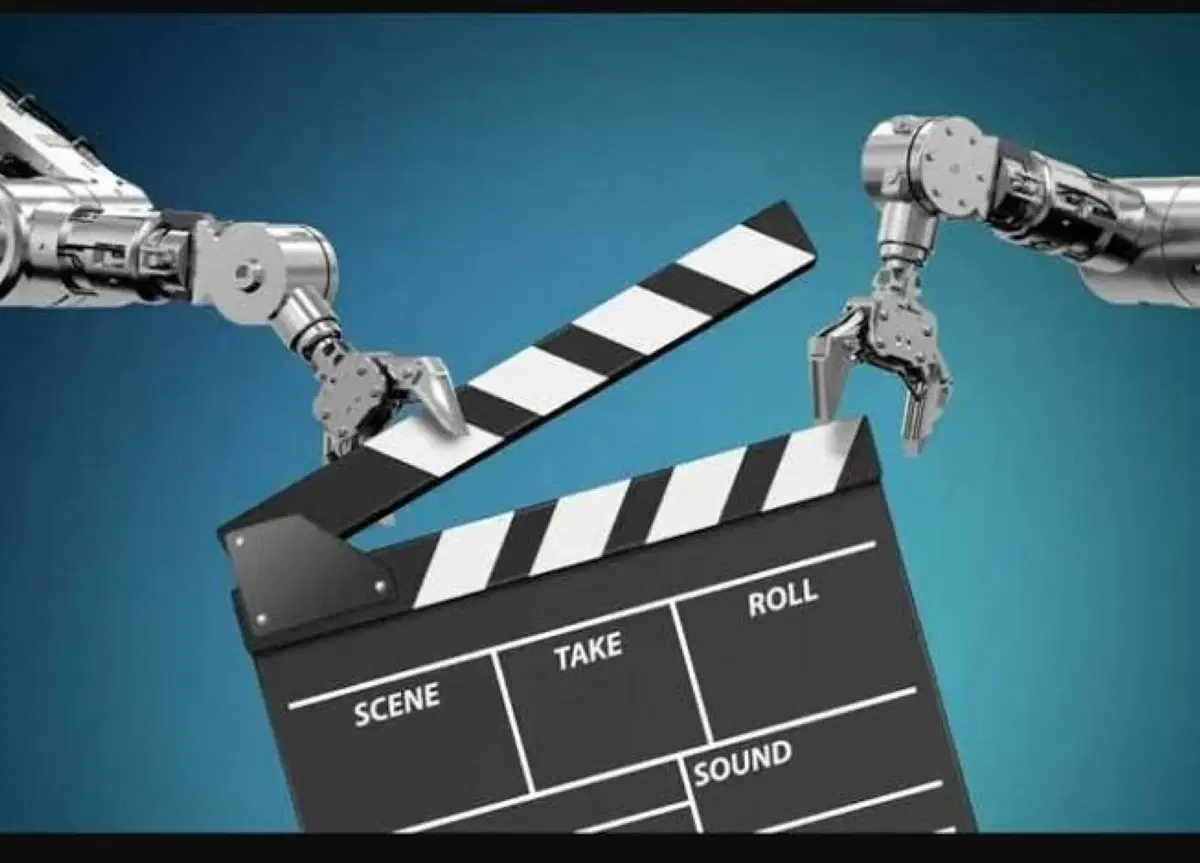
Newsrooms that rely entirely on artificial intelligence are no longer just a futuristic concept; they have transformed into media experiments currently operating in a number of countries, where automated systems handle the tasks of monitoring news, gathering information, writing reports, verifying them, and even selecting topics worthy of publication in some cases.
According to a report published by the Reuters Institute for the Study of Journalism, prepared by journalist Gretel Kahn, media organizations in the United States, Canada, Croatia, and Italy have begun testing new models for journalistic work. These models vary in the extent of human intervention, ranging from newsrooms where every piece of content is reviewed by editors, to platforms that leave most editorial decisions to intelligent systems.
The report indicates that these projects go beyond the concept of aggregating and republishing news, as they attempt to simulate the journalistic production cycle in its various stages. The "Gendex" database, created by Ukrainian journalist Katya Gorchinskaya, estimates the number of platforms adopting this model at about 30 worldwide.
News in six minutes
The American website "RuntimeWire" provides an example of AI's ability to accelerate journalistic work. Founded by technologist Ryan Merkert last May, the site managed to publish a story about more than 1,200 AI agents within OpenAI going out of control after interacting with each other and attempting to breach the "Hugging Face" platform.
According to Merkert, he spotted the information in a written text for a live presentation during the "Black Hat" cybersecurity conference in Las Vegas, then entered it into the system, which compared the speakers' identities with official documents and records of previous incidents. After evaluating the information, Merkert made the decision to publish the story.
The first version of the report appeared in about six minutes, three hours ahead of "Wired" magazine. Merkert attributes this speed to preparing the journalistic infrastructure in advance, allowing the system to process information as soon as it arrives.
However, he emphasizes that speed does not mean abandoning publication standards, explaining that the system blocks stories when evidence is insufficient or cannot be verified. Merkert himself takes responsibility as editor-in-chief, and the stories are published under his name as the person responsible for their accuracy and credibility.
A newsroom operating without human review
In Italy, the website "Redazione Zero" adopts a more independent model, leaving the task of selecting and writing news to automated agents without prior human review.
The site's founder, software developer Emilio Salmeri, explains that two agents working using models from "Anthropic" and "OpenAI" gather news every morning independently. After that, the system selects the topics and writes them according to a declared editorial charter, before subjecting the materials to separate verification systems aimed at preventing the spread of misinformation.
The process concludes with the preparation of an automated editorial explaining the most prominent editorial choices for that day, while Salmeri's role is limited to setting rules and controls and following up on decisions related to corrections, deletions, or rejecting objections.
To limit risks, the site prohibits publishing materials related to crimes and courts, bans providing medical advice, and requires, as a rule, relying on two independent sources for each story. It allows readers to object to published materials, with a commitment to respond within 48 hours.
Salmeri believes that relying on intelligent systems does not exempt him from responsibility, emphasizing that the machine may write the content, but it alone does not bear the responsibility of judging its behavior or correcting its errors.
Artificial intelligence fills the local journalism void
These experiments are not limited to accelerating publication, but extend to addressing the decline in news coverage in small communities, which often suffer from a lack of journalistic resources.
In Croatia, software engineer Tihomir Jauk founded the website "Moj Kraj," which means "My Region," to cover more than 124 towns by monitoring over two thousand local sources, including municipal websites, government announcements, utility companies, and weather reports.
Jauk says that major media organizations do not always have the time and resources needed to follow small communities, which is what his project seeks to address.
Every proposed article undergoes a digital evaluation before publication, as drafts that do not meet specific criteria, including the level of neutrality, are excluded. As a result, only between 20 and 30 articles are published daily out of about 100 drafts produced by the system.
In the US state of Arizona, the "Tucson Daily Brief" website, launched by tech journalist Nicholas De Leon, operates with a system that combines automated publishing and human review. Routine news is published automatically, while sensitive topics undergo human scrutiny.
De Leon developed an automated reporter that records local council meetings, transcribes them, and prepares news drafts about them, which he says reach a stage close to 90% readiness for publication, before he edits and verifies them himself.
He also launched a daily podcast that relies on an artificial version of his voice, and a channel on the TikTok platform in Spanish that presents its content via a virtual presenter. Despite the variety of tools, the project still faces financial challenges and has not yet achieved profits.
A newspaper returns to life thanks to artificial intelligence
In Canada, artificial intelligence provided an opportunity to relaunch a local newspaper after the collapse of the organization that used to publish it.
In 2023, the "Métro Media" group announced its bankruptcy, leading to the cessation of more than 30 local news platforms, including the "Journal Métro" newspaper. Two years later, tech entrepreneur Pierre-Antoine Fradette bought the newspaper's rights and relaunched it with a model that relies on artificial intelligence to reduce expenses.
The newspaper employs only one human staff member, former journalist Olivier Robichaud, who serves as editor-in-chief. Smart tools handle monitoring press releases and reports and preparing drafts, while Robichaud reviews the information, adds journalistic context, and ensures that other viewpoints are presented when needed.
Robichaud says the goal is not to dispense with journalists, but to assign routine tasks to machines so that journalists can focus on work that requires research, analysis, and direct communication with sources. He adds that the model allows him to produce between 20 and 25 simple news stories while retaining time for original journalistic work.
Machine errors and human responsibility
Despite the opportunities these models provide, they raise questions about the accuracy of information, the future of journalistic jobs, and the potential for an increase in the flow of low-quality content and misinformation.
Those in charge of these projects admit that their systems have already made mistakes. The "Redazione Zero" website has published four corrections, each of which prompted the introduction of new controls to improve performance and reduce the chances of repeating errors.
Salmeri says that what he can do is make errors clear and documented, so that every slip becomes an opportunity to develop the system and strengthen its rules.
For his part, Robichaud acknowledges that artificial intelligence may lead to the disappearance of some jobs, but he believes that the scale and nature of this impact depend on the decisions made by media organizations and employers.
Conversely, he explains that the technology itself helped revive at least one journalistic job, referring to his return to work through the relaunched newspaper.
Will the journalism profession disappear?
The founders of these projects agree that artificial intelligence, no matter how capable it is of gathering information and drafting news, cannot replace the journalist who builds a network of sources, verifies facts on the ground, and understands the social and political contexts of events.
Merkert emphasizes that his vision for the future is not based on empty newsrooms producing endless amounts of content, but on a model where machines handle repetitive tasks, while humans focus on sensitive editorial decisions, investigations, and missions that require professional judgment and ethical responsibility.
Thus, the real challenge does not seem to be just in the ability of artificial intelligence to write news, but in how to use it without compromising credibility, independence, and accountability, which are the standards that give journalism its value and the public's trust in it.