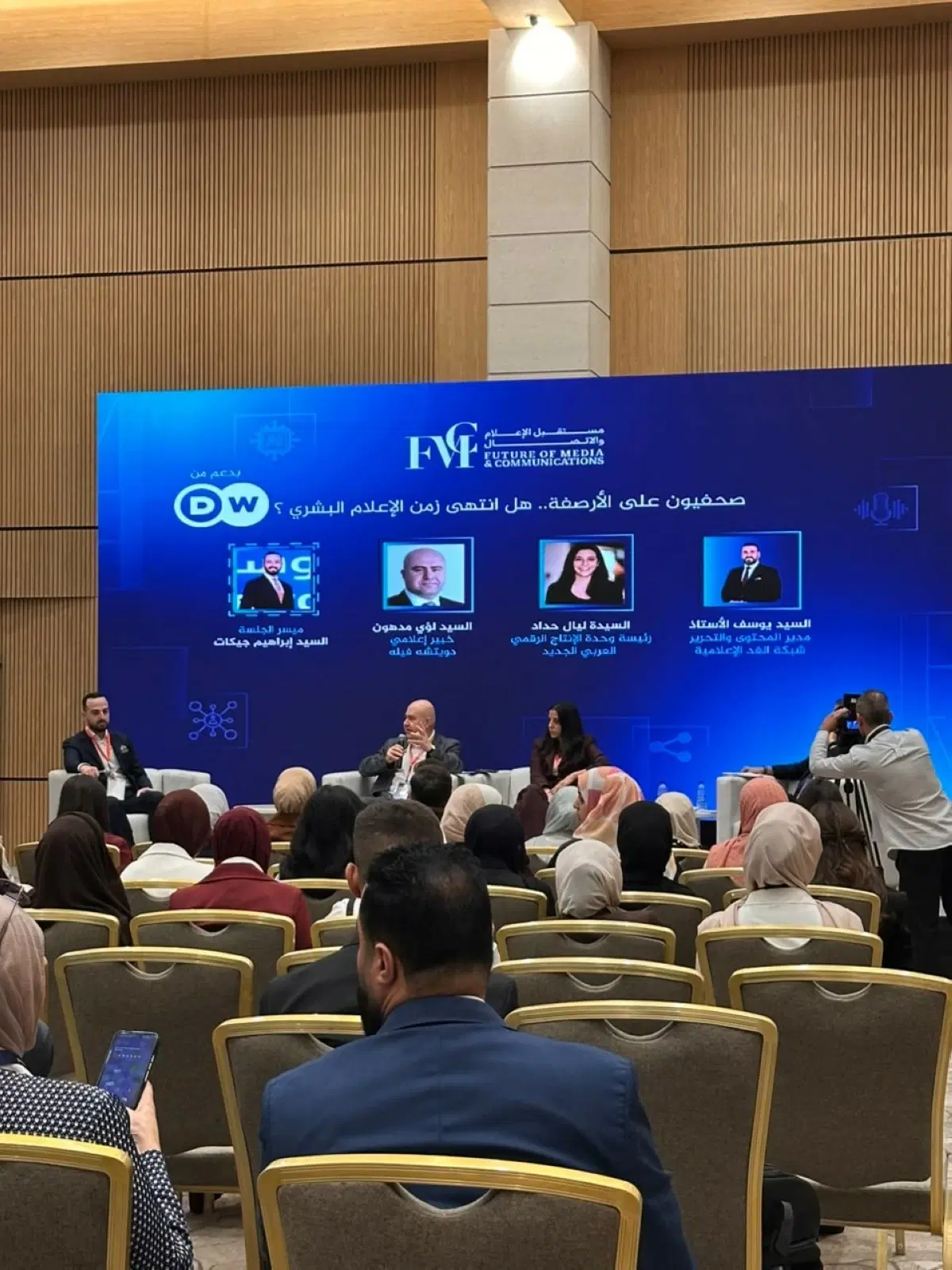
The session highlighted the challenges facing journalists and media institutions in light of the rapid changes in the journalistic work environment, the rise of digital platforms, and the increasing reliance on technical tools in producing and circulating news, alongside questions regarding the future of traditional journalism and its ability to keep pace with new transformations.
The importance of this discussion emerges in light of the changes that have occurred in the relationship between the public and the media, and the growing need for reliable professional content capable of keeping pace with the speed of publishing without compromising the standards of accuracy, verification, and credibility.
The development of artificial intelligence also raises questions about the nature of the relationship between the journalist and technology, the limits of relying on modern tools in gathering information and drafting content, and the extent of their ability to replace the human role of the journalist in understanding contexts, verifying facts, questioning sources, and conveying issues that concern society.
These discussions come at a time when media institutions are facing increasing challenges related to the sustainability of journalistic business models, enhancing public trust, developing professional skills, and keeping pace with digital transformations, to ensure that journalism continues to perform its role in conveying information, interpreting events, and monitoring public affairs.