An Impressionistic, Contemplative Approach to "Epic on the Margin"
Amman4 min read
Share
• From Siduri's Advice to the Margin of History
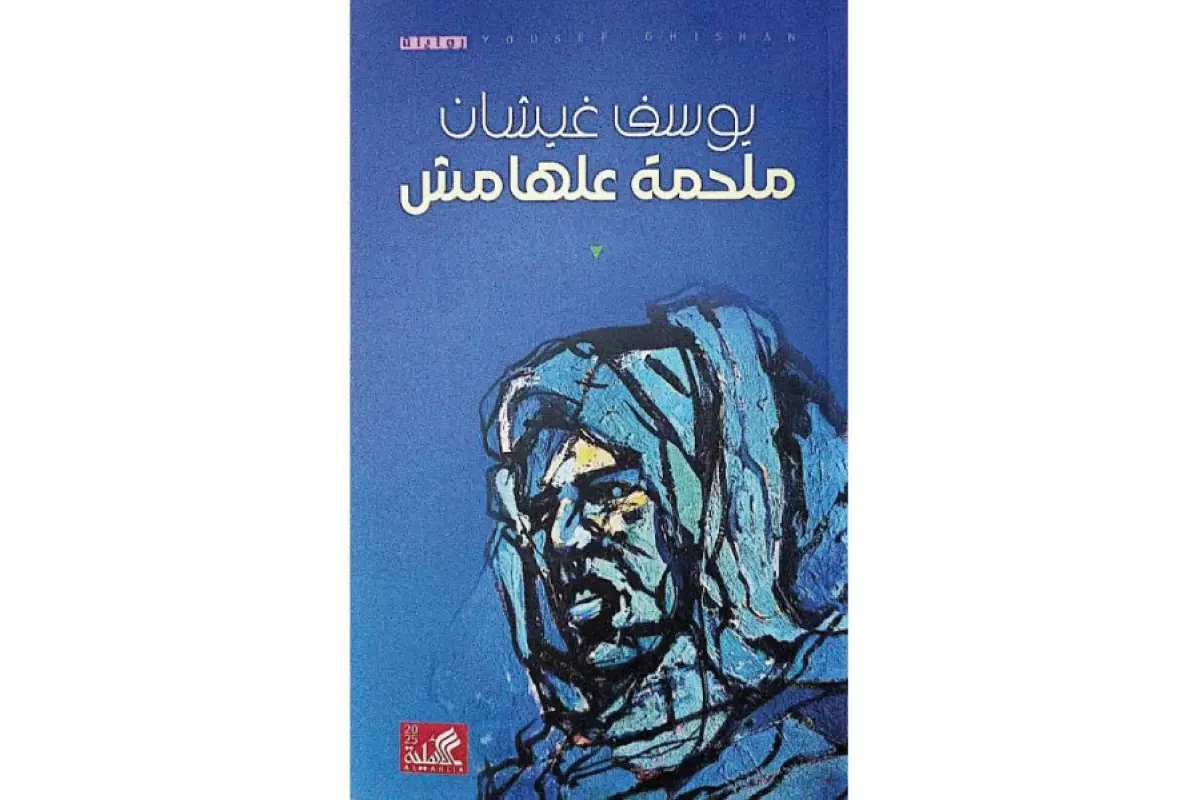
The creative satirical writer Youssef Ghaishan begins his book "Epic on the Margin" with Siduri's advice to Gilgamesh: "Where are you going, Gilgamesh? The life you are looking for you will not find... As for you, fill your belly, and make every day a feast... Pamper your little one, and make your wife happy." This quote is the key to the entire book; the author announces that he will not write the epic of Gilgamesh, but rather a counter-epic: the epic of those who seek not immortality, but a morsel of food, dignity, and a story to be told.
The title alone is a double paradox; "epic" evokes heroism, and "on the margin" shatters this illusion. So whose story deserves to be told: Their Excellencies or the bakers?
• Novel, Memoir, or Autofiction?
Classification here is a fundamental question; the author himself calls them "scribbles" and "a story cycle," and says in the appendix: "I was the teenager who wrote these scribbles."
The text is hybrid: it is a memoir because it relies on the author's memory and country, a novel because it reconstructs this memory with narrative tools, and autofiction because it does not pledge historical accuracy.
The use of "tablets" instead of "chapters" gives it epic legitimacy, but turns it on its head; the tablets become about a small town, a mansaf, a funeral, and a child searching for a carrot.
Non-linear construction is a simulation of memory itself; we do not remember in chronological order, but through scenes and sounds.
The margin speaks: from the individual hero to the popular collective.
The margin speaks: from the individual hero to the popular collective.
There is no single hero, but an entire community: Katerina the Calligrapher, Atef "Qursh al-Damdam," Faraj the Italian, Abu Sabah, the genies of Garouda, Ais, Abu al-Haya, and Rami "the neighborhood madman."
This collective is the true hero; each character carries a part of the story, and each story adds a layer to the epic. This structure reminds us of "One Thousand and One Nights" rather than the "Iliad": an entire city telling itself.
The author writes about people who do not appear in history books: the peasant, the shoemaker, the baker, the woman, the child, the detainee, the immigrant, and the madman. This is a moral choice: to give voice to the voiceless.
• The Economics of Survival
Poverty is a primary character in the book. It is present in the wretched father's shop, in the "shilling" for which a child is beaten, in the "chicken thighs" that a child discovers are discarded feet, and in the daily "mujadara."
Dignity is the hardest issue; the child is beaten until he loses consciousness, yet he does not back down, and the grandfather refuses compensation from an American friend. Poverty does not negate dignity, but makes it more fragile and important.
• Women facing oblivion
Women are the makers of life: they bake, cook, give birth, and are buried. But they are also the makers of the story: Katrin the calligrapher reads fortunes, Katrin the spinster divides the room with chalk, Shafiqa endures her husband unto death, and Nada lies to the soldier to protect her fedayee neighbor.
The most telling scene: the mother who swears solemn oaths to protect her neighbor, then we see her at night praying before the Virgin Mary asking for forgiveness because she lied. The woman here is neither a saint nor a sinner, but a human being in a gray area. Women confront oblivion through storytelling; they preserve tales and pass them on.
Laughter is a weapon
A single thread connects all the stories: dark humor.
The scene of Katrin's husband who dies because he refused plain halva and insisted on the "stuffed" one: a funny and tragic scene. And the scene of the frozen chicken used to hit Zarifa: a funny and painful scene.
This is the humor of oppression; the humor of those who own nothing except laughter. The language blends narrative Modern Standard Arabic with Jordanian colloquialism in the dialogues; the Standard Arabic grants epic dignity, while the colloquial grants life and populism. This blending creates a fertile tension, although some vocabulary items may need dictionary and lexical explanation for non-Jordanians.