Egyptian: Smart traffic signals to be operational in Irbid by mid-November
Amman6 min read
Share
Al-Khatib: Sensors and cameras to automatically regulate traffic without human intervention at 36 intersections
Deputy Prime Minister and Minister of Local Administration, Engineer Walid Al-Masri, announced that the operation of smart traffic signals will begin at three main intersections in Irbid city: the Culture intersection, the Barda intersection, and the Darawisha intersection on the 15th of November. Subsequently, 36 traffic lights and intersections will be connected to smart systems and the main control center, which is being constructed within the building of the Greater Irbid Municipality.
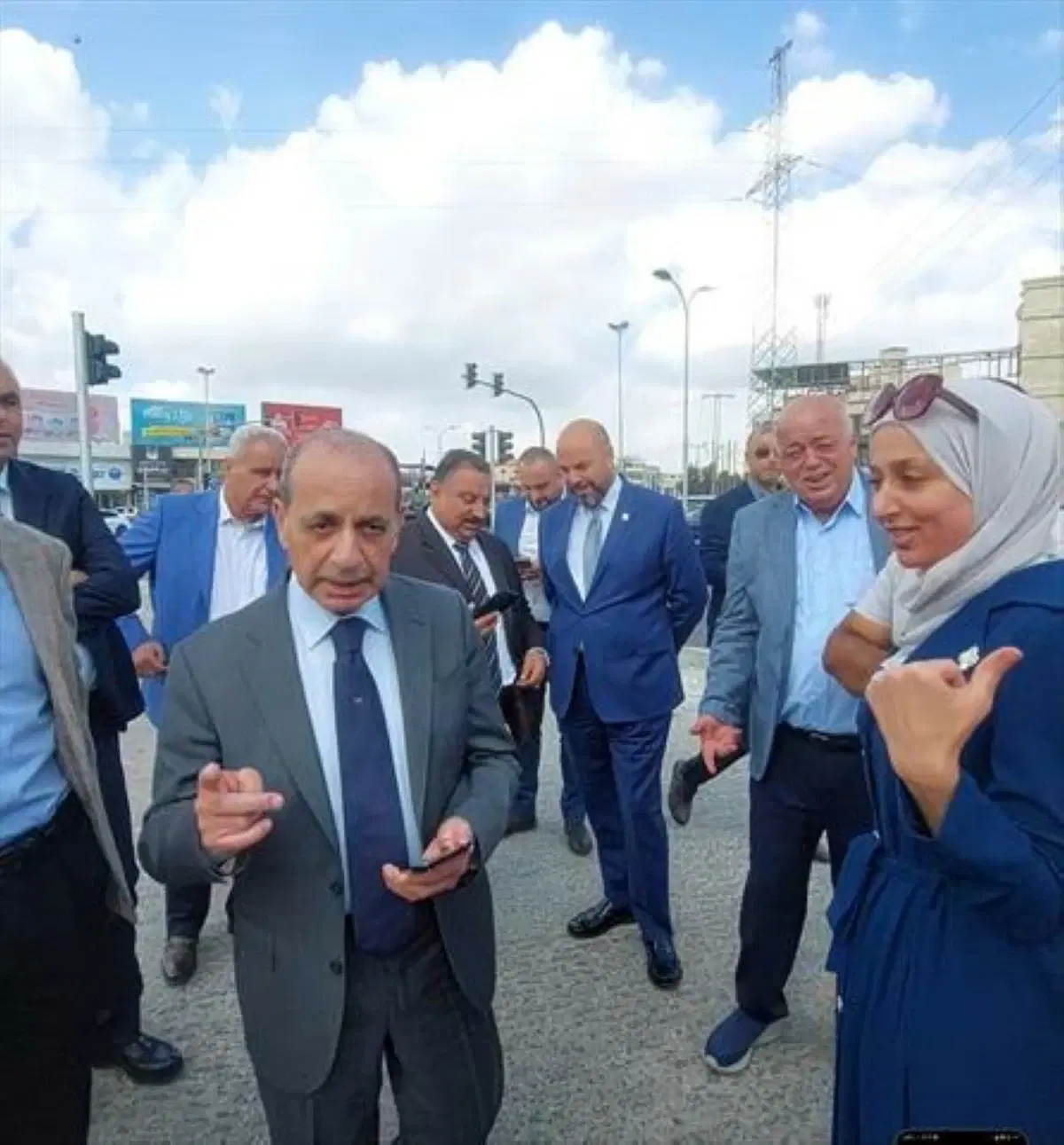
During the launch of the smart traffic signals project, attended by Irbid Governor Firas Abu Al-Ghunim, Greater Irbid Municipality Committee Chairman Imad Al-Azzam, Irbid Police Commander Colonel Muhammad Al-Abadi, and the project's donor, Engineer Abdul Rahman Al-Khatib, Al-Masri requested that all intersections and signals linked to the project be completed before the upcoming Eid Al-Fitr, emphasizing the importance of accelerating the pace of work and completing the project for its impact on serving citizens and enhancing traffic safety and facilitating movement within the city.
Al-Masri expressed his hope that the project would achieve the desired success, noting that Irbid Governorate is home to about one million people, with about 800,000 people entering it daily from neighboring governorates, which necessitates the transition to smart traffic solutions capable of handling traffic density and serving citizens.
He stressed the importance of the project including an integrated cybersecurity system to protect smart systems from any hacking attempts, while praising the role of Jordanian engineer Abdul Rahman Al-Khatib, who donated the project and oversees its implementation, noting that the value of the donation exceeded one and a half million dinars in equipment and smart systems.
Al-Masri requested that the traffic light at the Yarmouk University intersection be provided with dedicated services for people with disabilities, especially the blind and those with mobility impairments, given the heavy movement of students in the area, emphasizing the importance of the new traffic infrastructure being more comprehensive and suitable for all road users.
He said that the success of the smart traffic signals project in Irbid would open the way for its expansion in the future and its extension to other governorates and cities, contributing to the development of the transportation and traffic system in the Kingdom.
For his part, Greater Irbid Municipality Committee Chairman Imad Al-Azzam said that the municipality would take additional traffic measures extending from the intersection area to the Naseem signals, with the implementation of an emergency escape route and a solution for the square in Al-Petra Street, as part of the integrated traffic work system of the project, to ensure that the traffic crisis is not transferred from one location to another.
Al-Azzam stressed that connecting the 36 signals within a single system would make traffic movement more organized by creating an integrated system in which the timings and operation of the signals are compatible with each other, which helps reduce stops and congestion and improve the efficiency of the road network in the area.
Al-Azzam confirmed that the municipality relies heavily on this project to find a permanent and radical solution to the problem of the Culture Square, which is one of the most notorious traffic black spots and worries the municipality due to the daily density, congestion, and disruptions that occur in the area. This project is considered the largest on the traffic scale that the municipality is implementing in an integrated manner to alleviate traffic congestion and enhance traffic safety.
In turn, the Jordanian engineer who donated the project, Abdul Rahman Al-Khatib, who works in Qatar and is an expert in the traffic field and has implemented a number of traffic projects there, explained that the project includes the installation of smart sensors on the 36 signals covered by it, in addition to cameras on the traffic light poles.
He explained that the signals will operate automatically and without direct human intervention by monitoring traffic density at intersections and analyzing it, and then increasing the duration of the signal opening electronically in the direction that witnesses traffic density and congestion to ensure smooth traffic movement.
He added that work on the main control center within the Greater Irbid Municipality building has begun, noting that the center will allow intervention when needed to adjust the signals and increase their opening duration, but all smart signals within the project will operate primarily according to an electronic and automatic smart system based on ground smart sensors and cameras at each signal.
Al-Khatib pointed out that the first phase of the project includes three intersections: Culture, Barda, and Darawisha, which will be operated by the smart system on the 15th of November, and the rest of the signals will be gradually included in the project after completing the infrastructure work and installing sensors and cameras.
He explained that the system used is capable of connecting about 250 intersections and traffic lights, allowing for future expansion of the system and connecting a larger number of intersections within one control center.
He said that the idea of the project began during his passage through the Culture intersection, where it took about 28 minutes to cross the intersection at the time, which prompted him to conduct a study and develop a traffic solution aimed at reducing the duration of passage during the same crisis to about 8 minutes.
He added that the idea began with a comprehensive study of three intersections and then expanded to include 15 intersections and traffic lights before the project expanded to include 36 signals, noting that the company he works with has implemented traffic projects in several countries that included about 1,700 intersections.
Al-Khatib confirmed that all infrastructure work in the project is being carried out by the Greater Irbid Municipality through its cadres, mechanisms, and expertise, while his role as a donor is limited to supervising the implementation, providing equipment and smart systems, and training municipality employees to manage the project independently in the future.
The Director of Implementation and Maintenance at the Greater Irbid Municipality, Engineer Tahani Al-Hazzaime, reviewed the procedures that began on the 1st of July to convert the Culture Square into an intersection with a traffic light based on the severe traffic congestion that the site was experiencing.
She explained that designs and studies were prepared, obstacles were removed, and work was carried out on the site without resorting to traffic closures through the municipality's cadres, noting that the completion rate of the Culture intersection works reached about 95 percent, in addition to opening streets within the project's vicinity to contribute to alleviating the traffic crisis.
For his part, Irbid Governor Firas Abu Al-Ghunim confirmed the administrative governance's readiness to cooperate and coordinate with various concerned parties to serve the city of Irbid, noting that the project comes within the framework of the royal directives to provide the best level of services to citizens, pointing to the integrated coordination between various institutions, which reflects positively on the level of services provided to citizens.