Economists: The Throne Speech Reflects the King's Concern for Enhancing the Resilience of the National Economy
Amman11 min read
Share
Economists affirmed that the continuous attention of His Majesty King Abdullah II to the economic modernization vision reflects His Majesty’s concern for enhancing the resilience of the national economy, which will have a tangible impact on economic growth, investment, and the living standards of citizens.
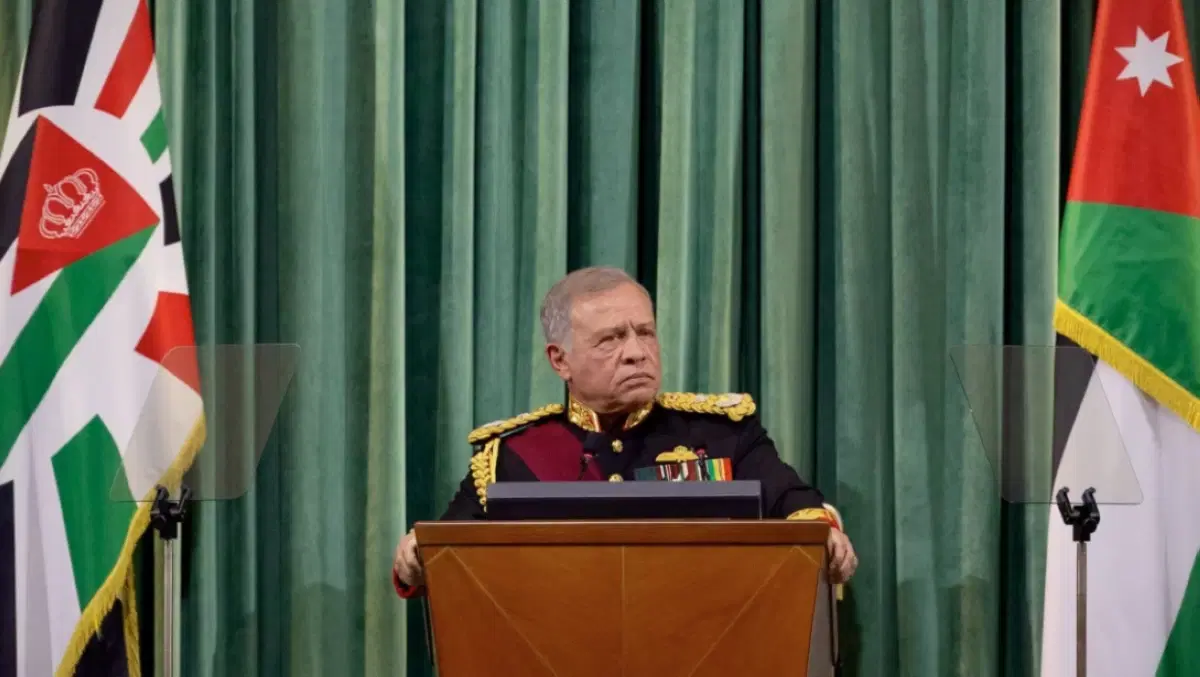
They told the Jordan News Agency (Petra) that the content of the Royal Throne Speech delivered by His Majesty the King during the opening of the third ordinary session of the 20th Parliament reflects a clear strategic vision for linking economic development to improving citizens' lives and enhancing the national economy’s ability to face challenges and seize opportunities.
They also emphasized that accelerating the implementation of the economic modernization vision’s targets, especially those related to investment, industry, exports, and employment, will enhance the productive and competitive capabilities of the national economy and solidify the industrial sector’s role in leading economic growth.
They emphasized that the major projects currently under implementation represent a key pillar for supporting the national economy, requiring accelerated progress, as they serve as drivers of economic growth, infrastructure development, and enhancing Jordan's position as a regional hub for business and investment.
The Chairman of the Chambers of Industry of Jordan and Amman, Engineer Fathi Al-Jgheba, said that the continuous royal attention to the economic modernization vision, and the emphasis in the Throne Speech on continuing the modernization journey and accelerating the completion of major projects, reflects the royal concern for enhancing the resilience of the national economy and accelerating progress across various axes, programs, and initiatives of the vision, which will have a tangible impact on economic growth, investment, and the living standards of citizens.
Al-Jgheba explained that His Majesty the King’s affirmation that true development is measured by the improvement in citizens’ livelihoods, opportunities, and the future of their children embodies the fundamental goal of the economic modernization vision and confirms that economic success is not limited to achieving growth in indicators and figures but extends to the economy’s ability to generate employment opportunities, improve income levels, and expand economic opportunities for Jordanians.
He added that the royal directives emphasize the importance of accelerating the implementation of the economic modernization vision across all its axes and priorities, and transitioning faster from planning to execution by enhancing the investment environment, stimulating productive sectors, raising the competitiveness of the national economy, and expediting the completion of major strategic projects, which will enhance the economy’s ability to achieve sustainable and inclusive growth.
He pointed out that His Majesty the King’s emphasis on Jordan’s pivotal role in the region opens broad prospects for enhancing the Kingdom’s position as a regional hub for industry, production, and exports, benefiting from its strategic location, stability, extensive trade agreements, and the diverse production base and growing export capabilities of Jordanian industry, which qualify it to be a launchpad for industrial investments into regional and global markets.
He stressed that the national industry represents one of the main pillars for achieving the targets of the economic modernization vision, given its contribution of about a quarter of the GDP and its role in providing employment opportunities, generating added value, and enhancing national exports.
He affirmed that accelerating the implementation of the vision’s targets, especially those related to investment, industry, exports, and employment, will enhance the productive and competitive capabilities of the national economy and solidify the industrial sector’s role in leading economic growth.
He explained that the coming phase requires intensifying efforts, enhancing partnership between the public and private sectors, accelerating the implementation of initiatives and economic reforms, and overcoming challenges facing investments, which will contribute to attracting quality industrial investments, expanding export markets, and enhancing Jordan’s integration into regional and global value and supply chains.
Al-Jgheba affirmed that the Jordan Chamber of Industry will continue to work in cooperation with the government and various partners to support the implementation of the economic modernization vision’s targets, enhance the competitiveness of the national industry, and solidify the Kingdom’s position as a regional hub for investment, industry, and exports, which will contribute to transforming economic growth into additional employment and income opportunities and achieving sustainable development whose impact citizens can feel in their daily lives.
For his part, the Chairman of the Jordan Businessmen Association, Ayman Al-Ala’ona, said that the content of His Majesty the King’s Royal Throne Speech reflects a clear strategic vision for linking economic development to improving citizens’ lives and enhancing the national economy’s ability to face challenges and seize opportunities.
Al-Ala’ona said that His Majesty the King’s emphasis on accelerating the completion of major projects represents an important direction towards enhancing productivity and stimulating investment, as these projects serve as drivers of economic growth, contribute to infrastructure development, open new horizons for the private sector, provide employment opportunities, and enhance Jordan’s position as a regional hub for business and investment.
He added that the coming phase requires translating these directives into clear implementation programs, according to specific timelines, while enhancing partnership between the public and private sectors and leveraging local and international expertise and investment capabilities to ensure the achievement of the targeted economic impact.
He pointed out the importance of accompanying major projects with economic, legislative, and procedural reforms that enhance the business environment, facilitate investment activities, and support the expansion of Jordanian companies, especially small and medium-sized enterprises.
He affirmed that the success of these projects is not measured solely by the volume of investments allocated to them but by their ability to create added value for the economy, generate quality job opportunities, and enhance the private sector’s contribution to the GDP.
Regarding water security, Al-Ala’ona explained that His Majesty the King’s emphasis on the priority of this issue reflects a deep understanding of the link between water and economic, food, and investment security, as water is an essential element for the continuity of production activities, industrial and agricultural expansion.
He highlighted the importance of continuing to implement strategic water projects, diversifying water sources, and improving the efficiency of water management to ensure the sustainability of this vital resource and preserve the rights of future generations.
He affirmed that what distinguishes Jordan is its ability to maintain its security and stability despite the tensions and challenges in the region, noting that the Kingdom will remain immune to terrorism and extremism thanks to the cohesion of its internal front, the awareness of its people, the efficiency of its security and military institutions, and the wise leadership of His Majesty the King.
Al-Ala’ona explained that this safe and stable environment represents a strategic advantage for Jordan in attracting investments and enhancing investor confidence, emphasizing that the responsibility of the current phase requires building on these assets and transforming them into sustainable economic and development opportunities.
For his part, economic expert Engineer Musa Al-Sakt affirmed that the ultimate goal of economic modernization is not just achieving numerical growth indicators but translating this growth into a real improvement in citizens’ living standards, providing job opportunities, improving the quality of education and health services, and enhancing purchasing power, noting that this reflects the importance of moving from the concept of economic growth to the concept of inclusive development with a direct impact on society.
He stressed the necessity of accelerating the implementation of major economic projects, as they are strategic drivers of growth in the coming phase, as projects such as the National Carrier, railways, infrastructure development, and energy, transportation, and logistics projects form an integrated system capable of enhancing the competitiveness of the Jordanian economy, attracting investments, and opening new markets for the national industry.
He believed that the royal message sets an important test before the government, embodied in the efficiency of implementation and the speed of execution, noting that any delay in implementing major projects means a delay in investment, employment, and growth opportunities.
In this context, Engineer Al-Sakt emphasized the necessity of making the national industry and the private sector essential partners in these projects to maximize local added value, employ Jordanian labor, and increase reliance on national products and services.
For his part, the Chairman of the European Chamber of Commerce – Jordan, Engineer Muhammad Al-Samadi, said that the Royal Throne Speech affirms that the interest of the citizen is the foundation from which economic decisions and policies must emanate, and that the success of economic modernization is measured by the improvement in the living conditions, job opportunities, and quality of services provided to Jordanians.
He added that His Majesty the King’s emphasis on this approach places a clear responsibility on institutions to translate plans and programs into tangible results, linking development priorities to the needs and aspirations of citizens, which enhances their confidence in the modernization path and its ability to provide a better future for their children.
He explained that His Majesty’s call to expedite the completion of major projects reflects the importance of moving from planning to implementation within clear timelines and addressing obstacles that may delay execution, affirming that every progress in implementing these projects opens the door to new opportunities for investment, employment, and economic activity.
He pointed out that maximizing the economic and developmental return of these projects requires enabling Jordanian companies to participate in their implementation and the associated supply chains, providing opportunities for small and medium-sized institutions, and linking the qualification of young people to the required skills, ensuring that their impact extends to various governorates.
He indicated that commitment to implementation sends a message of confidence to investors and international partners, and enhances Jordan's ability to attract high-quality investments and build upon its pivotal regional position and role, pointing to the importance of leveraging economic relations with European countries to attract expertise, technology, and partnerships that support production and exports and provide sustainable job opportunities.
He explained that the private sector is a key partner in translating royal directives into reality, and that the chamber is committed to enhancing and directing communication between Jordanian and European companies toward practical cooperation and investment opportunities that contribute to achieving economic modernization goals.
Al-Smadi emphasized that the royal message is clear: "Economic strength must be reflected in citizens' lives, and the value of major projects lies in their ability to improve living standards, expand opportunities, and enhance economic security for families."
For his part, Dr. Dheifallah Abu Aqoula, President of the Owners of Clearance and Cargo Transport Companies Association, stressed the importance of the directives included in His Majesty King Abdullah II's speech regarding accelerating economic modernization and implementing major projects, given their impact on boosting growth, investment, and job creation.
Abu Aqoula stated that His Majesty the King's emphasis on placing citizens' interests at the heart of decision-making, and ensuring development is tangible in people's livelihoods, opportunities, and future, reflects the necessity of translating economic plans and programs into results that positively affect citizens and productive sectors.
He noted that the major projects currently underway represent a crucial pillar for supporting the national economy, requiring their accelerated completion according to clear timelines, and strengthening public-private partnerships, thus opening new horizons for investment and job creation.
He affirmed that the Throne speech represents a call to continue working, building, and enhancing national responsibility, stressing that the private sector will continue fulfilling its role in supporting the national economy and contributing to achieving economic modernization goals, serving Jordan and its people and preserving the economy's resilience and sustainability.
For his part, financial and economic expert Dr. Muhammad Al-Hadab Al-Sarhan affirmed that His Majesty the King's emphasis on placing citizens' interests at the core of economic decisions reflects a clear royal vision that economic growth is not an end in itself, but a means to improve living standards, create job opportunities, and enhance basic services.
He explained that Jordan's economy recording 3 percent growth in the second quarter of the current year represents a positive indicator, but the main challenge lies in translating this growth into increased household incomes, expanded youth employment opportunities, and more balanced development across governorates, so that the fruits of economic modernization reach all segments of society.
He pointed out that His Majesty's directive to accelerate the completion of major projects places the government before the responsibility of linking implementation to measurable outcomes, foremost among them newly created jobs, improved services, and economic and social returns, affirming that the success of the economic modernization vision is ultimately measured by the degree of improvement citizens feel in their daily lives and their children's future.
He noted that the royal focus on education, healthcare, and job opportunities confirms the importance of integration between economic and social development, ensuring that new investments and projects are accompanied by youth skills development and improved quality of public services, guaranteeing that economic growth translates into enhanced citizen welfare and reduces developmental gaps between governorates.
Al-Sarhan affirmed that the upcoming phase requires linking government plans to clear indicators to measure their impact on citizens, such as employment rates, income levels, and service quality, alongside enhanced accountability for results.