Experts: Jordan's strength is the foundation for protecting its supreme interests and enhancing its Arab and humanitarian role
Amman6 min read
Share
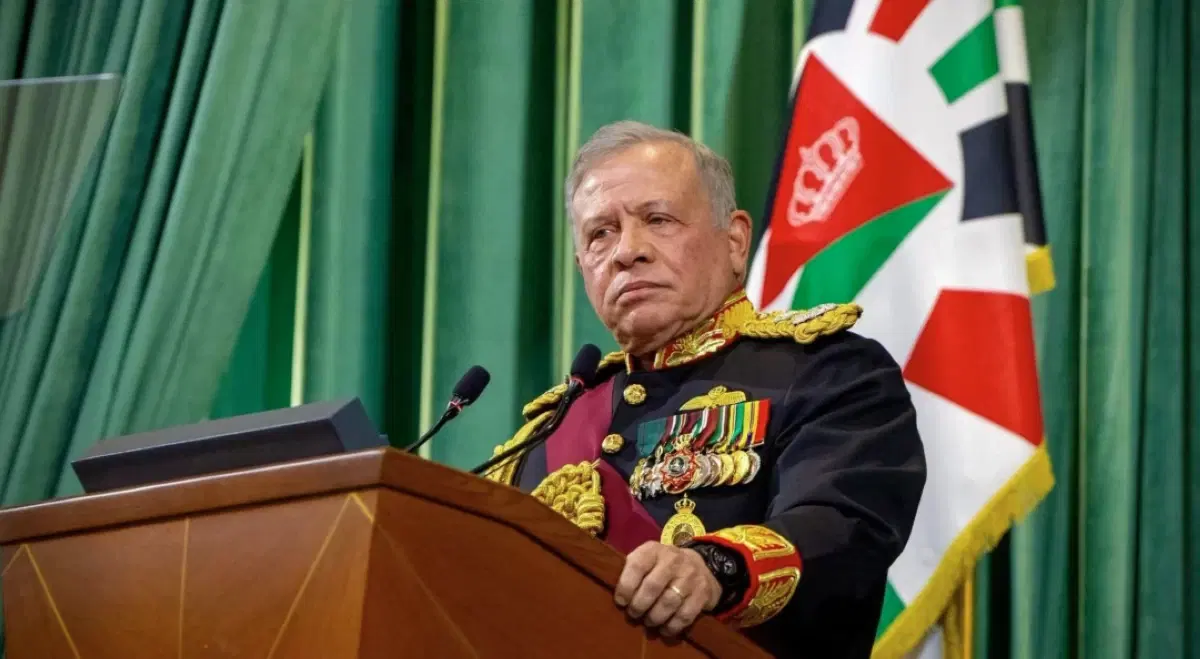
Experts affirmed that the High Throne Speech delivered by His Majesty King Abdullah II at the opening of the third ordinary session of the 20th Parliament embodied a steadfast national vision that makes Jordan's strength the foundation for protecting its supreme interests and enhancing its Arab and humanitarian role, emphasizing that under Hashemite leadership, Jordan remains a sincere supporter of its brothers and a steadfast defender of the Palestinian cause and the legitimate rights of the Palestinian people.
Professor Hassan Abdullah Al-Duqqah, a professor of strategic studies at King Hussein bin Talal University, said that the Throne Speech embodied a steadfast national vision that makes Jordan's strength the foundation for protecting its interests and enhancing its Arab and humanitarian role, noting that a strong Jordan, with its institutions, army, security apparatus, unity of its people, and the awareness of its citizens, has the capacity to shoulder its responsibilities with confidence and competence.
He added that under Hashemite leadership, Jordan continues the path of construction and modernization, and solidifying its position as a sincere supporter of its brothers and a steadfast defender of its nation's causes, foremost among them the Palestinian cause and the legitimate rights of the Palestinian people.
He affirmed that the Royal vision carries an inspiring call for national efforts, enhancing cooperation between authorities, expanding youth opportunities, empowering the economy, and translating ambitions into achievements that citizens can feel in their daily lives.
He explained that building a strong domestic front grants Jordanian diplomacy an influential presence and greater capacity to serve peace and stability, and support joint Arab action.
He pointed out that the meanings of partnership, responsibility, and belonging are renewed under the dome of the Parliament, keeping the national interest as the compass of action, adding that under the leadership of His Majesty the King, Jordan remains a model of wisdom, determination, and generosity, a homeland of dignity and hope that derives its strength from its people and places its capabilities at the service of its brothers, and in crafting a more prosperous and secure future for future generations, with steadfast will and renewed confidence.
In turn, security and strategic expert Dr. Bashir Al-Duqqah said that His Majesty's Speech carries strategic implications that go beyond the political description of state strength, as it links Jordan's ability to protect its interests to the extent of its elements of power and its ability to withstand and maneuver in a highly turbulent regional environment.
He added that a strong state is not only one that deals well with crises, but one that has the capacity to prevent their repercussions on its security, stability, and national interests.
He affirmed that from a security and strategic perspective, His Majesty lays a clear foundation for the Jordanian role equation; Jordan cannot maintain its presence and influence in its Arab environment without strong institutions, an economy capable of withstanding pressures, and deterrent defensive and security capabilities.
He explained that these elements combined grant Jordanian decision-making its independence and protect it from attempts at blackmail or imposition of dictates.
Al-Duqqah pointed out that in the Royal message, there is a strategic dimension related to the future, as the challenges surrounding Jordan are no longer limited to direct military and security threats, but have extended to economic and political pressures, and attempts to reshape power balances in the region.
He noted that this requires anticipating risks, raising the level of national readiness, and developing comprehensive tools of power, pointing out that a strong Jordan is one that has the ability to read transformations before they occur and deal with them with realism and firmness, without compromising its constants or allowing any party to influence its national decision.
Al-Duqqah affirmed that His Majesty emphasizes that supporting brothers does not stem from emotion alone, but requires a state that possesses the capacity, capabilities, and decision.
He concluded that Jordan wants to remain a difficult number in the region's equations, present in its stances, and capable of protecting its interests and performing its Arab responsibilities, explaining that this is the philosophy of strength that His Majesty spoke about.
For his part, Professor Misaa Al-Rawashdeh, a sociology professor at the University of Jordan, said that His Majesty King Abdullah II's Speech establishes a vision that links Jordan's strength to the cohesion of its internal front and the awareness of its citizens, noting that national unity protects confidence among society components and prevents the exploitation of crises to provoke division.
On the Arab level, Al-Rawashdeh said that His Majesty's affirmation of adherence to Arabism and defense of the nation's causes carries a message of continuity that transcends the current circumstances, noting that linking the positions of the father, son, and grandson confirms the entrenchment of Jordan's commitment and enhances confidence in the Arab public opinion in the stability of this approach.
She explained that the aspiration for a unified Arab voice awakens a sense of identity and shared destiny, and presents solidarity as a goal worth working for despite challenges, emphasizing that the social implication of the Speech lies in connecting national cohesion with Arab solidarity; and that a cohesive society grants its state strength in defending its interests and the causes of its nation.
Meanwhile, Professor of Public (Constitutional) Law Dr. Mu'adh Abu Dalo affirmed that the strength of the Jordanian state forms the fundamental pillar for protecting its supreme national interests, and that its cohesion and resilience in the face of challenges enhance its capacity to safeguard its national and pan-Arab security, and its security, strategic, political, and economic interests.
He explained that the current phase calls for continuing to fortify the domestic front in the face of various challenges and risks, emphasizing that Jordan's strength enables it to overcome obstacles and allows it to continue its role in supporting its Arab brothers.
He pointed out that under Hashemite leadership, Jordan has never been late in performing its Arab and pan-Arab duties towards its Arab brothers, and has remained a supporter to them in all circumstances, confirming that Jordan's strength and resilience represent an essential condition for continuing to support Arab brothers, foremost among them the Palestinian cause and other pan-Arab issues.