Official, academic, community and educational activities: the King's speech reinforces national constants and affirms the priority of the citizen, the rule of law and Jordan's security
Amman7 min read
Share
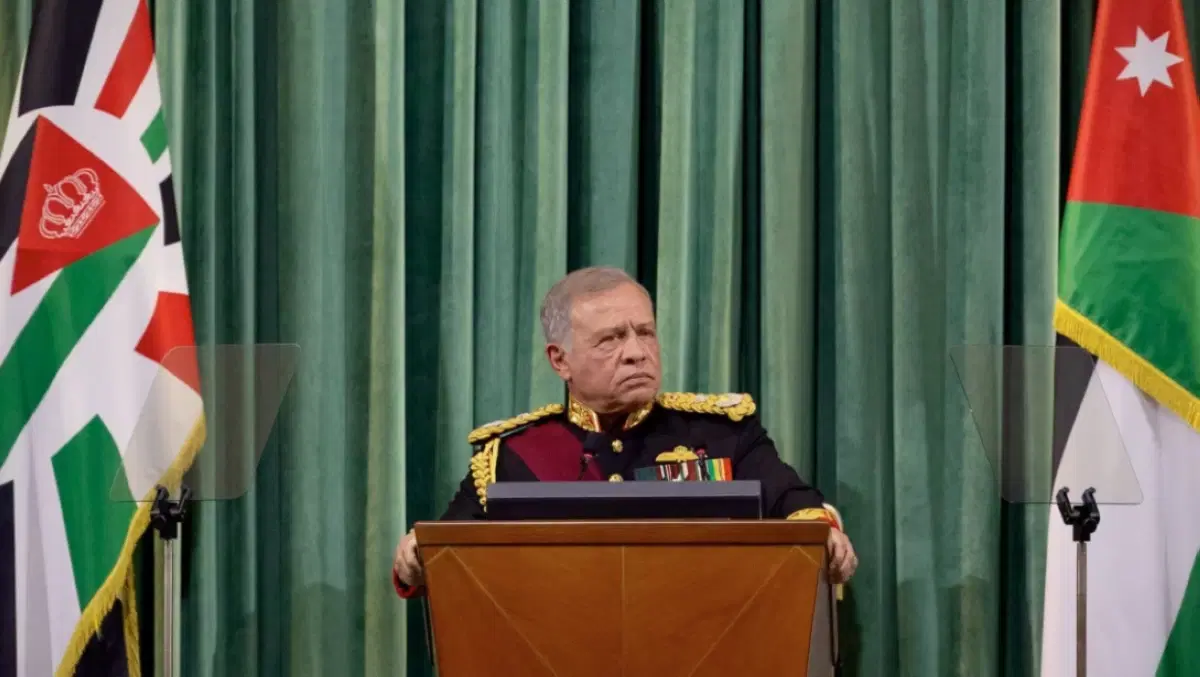
His Majesty King Abdullah II's royal speech, delivered at the opening of the regular session of the House of Representatives, received a broad response from official, academic, community and educational activities, due to its national, political, economic and social messages that reflected the constants of the Jordanian state, affirmed the importance of internal front cohesion, safeguarding the nation's security and stability, strengthening the rule of law, advancing the paths of modernization, reform and development, and renewing the reaffirmation of Jordan's steadfast position on the Palestinian issue
Speakers affirmed that the royal speech was comprehensive of various national priorities, delivering clear messages regarding the responsibility of official and community institutions to translate royal directives into tangible programs and achievements, noting that its emphasis on the citizen's role in development, the importance of protecting national resources, improving services, and enhancing political participation constitutes a roadmap to confront current challenges and anticipate the future
Director of Administrative and Financial Affairs Dr. I'timad Al‑Jaafari said that His Majesty's emphasis that Jordan's strength lies in its people, their awareness and cohesion reflects the depth of the royal vision in building a state based on the unity of its citizens and their trust in national institutions, noting that the King's remarks about the Karak martyrs carry deep national and humanitarian connotations, and affirm that the martyrs' sacrifices will remain a trust upon the necks of Jordanians, and that preserving the nation's security and unity is the true fulfillment of those sacrifices
She added that the King's affirmation that the public service is a responsibility and service to citizens, and that the law knows no name, position or influence, represents a direct message to all institutions and their employees to adhere to standards of integrity, transparency and justice, develop administrative performance, avoid bureaucracy, and deliver services efficiently and responsibly
Al‑Jaafari indicated that official institutions are required to make the citizen's interest the core of their work and decisions, and to translate the speech's content into practical measures reflected in service quality and living standards, emphasizing the importance of embedding a culture of institutional responsibility and strengthening trust between citizens and public administration
For his part, the director of the Karak Center for Excellence, the Family Health Care Institute, one of the institutes of the King Hussein Foundation, Dr. Munther Al‑Kharsha, said the royal speech carried important political and national dimensions, especially in its affirmation of the role of constitutional institutions in enhancing political life and cementing the principle that the nation is the source of authority, noting that the King's invitation to the House of Representatives to be a voice for the nation, a guardian of the public interest and a watchdog over government performance confirms the importance of developing parliamentary practice and strengthening its role in oversight and legislation
He added that the King's emphasis that disagreement in opinion represents a source of strength as long as the national interest is the goal reflects a democratic approach based on dialogue, respect for pluralism and acceptance of other views, away from the tug‑of‑war that could affect the public interest
Al‑Kharsha pointed out that the speech placed a great responsibility on legislative and executive institutions to translate citizens' priorities into policies and programs, noting that real development is not measured by the number of announced plans and projects, but by how they impact people's lives, improve their opportunities for work, education and treatment, and enhance justice and equal opportunity
In turn, Dean of the College of Sports Sciences Dr. Amjad Al‑Madanen said the royal speech affirmed the importance of investing in the Jordanian human being as the fundamental pillar of development and progress, noting that the King's emphasis that citizens must feel the impact of development in their education, opportunities and the future of their children places educational institutions and universities before a national responsibility to prepare generations capable of keeping pace with changes and contributing to building the national economy
He added that universities' role is not limited to providing academic knowledge, but extends to building balanced personalities and enhancing values of citizenship, belonging, teamwork, and developing youth capacities and equipping them with skills that qualify them to participate in economic and social life
For his part, retired presenter Maher Al‑Hourani said the King's affirmation of the role of the Jordanian Armed Forces – the Arab Army and security agencies – in protecting the nation and safeguarding its security and stability embodies the high national stature of these institutions and the efforts and sacrifices they make to preserve Jordan's security and the safety of its citizens
He added that the King's remarks on the terrorist attack and the Karak martyrs carried a firm message that Jordan will not allow any entity to harm its national unity or undermine its stability, and that confronting extremist ideology requires, alongside security readiness, a deep societal awareness and cooperation among various state institutions and community members
Hourani affirmed that the royal commendation of Jordanians' awareness, wisdom and cohesion confirms the importance of the internal front in confronting challenges, stressing the need not to be swayed by rumors or speeches that aim to incite discord, and to promote a culture of national responsibility and rally around the Hashemite leadership and the military and security institutions
In the economic and water sector, Dr. Mohammed Ayoub Al‑Tarawneh said the King's affirmation that the citizen's interest must be at the core of every decision represents the essence of the developmental vision Jordan needs in the upcoming stage, noting that the success of economic modernization programs is linked to their ability to create jobs, stimulate investment, raise productivity, and improve citizens' living conditions
He added that the King's call to accelerate the completion of major projects reflects the importance of moving from planning to implementation, and strengthening integration between governmental institutions and the private sector, thereby contributing to leveraging national potentials and creating sustainable economic opportunities, especially for youth
Al‑Tarawneh pointed out that the King's emphasis on the priority of water security, and the repeated phrase “water, water, water,” clearly signals the magnitude of the water challenge facing Jordan, as one of the most water‑scarce countries, affirming that protecting water requires proactive plans, efficient resource management, accelerating strategic projects, reducing water loss, and promoting a culture of consumption rationalization, to ensure resource sustainability and the rights of future generations
He affirmed that water security is no longer merely a service issue, but has become an essential component of national security and economic and social development, requiring the combined efforts of official institutions and society to preserve this national wealth
Regarding Jordan's stance on the Palestinian issue, speakers agreed that the King's renewed affirmation that security and stability in the region cannot be achieved without meeting the rights of the Palestinian people in their land reflects Jordan's steadfast position on the Palestinian cause and its rejection of ongoing Israeli violations in Gaza, the West Bank and Jerusalem
They noted that Jordan, under its Hashemite leadership, continues to defend Arab causes, foremost the Palestinian issue, based on a historically firm stance that underscores the necessity of achieving justice, establishing fair and comprehensive peace, and safeguarding the legitimate rights of the Palestinian people
They emphasized that the royal speech constitutes a comprehensive national message that goes beyond the political description of the phase, setting clear responsibilities before official, legislative, educational and community institutions, calling for strengthening institutional work, consolidating the rule of law, embedding citizenship and belonging values, and turning development plans into results felt by citizens in their daily lives
They affirmed that Jordan's strength and stability will remain based on the cohesion of its people and their awareness, the efficiency of its institutions, the sacrifices of its armed forces and security agencies, and the mutual trust between leadership and the populace, enabling the kingdom to continue its path steadfastly in facing challenges and preserving its Arab and regional role and standing