From Wadi Rum to Mingsha... The desert is a tourism bridge between Jordan and China
Amman5 min read
Share
Mingsha Mountain and Crescent Moon Spring in Dunhuang... A desert scene that combines sand and water in the heart of China's Gansu
Despite the vast geographical distance separating Jordan from China, the tourism memory of both countries meets at a desert landscape dominated by vast expanses of sand, where visitors to both Wadi Rum and Mingsha Mountain find a unique experience that evokes the beauty of desert nature.
In southern Jordan, Wadi Rum, with its towering rocky mountains, red sands, and desert camps, constitutes a tourist destination that attracts visitors from all over the world, while the Mingsha Mountain and Crescent Moon Spring area in Dunhuang city, Gansu province, northwest China, presents another desert scene, where sand dunes and a spring of water take their place amidst the sands.
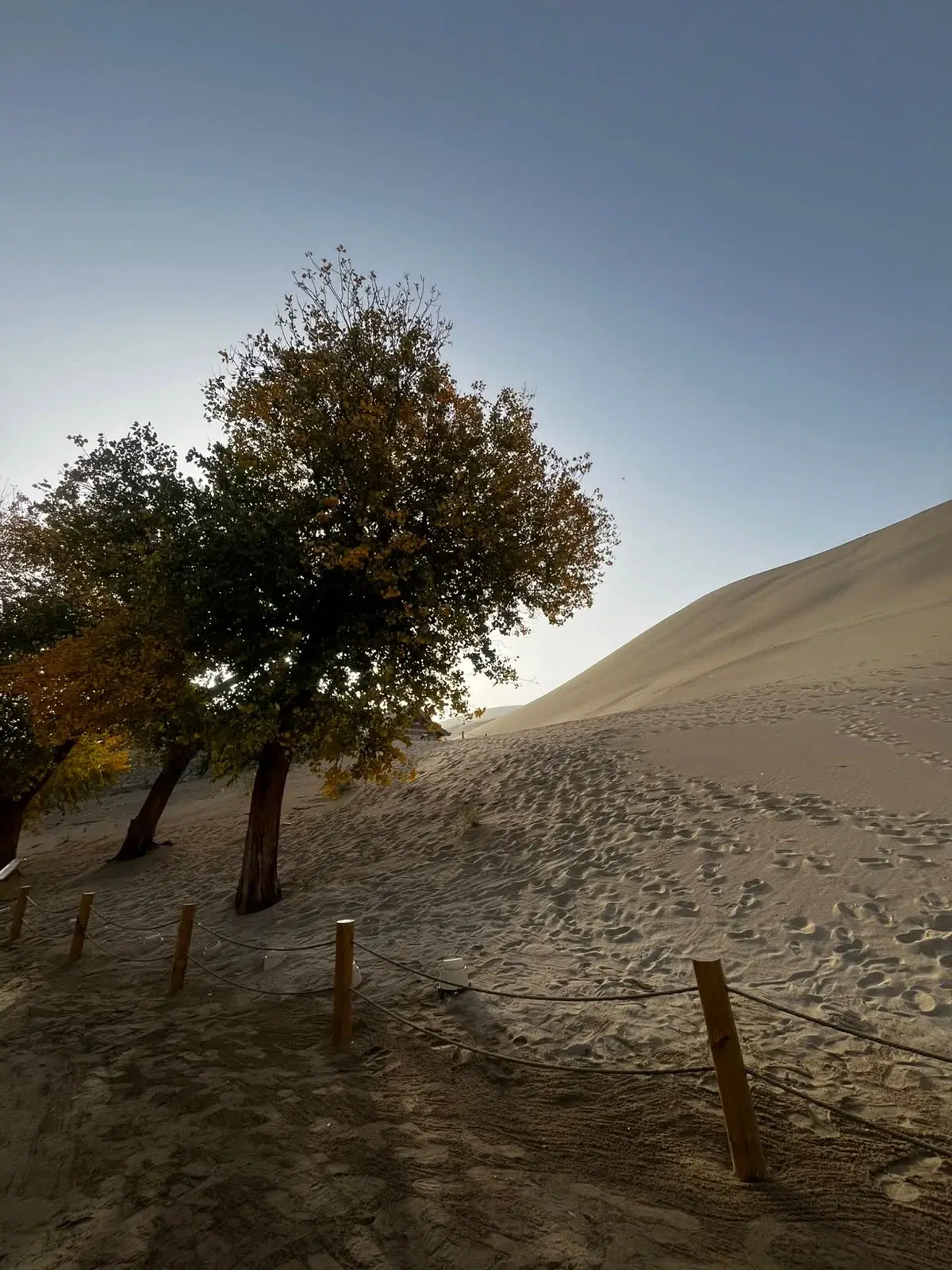
During a field visit to the area as part of a press delegation that included representatives from a number of Arab countries, including Jordan, "Al-Mamlaka" observed a natural scene in which stretches of sand intermingle with the sandy heights surrounding the Crescent Moon Spring, in a tourism experience that attracts visitors eager to explore the desert and enjoy its natural components.
The Mingsha Mountain and Crescent Moon Spring area is located about 5 kilometers south of Dunhuang city and is considered one of the most prominent tourist destinations in the city, due to its natural scenery that combines sand dunes and water in one desert space.
Mingsha Mountain derived its name, which means "Singing Sand Mountain," from the sounds emitted by the sand as it moves and slides down the slopes, as it can produce sounds resembling humming or the roaring of wind.
The mountain extends more than 40 kilometers from east to west and is about 20 kilometers wide from north to south, while its main peak reaches about 1715 meters above sea level.
In the heart of the sandy landscape appears the Crescent Moon Spring, surrounded by dunes from various directions, forming a striking natural tableau that combines sand and water in a desert environment.
Read also
Archaeological documents recount the story of mail and communication on the Silk Road at the Chinese "Xianxuanzhi" station
Former Chinese diplomat: The King's visit to China developed relations between the two countries
From rock carving to the smart board... Chinese and Arabic calligraphy... different scripts and shared cultural curiosity
The uniqueness of the spring lies in its remaining visible amidst the surrounding sands, as the movement of the dunes has not led to it being buried, and it has maintained its distinct shape over long historical periods, becoming one of the most famous natural landmarks in Dunhuang.
The scene in Dunhuang, despite the differences in its geographical details, evokes the desert tourism experience in Wadi Rum, where sand dunes form between rocky mountains, and the open spaces give visitors the opportunity to explore the nature of the desert.
However, the comparison between the two destinations reveals the uniqueness of each; in Wadi Rum, the red sands stand out, giving the place its distinctive visual identity, and intermingle with the towering mountains and rock formations, while the sand dunes in Mingsha Mountain dominate the scene, alongside the singing sands phenomenon and the presence of the Crescent Moon Spring in their midst.
In Wadi Rum, the tourism experience does not stop at visiting the site and moving between dunes and mountains, but extends to staying overnight in desert camps, which provide visitors with the opportunity to spend the night in the heart of the desert, enjoy watching the stars, eat local food, and learn about aspects of Jordanian culture and hospitality.
This experience gives the visitor more time to interact with the place, away from a quick visit, as the stay becomes an essential part of the tourist trip that combines exploring nature, desert activities, and learning about the local lifestyle.
As for the Mingsha Mountain and Crescent Moon Spring area, tourism activities vary between climbing the dunes and enjoying the view from their heights, to riding camels that transport tourists across the sands.
The authorities in Mingsha Mountain provide electric vehicles that transport visitors to the desert area where the Crescent Moon Spring is located, where visitors wear special foot covers before touring the sandy area. Visitors receive an explanation about the place, with the opportunity for them to contemplate and roam, in addition to the presence of warnings defining the areas where movement is permitted and the sandy heights allowed for climbing.
Visitors are also given the opportunity to watch camels transporting tourists across the sands and take memorial photos in the place, in a scene that adds a traditional desert character to the tourism experience.
The comparison between the two destinations highlights how desert nature, despite its different geographical locations and formations, can offer tourism experiences that are similar in some of their elements, yet different in their details and cultural uniqueness.
In Jordan, Wadi Rum constitutes part of the Kingdom's tourism identity, and the United Nations Educational, Scientific and Cultural Organization (UNESCO) included it on the World Heritage List in 2011 as a site that combines natural and cultural value, and includes archaeological evidence and rock inscriptions that reflect the history of human presence in the region.
In China's Dunhuang, Mingsha Mountain and Crescent Moon Spring represent another model of desert tourism, where nature integrates with tourism activities in an area historically linked to the Silk Road and its location on trade and cultural communication routes between the East and the West.
For the Jordanian visitor, seeing the sand dunes in Dunhuang evokes familiar scenes from Wadi Rum, but at the same time offers a different experience, manifested in the nature of the singing sands and the presence of the Crescent Moon Spring in the middle of the dunes.