On World Tourism Day.. Wadi Rum translates the beauty of the desert into economic value
Nearly 1.03 million visitors during the first half of 2026
Amman5 min read
Share
Among the towering mountains, and along the desert whose colors change with the movement of the sun, Wadi Rum begins its daily story with visitors. SUVs carve paths through the sand, and the voices of guides tell the tales of the place, while tourist camps are scattered across the desert landscape, bringing nature, history, and Bedouin culture together in one of the most distinctive tourist experiences in Jordan.
On the 27th of September, and with the world celebrating World Tourism Day, Wadi Rum appears to be more than just a tourist destination; it is a site that carries a human memory spanning thousands of years, an exceptional natural landscape, a source of livelihood and job opportunities for the local community, and a window reflecting an important aspect of Jordan's tourism identity.
From the very first moment of entering Wadi Rum, the place imposes its presence on the visitor. Towering rocky and sandy mountains, wide valleys, natural arches, and open desert spaces where the colors of the sand blend with the shadows of the rocks.
On this land, the journey is not limited to observing nature; the visitor moves between multiple stations; from safari trips and exploring mountains and valleys, to camping and watching sunsets and sunrises, up to Arabic coffee sessions and learning about the details of Bedouin life.
These elements together give Wadi Rum a distinctiveness that has made it one of the most prominent tourist destinations in the Kingdom, and a destination for tourists seeking nature, adventure, culture, and an authentic experience.
Behind the contemporary tourist scene, Wadi Rum retains a deep human memory, as rock carvings, petroglyphs, and archaeological sites document the presence and interaction of humans with the environment in the region over approximately 12,000 years.
Wadi Rum has been listed on the UNESCO World Heritage List as a mixed site that combines natural and cultural value, in global recognition of the importance of the site and the exceptional elements it contains.
This value is inseparable from the Bedouin culture that remains present in the details of the place, from hospitality patterns and traditional foods to tourist guiding and desert trips, making the local culture part of the tourist product and not just a backdrop to the scene.
In the field, the relationship between tourism and the local community is clear; tourist vehicles, camps, guides, and various service providers represent an economic chain directly linked to the movement of visitors.
Tourism provides opportunities for the region's people in fields such as transportation, guiding, hospitality, camp management, and selling local products, crafts, and traditional foods.
Here, tourism goes beyond the concept of visiting the site to become an economic activity that provides income and job opportunities, making the local community a direct partner in the continuity of tourist movement and the preservation of the place's identity.
Recent data indicate that Aqaba and Wadi Rum received about 1.03 million visitors during the first half of 2026, while the number of hotel guests reached about 382,800, coinciding with an increase in the average length of stay from 1.9 to 2.2 nights.
These indicators reflect the importance of the region on the map of Jordanian tourism, and highlight the need to develop the tourist experience in a way that preserves the uniqueness of Wadi Rum while responding to the growing demand for desert tourism services.
Sustainable tourism.. The real test
But the growing tourism scene places Wadi Rum before a great responsibility: how can the economic benefit from tourism be increased while preserving nature and heritage?
The site, which receives an increasing number of visitors, needs careful management of vehicle routes, organization of camps, reduction of waste, protection of rock carvings and petroglyphs, preservation of the natural landscape, and ensuring that any tourist expansion is compatible with the sensitivity and global value of the site.
Here, the importance of sustainable tourism emerges as a practical necessity, not just a slogan, so that the movement of visitors remains a source of development without turning into pressure on the environment or heritage.
In this context, partnerships between national and international institutions are gaining increasing importance, as UNESCO and the Aqaba Special Economic Zone Authority signed a cooperation agreement in June 2026 aimed at supporting sustainable development in Aqaba and Wadi Rum, enhancing heritage protection, environmental management, and empowering youth. These efforts come within a trend that links tourism development to the preservation of natural and cultural resources, and enhances the participation of the local community in the management and investment of tourism assets.
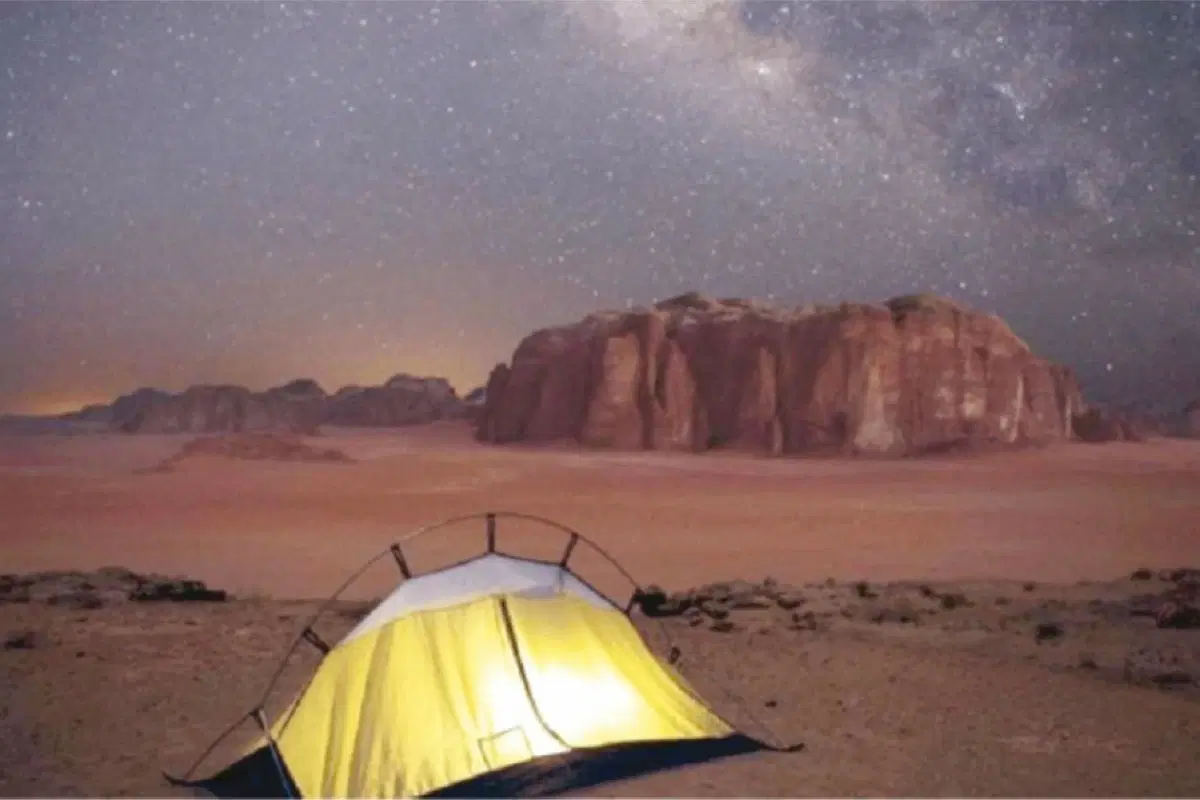
As the sun sets, the colors of the mountains and sand change, and desert camps begin to welcome their visitors, while the desert prepares for another scene of its day; a Bedouin dinner, Arabic coffee, sessions around the fire, and a clear sky that opens the way for the experience of stargazing.
The natural landscape, history, carvings, Bedouin culture, adventure, and hospitality all intertwine to create a tourist product that bears the imprint of the place.
On World Tourism Day, Wadi Rum confirms that the strength of Jordanian tourism lies not only in the beauty of nature, but in its ability to transform this beauty into a sustainable human, economic, and cultural experience.
The biggest challenge remains for the valley to preserve what made it exceptional; an open desert that preserves human memory, provides opportunities for the local community, and welcomes the world without losing its soul.