The tourism and cultural sectors: A history told and a thriving tourism
Amman7 min read
Share
Over the past two years, the tourism and cultural sectors have witnessed the implementation of a series of initiatives and programs as part of national efforts to develop them and enhance their role in economic growth. In the tourism sector, the government has taken a series of measures to support tourism establishments and their employees, particularly in activities and regions most affected by the repercussions of regional challenges, by expanding domestic tourism programs and intensifying promotional efforts for Jordan in regional and international markets, in addition to working on rehabilitating and operating a number of stalled tourism facilities.
In the cultural and heritage field, efforts included rehabilitating archaeological and heritage sites in various governorates and launching a project to document the Jordanian narrative, which enhances national identity and preserves the historical and cultural heritage for future generations.
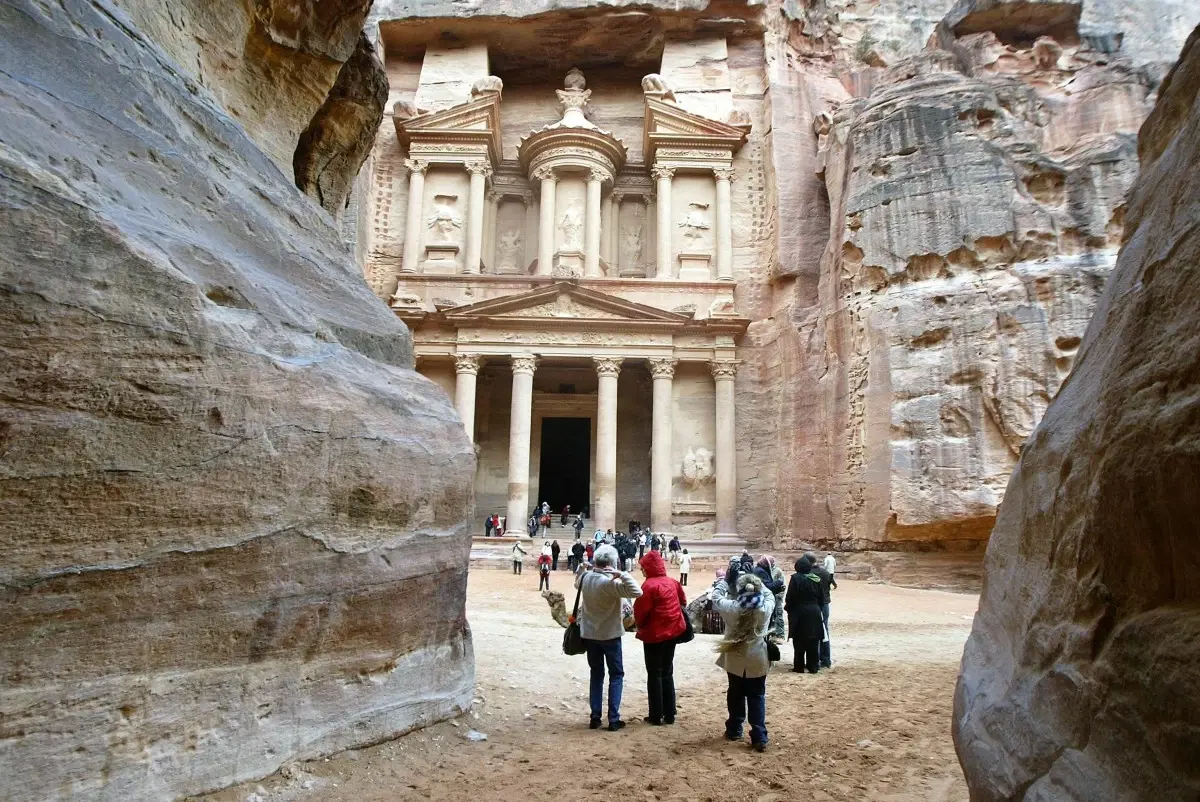
Within the framework of government efforts to mitigate the repercussions of regional challenges on the tourism sector, the Council of Ministers adopted a package of decisions to support tourism establishments and workers in the tourism sector in the Petra Development and Tourism Region Authority (PDTRA), including 11 decisions benefiting about 1,600 workers, at a total cost of five million dinars borne by the government.
Under these decisions, the government will bear, until the end of 2026, half of the wages subject to social security and their contributions for about 900 workers in the tourism sector in the region, and 35 percent of them for more than 500 workers in international hotel chains.
The wage support program also includes 280 workers who have been suspended from work for six months. The decisions also included postponing loan installments for tourism establishments in the region for a year, with the government bearing the interest resulting from this postponement, and rescheduling income tax, sales tax, electricity, and water dues for the establishments, with exemptions from interest and fines according to installment conditions.
Regarding domestic tourism and supporting establishments and workers in the tourism sector, the "Jannah.jo" (Our Jordan is a Paradise) program was expanded to encourage citizens to visit tourist destinations in the Kingdom, contributing to boosting tourism movement and supporting local communities. The number of participants in the program reached 202,000 since its launch in April until the end of last September.
The program also expanded to include new categories, including school students and foreign students in Jordanian universities, with an increase in the number of activities and participants in the most affected areas.
During the same period, 106 accommodation establishments, 113 restaurants, 141 tourism offices, and 26 transport companies benefited from the program, in addition to 550 tour guides, while 6,430 buses were operated under it.
Efforts to restart stalled tourism facilities included the rehabilitation and operation of the Dead Sea beach after a closure that lasted several years. The beach extends over an area of 240 dunums and includes a sandy beach and a swimming pool, with a capacity of 4,500 visitors. The Dead Sea Corniche was also opened and operated over an area of about 600 dunums, including an outdoor theater that can accommodate about 2,500 people.
200 male and female workers are employed at the two sites, with local community members making up about 95 percent of them, while the beach has received about 135,000 visitors and the Dead Sea Corniche about 33,000 visitors since their opening.
The eco-lodge in the Yarmouk Forest Reserve near the Umm Qais area in Irbid Governorate was also opened and operated after stumbling and delays that lasted about 4 years. The project was implemented within the Royal Initiatives and includes 20 chalets, 10 hotel rooms, a dining hall, a meeting hall, and a solar energy system. 40 employees from Irbid and surrounding areas work there, in addition to its reliance on the local community to provide basic materials.
In the field of environmental protection and biodiversity conservation, Aqaba achieved a prominent international environmental achievement by including the Aqaba Marine Reserve on the UNESCO World Natural Heritage list last July, becoming one of 91 reserves around the world, reflecting its environmental importance and its role in protecting biodiversity and coral reefs.
The reserve also continues its efforts to promote sustainable ecotourism and provide an attractive environment for diving and marine exploration. In addition, the reserve was included in the Green List of Protected Areas of the International Union for Conservation of Nature (IUCN) in 2023, and the first public beach in Aqaba received the Blue Flag certificate for four consecutive years during the 2023–2026 period.
Regarding enhancing regional air connectivity, an agreement was signed to launch direct and regular flights between Aqaba and both Riyadh and Abu Dhabi, with the actual operation of the two lines beginning last September.
Within the framework of promoting Jordan in international markets, a large-scale promotional campaign (Impossible to Match) was launched in conjunction with the national team's participation in the World Cup for the first time. It targeted 10 international markets, including the United States, the United Kingdom, Germany, France, and Brazil. The campaign achieved about 926.9 million impressions and 2.44 million clicks on the official Jordanian tourism website "Visit Jordan".
Within the framework of national efforts to document Jordanian history and identity, the project to document the Jordanian narrative was launched, in response to the vision of His Royal Highness Crown Prince Al Hussein bin Abdullah II, with the aim of documenting Jordan's history, which spans more than 2.5 million years.
Since its launch, the project has witnessed the implementation of many initiatives and activities, most notably the launch of the "Stories from Jordan" platform to document personal and family stories and the oral memory of citizens. The platform has received more than 1,750 submissions. 12 dialogue seminars were also implemented within the "Dialogues" program in 12 governorates, with the aim of highlighting the specificity of each governorate and its role in shaping the Jordanian narrative, in addition to preparing a guide that documents the various historical eras in Jordan. Work is also underway in partnership with the private sector to produce a documentary series that addresses the history of the various civilizations that have witnessed the land of Jordan.
Many archaeological and heritage sites have witnessed maintenance and rehabilitation works, most notably the Tell Mar Elias archaeological site in Ajloun and the Umm ar-Rasas archaeological site, in addition to restoring the Qatrana Castle in Karak, rehabilitating its facilities, improving the services provided to visitors, and including it in the "Jannah.jo" program, which contributes to stimulating tourism movement and supporting local communities by operating commercial and service shops at the site.
Regarding the cultural and artistic presence of Jordan, the 40th session of the Jerash Festival for Culture and Arts was held in 2026 under the slogan "A Legacy That Extends... Generations Meet," attracting about 200,000 visitors. It witnessed the organization of 401 cultural, artistic, literary, and heritage events, including 81 international events with the participation of 30 countries.
The session also witnessed an expansion in the spaces for performances and cultural activities, as the festival contributed to employing 1,698 people from the local community, an increase of 74 percent compared to 2025, in addition to the participation of 250 women in the Jerash market.
Work continues on implementing many other projects, including the Jerash Eco-Tourism Village project, which is being implemented between 2025 and 2027, and the Umm Qais Archaeological Museum, whose rehabilitation completion rate has reached 50 percent, in addition to restoring archaeological sites in the Rihab District in Mafraq and including them in local tourism programs. The Royal Society for the Conservation of Nature is working on designs for tourism projects in Afra Hot Springs, Azraq, and Zara.
Efforts continue to develop new tourism projects and products in various governorates of the Kingdom, including ecotourism and heritage tourism, developing reserves and natural and archaeological sites, and establishing facilities for conferences and events, which contributes to diversifying tourism experiences and enhancing Jordan's attractiveness to visitors.