Politicians: The Throne Speech Renews Jordan's Constants in Defending the Nation's Issues
Amman8 min read
Share
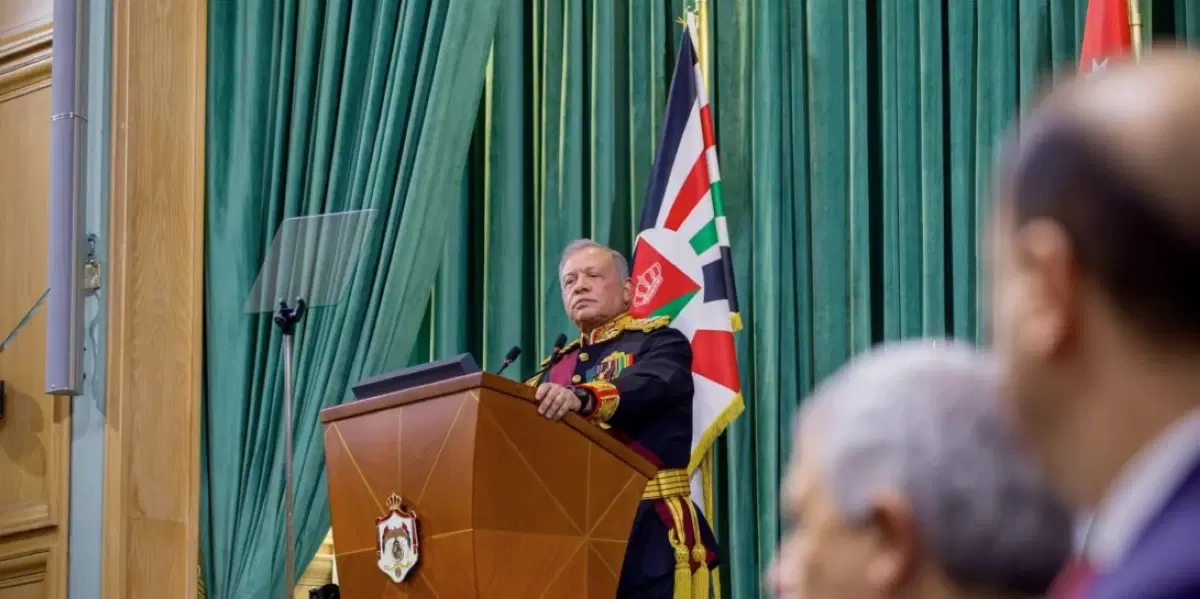
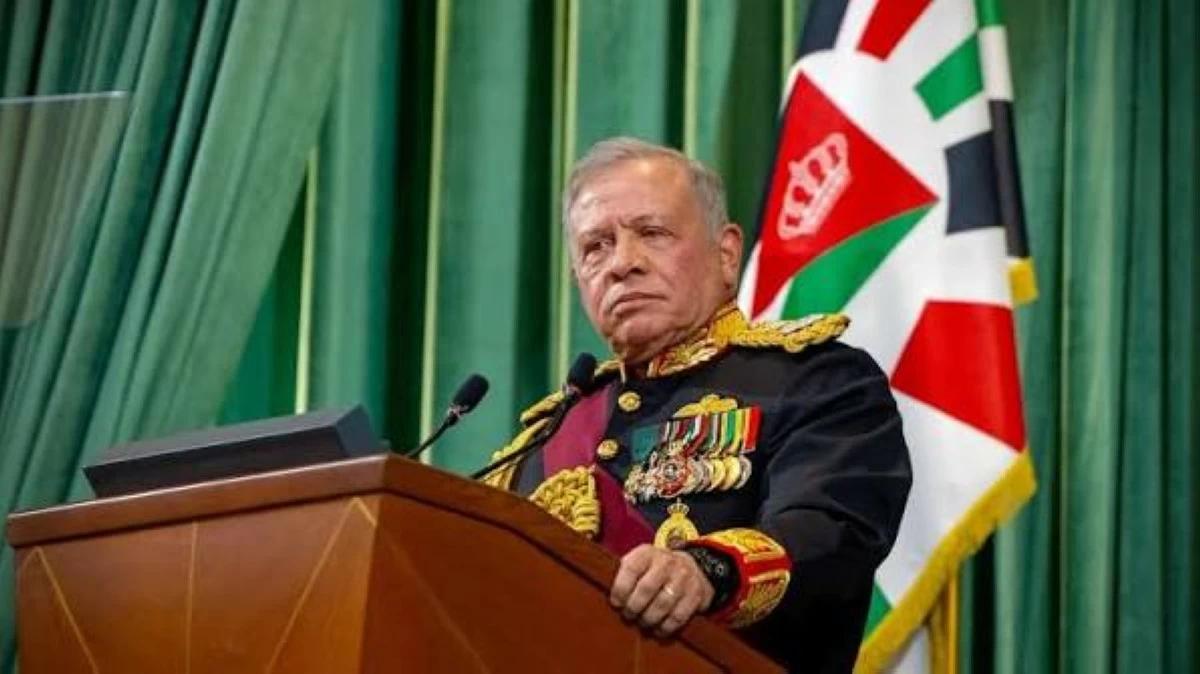
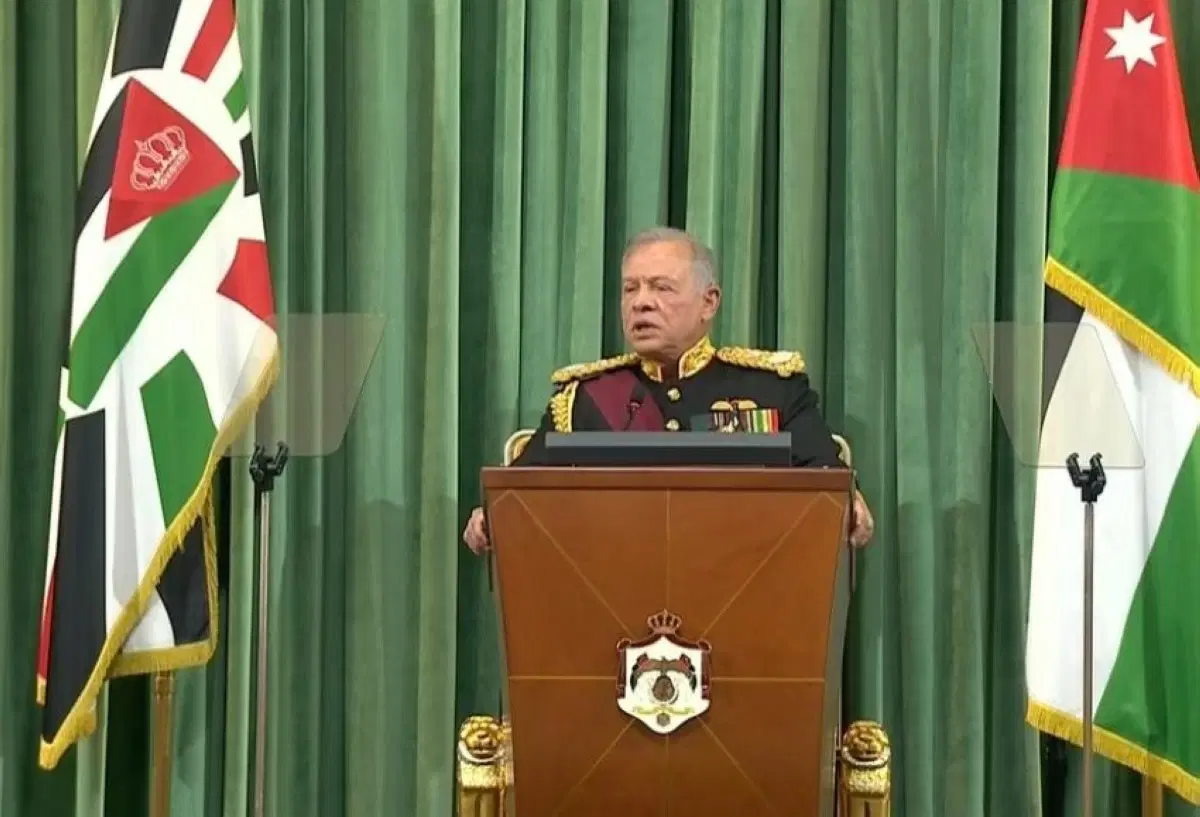
The Royal Throne Speech, delivered by His Majesty King Abdullah II today, Monday, at the opening of the third ordinary session of the 20th Parliament, reaffirmed the constants of the Jordanian state in adhering to its Arab identity and defending the nation's issues, considering this a well-established approach in the Jordanian state's journey and a hereditary Hashemite legacy, not governed by circumstances or political variables, but based on historical heritage, national and humanitarian responsibility towards Arab brothers, their rights, and just causes.
His Majesty emphasized that Jordan will remain steadfast in its position and committed to its Arab identity, defending the issues of its nation, saying: "We remain steadfast in our position, committed to our Arab identity and defending the issues of our nation, as my father was before me and my son will be after me, so that the unified Arab word, even if it seems distant, remains our desire and goal," stressing that "there is no path to security and stability in our region without fulfilling the right of the Palestinian people to their land," pointing to the ongoing humanitarian disaster in Gaza and the continued attacks in the West Bank and Jerusalem, and that Israeli expansionist ambitions pose the greatest threat to the region's future and hopes.
Former Minister and Political Science Professor Dr. Amin Mashaqba said that one of Jordan's constants is defending the Palestinian issue, which forms the core of the Hashemite approach to preserving Palestinian rights, noting that His Majesty the King emphasized in his speech at the opening of the third ordinary session of Parliament that stability or peace in the region cannot be achieved without the Palestinian people obtaining their rights.
He added that the Palestinian issue has historically been the cornerstone of Jordanian foreign policy, and issues related to the Palestinian cause rank high among the priorities of His Majesty the King and the Hashemite kings across the four reigns, in preserving the legitimate rights of the Palestinian people and defending their cause, based on the fact that the legitimate rights of the Palestinian people do not expire over time or with the passage of years.
He explained that Jordan also stands alongside Arab issues and defends fundamental issues concerning Arab countries, noting that Jordan has never attacked any neighboring Arab country, nor does it interfere in the internal affairs of countries, but supports Arab issues, whether in Syria, Palestine, the Arab Gulf, or North Africa in general.
Mashaqba affirmed that the Jordanian stance and defense of Arab issues, especially the Palestinian issue, constitute a well-established Hashemite legacy, stating that Jordan continues to engage with Palestinian brothers and support their cause towards the establishment of an independent Palestinian state on the lines of June 4, 1967, with East Jerusalem as its capital.
For his part, Abdullah Tawfiq Kenan, Secretary-General of the Royal Committee for Jerusalem Affairs, said that the Jordanian Royal Throne Speech represents a national, pan-Arab, and humanitarian roadmap and strategy for Jordanians, since the first Throne Speech during the Emirate of Transjordan in 1929, and the first Throne Speech during the Hashemite Kingdom of Jordan in 1946, noting that His Majesty King Abdullah II has followed this Hashemite approach with steadfastness and determination since his first Throne Speech in 1999, after assuming his constitutional authorities.
He added that His Majesty's speech carries conscious contents and messages that foresee the future, despite the challenges facing the region and its stability, affirming that the wisdom of the confident Hashemite leadership has successfully navigated Jordan, the nation, and the region to safety.
Kenan explained that the Royal Throne Speech comes amidst complex current conditions, requiring deep awareness of the implications and influences currently affecting various political, economic, social, and security dimensions internationally, noting that resolving the Palestinian issue, especially its core, Jerusalem, forms the fundamental pillar of the global stability system, especially amid the escalating events in Palestinian territories, exemplified by Israeli attacks and the systematic apartheid policy based on detention, killing, settlement, and the violation of Islamic and Christian holy sites.
He affirmed that the Royal Committee for Jerusalem Affairs sees that the Throne Speech reflects a deep understanding of the gravity of the challenges facing the region, which require, as His Majesty the King indicated, adherence to national determination and will, noting that this will has proven its strength during the period that witnessed the painful incident of the Al-Humoud Church, and that national unity, as His Majesty indicated, embodied the strong, unified Jordanian family capable of supporting national issues, especially the Palestinian issue and its core, Jerusalem.
He pointed out that Jerusalem has been the pulse of the Hashemite legacy over the decades, and that the Hashemite custodianship over Islamic and Christian holy sites therein, and support for the people in Palestine, is a trust carried by parents, grandparents, and descendants, alongside supporting the Palestinian people in attaining their rights, including the two-state solution and the establishment of a Palestinian state with East Jerusalem as its capital on the borders of 1967, affirming that there is no path to peace and stability in our region and the world without the Palestinians obtaining these historical rights.
Kenan pointed out that the Royal Committee for Jerusalem Affairs and the sons of the homeland stand behind the Hashemite leadership, which always emphasizes that Jordan's strength lies in preserving its constants and principles from which it will not deviate, alongside continuing the comprehensive development march, the achievements of which are protected and defended by the Arab Army and security agencies, affirming that Jordan, with its blessed land, the determination and resilience of its people behind its leadership, which enjoys the trust and respect of the world, will remain a model of giving, modernization, and achievement, and that Jordan, with its people and Hashemite leadership, the historical custodian of Islamic and Christian holy sites in Jerusalem, will remain a support for the nation and its issues, and for Palestine and its just cause, no matter the cost or the sacrifices.
For his part, the Secretary-General of the World Mediation Forum, Engineer Marwan Al-Faouri, affirmed that Jordan's constant stances in defending Arab and Islamic issues, especially the Palestinian issue, are not circumstantial stances dictated by political shifts or imposed by regional conditions, but rather an authentic Hashemite legacy and the approach of a state and a historical message rooted in the conscience of the Jordanian leadership and people.
Al-Faouri said, "On the occasion of His Majesty King Abdullah II's speech before Parliament, Jordan, under Hashemite leadership, has remained faithful to its national and humanitarian constants, especially defending the legitimate rights of the Palestinian people, their right to freedom, dignity, and the establishment of their independent sovereign state on their national soil with East Jerusalem as its capital, and rejecting displacement, liquidation, and attacks on Islamic and Christian holy sites."
He added that the Hashemite custodianship over Islamic and Christian holy sites in Jerusalem represents a historical, religious, and moral responsibility, embodying the deep Jordanian Hashemite connection to Jerusalem and Palestine, noting that defending Jerusalem and its Arab identity is not merely a political stance, but a trust passed down through generations.
He emphasized that the strength of Jordan's position stems from the combination of steadfastness in principles with wisdom in managing challenges, and from the recognition that defending Palestine and protecting Jordan's security, stability, and national unity are integrated responsibilities that do not conflict or diverge.
Al-Faouri affirmed that Jordan will remain, under its Hashemite leadership, its people, and its institutions, faithful to its Arab, Islamic, and humanitarian mission, steadfast in defending the Palestinian right, and believing that just peace can only be based on justice, and that the dignity and rights of peoples are non-negotiable.
For her part, Ambassador Lina Arafat affirmed that His Majesty King Abdullah II always emphasizes, in international forums, Jordan's firm and constant commitment to defending just Arab issues, especially the Palestinian issue, which represents the core of the conflict in the region and its centrality.
She stated that Jordan's positions stem from a comprehensive historical and ethical vision that makes supporting Arab rights and national security an inherent Jordanian responsibility, not subject to bargaining, and unchanging with shifts in political circumstances or regional challenges.
She added that the historical Hashemite custodianship over Islamic and Christian holy sites in the Holy City of Jerusalem embodies the depth of this genuine Jordanian commitment, noting that Jordan continues, through its international diplomatic and on-the-ground efforts, to confront all attempts targeting the holy sites and altering the historical and legal status quo of the holy city.
Arafat affirmed that Jordan always emphasizes that the establishment of an independent sovereign Palestinian state on the lines of June 4, 1967, with East Jerusalem as its capital, is the only path to achieving just and comprehensive peace and stability for the peoples of the region.
She pointed out that this path represents a Hashemite covenant and a code of honor inherited by Jordanians through the years from the kings of the House of Hashem, who dedicated themselves to serving the causes of the nation and protecting its rights and sacred trusts. She affirmed that Jordan will remain, with its aware people, wise leadership, and valiant armed forces, a pillar and refuge for its Arab brethren, and a free platform carrying the nation's grievances to international forums, steadfastly holding to its national and pan-Arab references and unbreakable principles.