"Yedioth Ahronoth": Israel completes its preparations to attack Iran, and the decision rests with Trump
Agencies4 min read
Share
The Hebrew newspaper reported on Saturday that Israel has completed its preparations for a new confrontation with Iran, at a time when the commander of the US Central Command, Brad Cooper, presented military options for resuming attacks to US President Donald Trump.
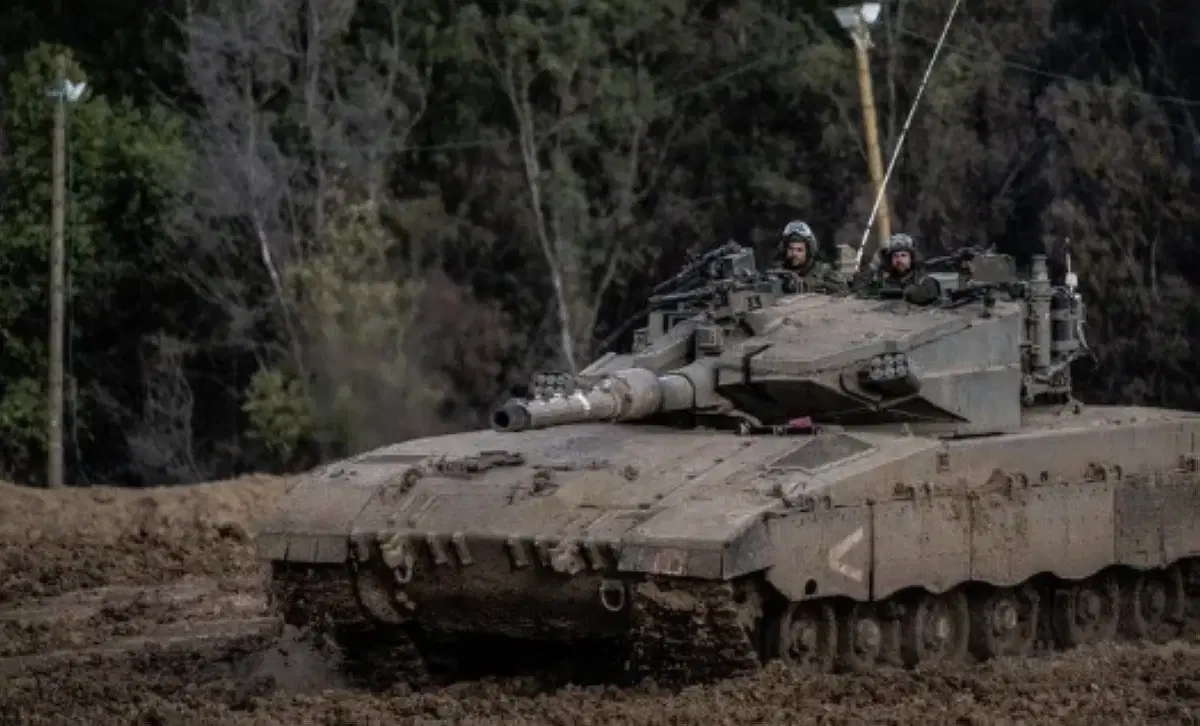
The newspaper stated that the Israeli army has completed its defensive and offensive preparations for the possibility of resuming military confrontation with Iran.
It indicated that the decision to return to war remains in the hands of President Trump, in light of the continued negotiations between Washington and Tehran.
The newspaper added, citing unnamed political sources, that Israel is approaching a new military round with Iran, but the Israeli political and military leadership does not hold the decision to initiate the confrontation, which is linked to the American position and Trump’s choices between reaching an agreement with Tehran or resuming military attacks in coordination with Israel.
It explained that Israeli preparations were not limited to theoretical plans, as the Air Force carried out sorties involving dozens of fighters and refueling aircraft, crossing the skies of Syria and Iraq to the vicinity of the Iranian border, in drills simulating potential flight paths for an attack, noting that these drills have been repeated more than once.
In a related context, the newspaper mentioned that Admiral Brad Cooper presented military options to Trump for resuming attacks on Iran during a meeting that included Secretary of Defense Pete Hegseth and Chairman of the Joint Chiefs of Staff Dan Kane, without a final decision being issued regarding a return to fighting.
The newspaper quoted media reports as saying that 10 US military transport aircraft arrived over the past few days at Israeli Air Force bases as part of an air bridge to transport military equipment to the region, coinciding with the continued reinforcement of US forces and Washington’s move to a state of readiness for the possibility of renewed military operations.
According to the sources, one of the main dilemmas is the absence of clear US strategic objectives for any potential military operation, as targeting nuclear facilities, missile systems, and Iranian military capabilities from the air does not necessarily mean toppling the Iranian regime or changing its policy.
It added that Washington might use the military threat to pressure Tehran with the aim of extracting an agreement with better American terms, claiming that "any agreement that does not address Israeli concerns regarding the Iranian nuclear program, missile systems, and armaments will not end the threats that Israel says it is facing."
The sources warned of the possibility of the confrontation extending to Lebanon, in the event that "Hezbollah" joins the fighting, as happened during the previous confrontation, noting that this could prolong the war and place additional pressure on Israeli air defense systems and interceptor missile stockpiles.
In parallel with military preparations, the newspaper pointed to reports of progress in indirect contacts between Washington and Tehran, mediated by Qatar, aimed at pushing toward direct negotiations covering the nuclear program, the Strait of Hormuz, and economic incentives for Iran, while proposing the possibility that China and Russia could play the role of guarantor for any potential agreement.
In contrast, the newspaper quoted Iranian leader Mojtaba Khamenei warning that any threat to Iran would be met with an immediate and effective response, without geographical restrictions, adding that the armed forces and the Iranian people would determine the timing and conditions for ending any future confrontation.
The newspaper concluded by stating that the fundamental issue for Israel is not limited to preparing for a new attack, but rather concerns ensuring that any military move serves Israeli security interests in the long term, and defining its objectives, mechanisms for ending it, and the desired outcomes.
The war began with attacks launched by the United States and Israel on Iran on February 28, before a ceasefire was reached last April, then confrontations between Washington and Tehran renewed last July, amidst the stalemate in negotiations between the two sides.