Praise for political and legal messages
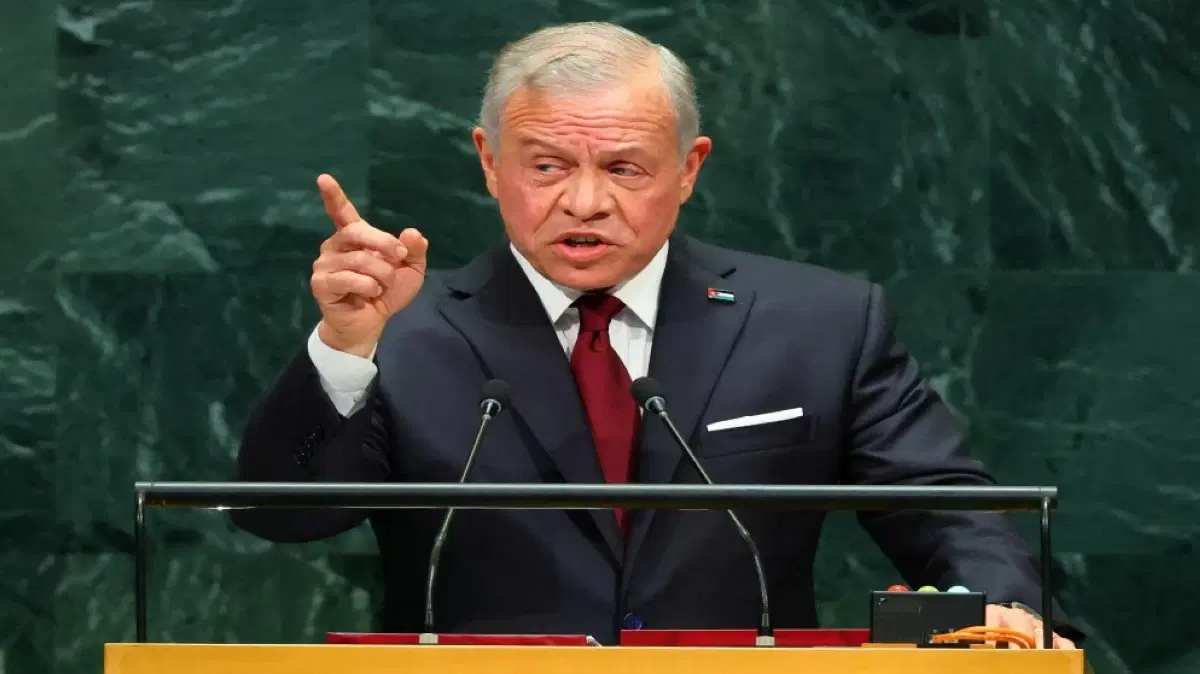
Former Prime Minister Bisher Al-Khasawneh said that King Abdullah II's speech before the General Assembly was "exceptional" in terms of its clarity, boldness, and comprehensiveness, noting that it focused on the "power of attention" in light of the decline in international interest in humanitarian crises, and on the necessity of not separating what is happening in the Gaza Strip from the West Bank.
He added that the speech called Israeli practices by their names in accordance with international law, from home demolitions and forced displacement to land seizure, de facto annexation, the establishment of checkpoints, and practices against Palestinians.
Al-Khasawneh explained that the King called for the application of international law and international legitimacy to all countries without exception, and the use of tools provided by the law, including sanctions, freezing assets, and banning the import of settlement products, considering that the absence of accountability for Israeli violations expands their repercussions to the region. He pointed out that the speech placed the security of the northern borders and water security at the heart of Jordanian national security, warned against the transfer of repercussions to Syria, and reaffirmed the Arab Peace Initiative and the necessity of keeping Gaza and the West Bank within the framework of the Palestinian cause and a single Palestinian state.
Former Deputy Prime Minister Mohammad Al-Halaiqa said that the speech placed the international community before its responsibilities regarding the continuation of violations and the decline in the effectiveness of international law tools, considering that the link between what is happening in Gaza and the West Bank reflects a reading of the interconnectedness of Palestinian developments and their repercussions on the region.
He added that the King's talk about southern Syria and water security carries a direct significance for Jordan, noting that the call to arrange a political and economic cost for violating international law means moving from condemning violations to using available pressure tools.
Former Minister of State for Media Affairs Sakher Dudin said that the speech constituted a "political and moral plea" in defense of the Palestinian cause, and was characterized, as he described it, by frankness in describing Israeli practices and criticizing international inaction in enforcing international law.
Dudin pointed out that among the most prominent messages of the speech were the link between Gaza and the West Bank, and the warning against settlement, displacement, and land confiscation, in addition to demanding that the international community use political, economic, and diplomatic tools for pressure.
For his part, the Director of the Center for Strategic Studies at the University of Jordan, Hassan Al-Momani, said that the speech focused on the concept of "attention," warning that the transformation of temporary positions into a continuous disregard for crises contributes to their continuation.
Senate member Mahasen Al-Jaghoub said that the Palestinian cause was present in King Abdullah II's movements, noting that his speech before the UN General Assembly linked Gaza, the West Bank, Jerusalem, and regional security, and affirmed that peace will not be achieved unless Palestinians enjoy peace through the two-state solution and ending the roots of the conflict.
Al-Jaghoub added that the King stressed the importance of Jordan's security and its northern borders, and linked the Kingdom's security to Syria's security, in addition to confronting terrorism, extremism, and drugs. She called for a joint Arab-Islamic move to apply international law and achieve justice for the Palestinians, warning that Israeli ambitions will not stop at the borders of Palestine.
Former Foreign Minister Marwan Muasher said that King Abdullah II's speech carried strict messages to the West, most notably that diplomacy alone is no longer sufficient in light of Israeli policies, calling for the imposition of collective sanctions on Israel.
Muasher added that the speech described what is happening as a "war crime," "mass expulsion of the population," and de facto annexation of the West Bank, and criticized the international community's contentment with managing the conflict instead of solving it, confirming that recognizing the Palestinian state alone is not enough unless it is accompanied by practical steps.
The Regional Director of Save the Children International, Ahmed Al-Hendawi, said that King Abdullah II's speech was one of the strongest speeches, and carried a call to save the international system and international law, confirming that Jordan places respect for international law at the heart of its foreign policy and supports humanitarian work.
Al-Hendawi added that what is happening in Gaza and the West Bank confirms the need to reform the international system, noting the scale of violations against Palestinian children, and warned of systematic attempts to undermine the role of the United Nations, restrict the work of international organizations, and remove the Palestinian cause from its umbrella.
Syrian journalist Ziad Al-Rayes said that King Abdullah II's speech carried a warning message regarding the regional repercussions of Israeli practices, noting that what is happening in Gaza, the West Bank, and southern Syria is linked to the security of the region, especially Jordan and Syria.
Al-Rayes added that the continuation of Israeli incursions and attacks on sovereignty and water resources, in addition to the absence of international action, may lead to expanding the circle of conflict and affect efforts to combat terrorism and extremism, calling on the international community to act to preserve regional security and create conditions for building peace.
Al-Fayez: International law is being tested
Senate President Faisal Al-Fayez said that Jordan is facing increasing challenges as a result of conflicts in the region, confirming the Kingdom's rejection of any solutions that affect its national constants, security, or sovereignty, and its support for the establishment of an independent Palestinian state based on the two-state solution.
Former Prime Minister and Chairman of the Arab, International and Expatriate Affairs Committee in the Senate, Omar Razzaz, said that continuing to ignore violations and failing to enforce international law threatens international security and stability and undermines the chances of achieving peace, noting that what is required is to address the roots of the conflict and end the occupation.
The Chairman of the Administrative Committee in the Senate, Tawfiq Kreishan, described the speech as clear and explicit in warning against developments in Gaza and the West Bank, noting the King's emphasis that United Nations resolutions should not remain "ink on paper."
Senator Hussein Al-Hawatmeh said that the speech came at a very dangerous regional stage, warning that the continuation of settlement expansion and displacement in the West Bank, in addition to developments in southern Syria, threatens regional stability and affects Jordanian security.
The Chairman of the Palestine Committee in the Senate, Mazen Darwazeh, confirmed that the continuation of killing, displacement, and settlement undermines the chances of establishing a Palestinian state, while Senator Saad Al-Manaseer said that the concept of "attention" that the King focused on is linked to the international community's responsibility towards violations and the credibility of its institutions.
Senator Amjad Jumeian pointed out that what the King proposed meets the concept of comprehensive security for Jordan and the region, while Senator Reem Abu Dalbouh said that the speech affirmed Jordan's constants in rejecting displacement and settlement and defending Palestinian rights.
Deputies: Protecting national security in parallel with diplomacy
Speaker of the House of Representatives Mazen Al-Qadi said that the King's speech placed the international community before its legal, political, and moral responsibilities, and presented a vision based on the two-state solution, ending the occupation, and establishing an independent Palestinian state.
Al-Qadi confirmed that any threat to Jordan's northern borders or its water security represents a threat to national security, noting that adhering to diplomacy does not conflict with protecting national interests.
Deputy Majhem Al-Sqour said that the speech exceeded, as he described it, the limits of traditional diplomatic discourse to place the international community before its responsibilities, warning that managing conflicts and postponing solutions exacerbates crises.
Member of the Mithaq Parliamentary Bloc Awni Al-Zoubi confirmed that the speech reflected the consistency of the Jordanian position towards the Palestinian cause, and support for the steadfastness of the Palestinians, UNRWA, and the Hashemite Custodianship of the holy sites in Jerusalem.
The head of the Mithaq Parliamentary Bloc, Ali Al-Khalayleh, said that the speech combined defending Palestinian rights and protecting national interests, while the head of the Public Services and Transport Committee, Ayman Al-Badawneh, stressed the need to move from international positions to practical steps that enhance respect for international law.
Deputies, including Ibrahim Al-Qaraleh, Ibrahim Al-Tarawneh, and Ahmed Al-Shadaifat, focused on the fact that peace requires addressing the roots of conflicts and respecting international law, confirming their support for the two-state solution and the establishment of an independent Palestinian state.
The Azm Party Parliamentary Bloc said that the speech placed the international community before what it described as the interconnectedness of settlement, land seizure, and displacement, while the Administrative Parliamentary Committee confirmed that Jordan's security, sovereignty, and national interests represent constants that cannot be compromised.
Journalists Syndicate: Moving to practical steps
The Council of the Jordanian Journalists Syndicate said that the King's speech placed the international community before its responsibilities towards violations and wars in the region, confirming that Jordan's security, its northern borders, and its water security are part of its national security.
The Council considered that the continued violations in the Palestinian territories and the absence of effective accountability place the international system before a historical responsibility, calling for a shift from crisis management to taking practical steps to protect civilians and enforce international law.
It also emphasized the protection of journalists and media freedom in conflict zones, and reiterated its support for the Palestinian cause and the Hashemite Custodianship of Islamic and Christian holy sites in Jerusalem.
Bar Association: International Legal Action
The Bar Association expressed its support for the contents of the speech, stating that the King placed the international community before its responsibilities regarding violations, war crimes, attempts at displacement, settlement expansion, and attacks on holy sites.
The head of the Bar Association, Yahya Abu Aboud, said that the association will continue its legal efforts related to the Palestinian cause, including pursuing Israeli officials before the International Criminal Court, noting an upcoming visit by the association to the International Criminal Court next month.
The association reiterated its support for Jordanian positions, Palestinian rights, and the Hashemite Custodianship of Islamic and Christian holy sites in Jerusalem.
Affirming Jordan's Constants
Official, political, parliamentary, and union reactions converged in affirming the constants of the Jordanian position, foremost among them the support for establishing an independent Palestinian state based on the two-state solution, the rejection of displacement and settlements, support for UNRWA, and adherence to the Hashemite Custodianship of holy sites in Jerusalem.
The positions also focused on affirming that Jordan's security, its northern borders, and its water security are lines directly linked to national security, in parallel with the Kingdom's continued pursuit of diplomacy, dialogue, and support for efforts aimed at achieving peace.