The Palestinian issue at the forefront of the royal speech
Peace is not achieved by managing or postponing the conflict
Follow Al Rai

Royal speeches affirm Jordan's constants and call for political and legal solutions to crises
The Palestinian issue at the forefront of the royal speech
Peace is not achieved by managing or postponing the conflict
The call to respect international law and resolutions of international legitimacy
The two-state solution is the basis of sustainable peace
Jerusalem and the Hashemite custodianship are constants in the royal speech
Jordan combines political action with humanitarian effort
The royal speech calls on the international community to assume its responsibilities
Reducing escalation and protecting regional security and stability
Emphasizing the rejection of displacement and support for the rights of the Palestinian people
Jordanian diplomacy moves on political, humanitarian and legal tracks
The King emphasizes the importance of multilateral action and confronting extremism and terrorism
The King's speeches put the international community before its responsibilities towards peace
The speeches of His Majesty King Abdullah II, before the United Nations General Assembly, over the years, reveal an approach that does not limit itself to describing crises and diagnosing their repercussions, but puts before the international community clear paths to address them, starting from a Jordanian vision that sees peace, security and stability as a shared responsibility that is not achieved by managing or postponing crises, but by addressing their roots and putting political, legal and humanitarian solutions that are feasible for implementation.
In these speeches, the royal messages were not limited to the issues that concern Jordan and the region, despite the presence of the Palestinian issue and the repercussions of the regional crises at its core, but expanded to touch on issues of a global nature, in respect for international law, justice and human rights, to enhance multilateral action, confront extremism and terrorism, support refugees, and protect international security and peace, which made the UN platform a space for presenting a Jordanian vision that goes beyond reacting to events to anticipating their outcomes and calling for action before they escalate.
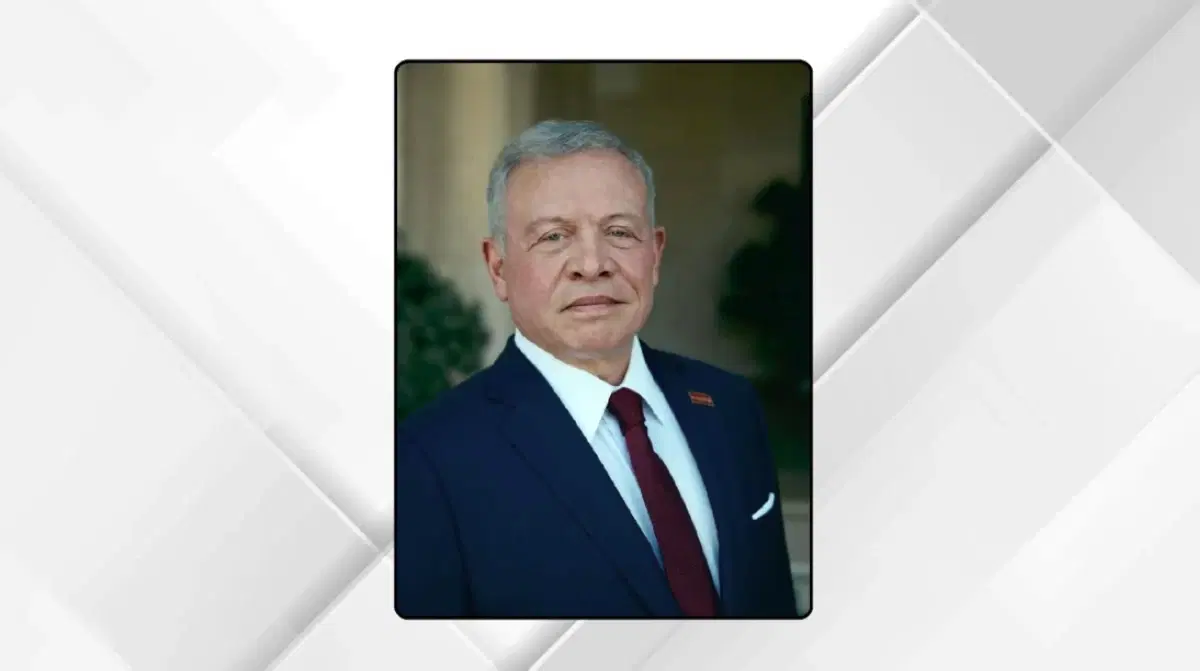
His Majesty the King participates in the meetings of the United Nations General Assembly currently being held in New York and delivers a speech at the opening session of the meetings of the United Nations General Assembly in its eighty-first session, in the presence of His Highness Crown Prince Hussein bin Abdullah II.
Speakers confirm that the royal speech reflects an integrated Jordanian vision based on defending security, stability and peace, adhering to international law and resolutions of international legitimacy, foremost among them the Palestinian issue.
Dr. Hassan Al-Duja, Professor of Strategic Studies at Al-Hussein Bin Talal University, confirmed that the speeches of His Majesty King Abdullah II before the United Nations General Assembly represent a key station for understanding the foundations of Jordanian foreign policy and the priorities of the Kingdom's diplomatic movement towards regional and international issues.
He explained that the royal speech reflects an integrated Jordanian vision based on defending security, stability and peace, adhering to international law and resolutions of international legitimacy, foremost among them the Palestinian issue, which occupies a central position in Jordanian foreign policy.
Al-Duja explained that His Majesty the King placed the Palestinian issue at the forefront of his speeches, confirming that the continuation of the Palestinian-Israeli conflict for long decades can no longer be satisfied with statements and condemnations, but requires the international community to take practical steps capable of ending the conflict and achieving peace.
He pointed out that His Majesty referred in his speeches to what the Palestinian people have suffered over decades of killing, displacement and loss of rights and dignity, confirming that the continuation of this situation cannot form a basis for security and stability in the region.
His Majesty the King had said during his speech at the eightieth session of the United Nations General Assembly last September, "When will we find a solution to the Palestinian-Israeli conflict? A solution that protects the rights of all parties and provides a normal life for families living in the heart of this conflict".
Al-Duja added that the royal position highlights the continuous emphasis that the Palestinian issue is not only a humanitarian issue, but also a political and legal issue linked to the right of the Palestinian people to self-determination and the establishment of their independent state.
He pointed out that His Majesty the King renewed the emphasis on the two-state solution as the framework through which sustainable peace can be achieved, through the establishment of an independent and viable Palestinian state with East Jerusalem as its capital alongside Israel, within arrangements that ensure security and peace for all the peoples of the region.
He stressed that Jerusalem holds a special place in the royal speech and Jordanian foreign policy, stemming from the Hashemite custodianship over Islamic and Christian holy sites, explaining that His Majesty the King emphasized the need to protect the legal and historical status quo in the holy city and warned against any measures that could alter its identity or infringe on the holy sites, as it is an issue that goes beyond the limits of political conflict due to its religious, humanitarian and international dimensions.
Al-Duja explained that Jordanian efforts have moved from political and diplomatic positions to field work, as His Majesty the King referred to Jordan's role in supporting the humanitarian response in Gaza and facilitating the delivery of food and medical aid through land convoys, airlifts and medical cadres, reflecting a Jordanian approach that combines political action with humanitarian effort and does not limit itself to expressing positions.
He continued that the royal speech reflects a broader vision of Jordanian foreign policy based on employing diplomacy to prevent the expansion of conflicts, protect Jordan's interests and enhance regional security, as Jordan views the Palestinian issue as directly linked to the security and stability of the Middle East, and that the continuation of occupation, conflict, violence and regional tensions threatens the future of the entire region.
Al-Duja explained that His Majesty the King's speech at the United Nations represents an extension of the continuous royal efforts at the international and regional levels to keep the Palestinian issue at the forefront of the international agenda, mobilize support for a political solution, stop the war, protect civilians, reject displacement, and push towards the establishment of an independent Palestinian state.
He confirmed that Jordanian diplomacy, led by His Majesty the King, is moving on parallel political, humanitarian, legal and diplomatic tracks, seeking to transform international positions from mere statements into practical actions, pointing out that the essence of the Jordanian message remains clear that sustainable Israeli security and real regional stability cannot be achieved without a just solution to the Palestinian issue, based on the establishment of a Palestinian state and the realization of the legitimate rights of the Palestinian people and the achievement of a just and comprehensive peace in the region.
Dr. Akhlef Al-Trawneh went on to say that reading the speeches of His Majesty King Abdullah II before the United Nations General Assembly over the past years reveals a continuous political and intellectual path, maintaining clear constants, foremost among them the Palestinian issue and the right of the Palestinian people to establish their independent state, alongside the emphasis on just peace, respect for international law and the protection of human rights.
Al-Trawneh explained that what is striking about these speeches is that His Majesty the King did not limit himself to describing the crises facing the region, but increasingly held the international community accountable for its responsibility towards them and the ability of its institutions to protect international law and apply the principles of justice equally, confirming His Majesty that the continuation of double standards not only threatens the issues at hand, but also weakens confidence in the international system and its institutions.
He pointed out that the particularity of the royal speech stems from combining the Jordanian national dimension and the humanitarian dimension of the Palestinian issue; Jordan speaks from a position directly affected by the repercussions of the conflict, while at the same time presenting the issue as a matter of rights, justice and stability, not just a transient political crisis.
Al-Trawneh pointed out that the royal messages warned of the dangers of continuing the conflict and clearly emphasized that addressing its roots is the real path to security and stability, and that peace is not achieved by managing or postponing the conflict, but by addressing its causes and reaching a just political solution.
He explained that what distinguishes the royal speech is addressing the international community in the language of responsibility; what is required is not only for the world to realize the magnitude of what is happening, but also for it to assume its responsibility towards it, which is a message that goes beyond the current circumstance to raise a broader question about the future of the international system and its ability to protect justice, law and human rights equally.
For his part, Dr. Hassan Al-Momani, Director of the Center for Strategic Studies at the University of Jordan, confirmed that the speeches of His Majesty King Abdullah II before the United Nations General Assembly represent a permanent regional and international reference for how to bring peace and security at the regional and global levels, due to the experience, credibility, rational, firm and balanced logic that His Majesty the King possesses.
He said that the speeches of His Majesty the King consistently reflect the priorities of Jordan and the region and the world, which are issues that touch the strategic national interests of Jordan, foremost among them the Palestinian issue.
Al-Momani added that the royal speech regarding the Palestinian issue and the rights of the Palestinian people has always been the most balanced and firm, pointing out that the past three years, specifically after the war on Gaza, have shown how this balanced and firm speech has made a real difference in this file.
He explained that His Majesty the King combined firmness and courage in his speeches to clarify points, and to state what the Israeli government practiced in the ugliest forms of displacement and killing, noting that His Majesty the King always focuses on the importance of international partnership and collective action to maintain global security, starting from the fact that the issues facing the world are larger than the capabilities of individual countries, and require joint efforts.
He pointed out that His Majesty the King pays constant attention to humanitarian issues, especially refugee issues, considering Jordan one of the largest host countries for refugees, and its humanitarian role in this regard.
He explained that the issue of confronting extremism and terrorism forms another axis that His Majesty the King constantly raises, affirming that Jordan leads this file and possesses the expertise and ability to contribute effectively to confronting it, in addition to issues of economic and security cooperation.
Al-Momani concluded that the speeches of His Majesty the King represent a reference stemming from global experience and credibility, reflecting the brilliance of Jordanian diplomacy under His Majesty's leadership, affirming that the meetings of the General Assembly hold an important place in the context of multilateral diplomacy, and constitute an opportunity to emphasize and highlight the issues that touch on Jordan's strategic national interests.
Dr. Mu'adh Abu Dlu, Professor of Public Law, confirmed that the speeches of His Majesty King Abdullah II at the United Nations General Assembly always receive wide international attention and interest, as His Majesty represents the voice of the region and the Arab world in international forums.
Abu Dlu explained that the central message that His Majesty's previous speeches have always carried emphasizes that the absence of stability and peace prevents talking about the region's opportunities and potential, noting the King's continuous warnings that a region that has witnessed many wars remains likely to produce more unless the core of the conflict is addressed, with a call for regional countries to exercise wisdom to avoid its spread.
He pointed out that the royal speeches have always highlighted Jordan's steadfastness in the face of economic, political, and security challenges, and its categorical refusal to be a arena for regional conflicts, alongside its commitment to opening channels of dialogue with all parties in pursuit of consolidating international peace and security.
Abu Dlu added that the Jordanian constants that were reflected in the previous speeches focused on the necessity of reducing regional escalation, alongside Jordan's firm stance with the sovereignty and stability of Lebanon, the call for the unity and stability of Syria, and the end of disturbances in the West Bank and ensuring the delivery of aid to the Gaza Strip.
He stressed that the speeches of His Majesty the King framed the steadfast Jordanian position towards the Palestinian issue as the central issue, calling for respect for international legitimacy decisions and a just and comprehensive solution according to the borders of June 4, 1967, and the establishment of an independent Palestinian state with East Jerusalem as its capital based on the Arab Peace Initiative (Beirut Summit 2002) and the principle of land for peace.
He pointed to the constant affirmation of the royal speeches on confronting any attempts to infringe upon the Hashemite custodianship of the Islamic and Christian holy sites in Jerusalem, and supporting the continuation of the work of the United Nations Relief and Works Agency for Palestine Refugees in the Near East (UNRWA), with the absolute rejection of any attempts to displace Palestinians, making the end of the Palestinian-Israeli conflict the main gateway and key to achieving international stability, security, and peace.
Dr. Misha'al Al-Ma'adi, Professor of Constitutional Law, said that the speeches of His Majesty the King at the United Nations General Assembly are not just a presentation of the Jordanian position, but are an active Jordanian presence in shaping the international stance towards regional issues.
He added that these speeches have maintained clear constants, foremost of which are the Palestinian issue and the right of the Palestinian people to an independent state with East Jerusalem as its capital, and the Hashemite custodianship of the holy sites.
Al-Ma'adi explained that what stands out in the royal speech is a vision based on peace, moderation, respect for international law, and rejection of double standards in dealing with crises, noting that the speech is characterized by its ability to combine clarity of position, depth of vision, and strength of argument without abandoning the language of dialogue and balance.
He pointed out that the importance of the royal presence internationally lies in the fact that Jordan is not content with expressing its position, but rather presents an integrated political vision for regional issues, and places the international community before its responsibilities towards achieving peace and stability.
Know more about this story?Send us a tip
Ask about this report — answers stay grounded in its text.