
Political and humanitarian messages to the international community
The importance of respecting international law and protecting the rights of peoples
Follow Al Rai

Combined defense of rights and adherence to diplomacy
Political and humanitarian messages to the international community
The importance of respecting international law and protecting the rights of peoples
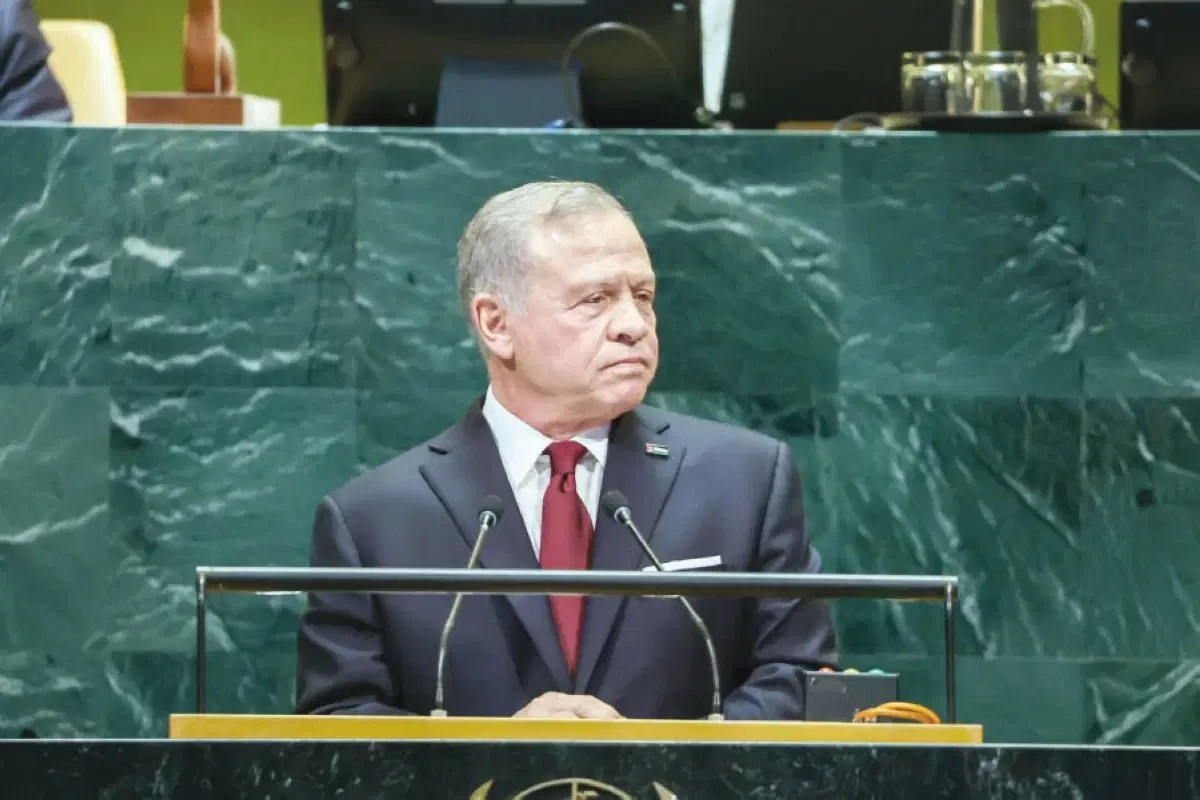
The echoes of the speech delivered by His Majesty King Abdullah II before the United Nations General Assembly did not stop at the limits of Jordan's position on regional and international issues, but its contents extended to broader areas related to building awareness among young generations, and what the national and political messages contained in the speech can carry as material for discussion within educational institutions.
Experts and stakeholders believe that the royal speech, with its emphasis on Jordan's principles and positions on national and pan-Arab issues, along with its discussion of the transformations imposed by the digital environment on the way information is received and paid attention to, provides an important space for schools and universities to turn some of its contents into discussion and analysis topics, thereby enhancing students' ability to understand Jordan's position in its regional and international environment, and to read political and media discourse more consciously.
Ajloun Governor Nayef Al-Hadayat said that the royal speech reflects the constants of the Jordanian state and its firm positions on regional issues, foremost of which is the need to achieve security and stability, respect for international law, and the protection of the rights of peoples, affirming that Jordan, under the leadership of His Majesty the King, continues to play its role in supporting efforts aimed at achieving peace and ending crises.
MP Ayah Allah Al-Frehatat pointed out that the royal position embodies Jordan's keenness to defend its national interests and Arab issues, noting that the Jordanian presence in international forums confirms the importance of the role played by the Kingdom in promoting dialogue and understanding, and raising humanitarian and regional issues before the international community.
Aqaba Governorate Council President Musa Al-Dardasawi affirmed that the speech of His Majesty King Abdullah II before the United Nations General Assembly carried clear political messages, reflecting the steadfastness of Jordan's position on regional issues, foremost of which is the Palestinian issue, and placing the international community before its responsibilities in facing crises, warning that the continued neglect and failure to enforce international law and turn resolutions into actions will make crises a permanent reality, and silence a position with consequences.
He said that His Majesty the King emphasized that Jordan, while adhering to peace and political solutions, does not overlook its national security, sovereignty, and interests, pointing out that the concept of security is no longer limited to protecting borders, but also includes water, food, energy, economic stability, employment opportunities, and the future of Jordanians.
Al-Dardasawi stressed the support of the Aqaba Governorate Council for the national positions and constants expressed by His Majesty the King, affirming that the Palestinian issue, Jerusalem, and the holy sites and the two-state solution are not seasonal headlines in Jordanian policy, but rather firm constants.
The Chairman of the Karak Governorate Council Committee, Ismat Al-Majali, and the members of the Committee expressed their pride and full support for the national and pan-Arab positions and constants contained in the speech of His Majesty King Abdullah II, which clearly reflected Jordan's constants and wise vision towards the current challenges facing the region and the world.
The Committee said in a statement issued by it that the royal speech carried a clear and bold message to the international community, emphasizing the need to move from the phase of 'crisis management' to addressing its root causes, resorting to the rules of international law and the values of justice, and rejecting the continuation of the humanitarian suffering endured by the brotherly Palestinian people, stressing their right to freedom, independence, and the establishment of their independent sovereign state, which guarantees the achievement of just and comprehensive peace in the region.
The Chairman of the Board of Directors of the Karak Chamber of Commerce, Mamdouh Al-Qaraleh, and the members of its Board of Directors, its employees, and the commercial sector in Karak Governorate, expressed their full support for what was contained in the speech of His Majesty King Abdullah II, highly appreciating His Majesty's national, pan-Arab, and humanitarian positions, which reflect with boldness and clarity the constants of the Kingdom and the wise vision towards the current challenges facing the region and the world.
The Union of Charitable Associations in Karak Governorate, represented by its administrative and general body, affirmed its full support for His Majesty King Abdullah II ibn Al-Hussein and his endorsement of the positions expressed by His Majesty in his speech before the international community, which embody Jordan's national, pan-Arab, and humanitarian constants, and reflect the clarity of the Jordanian vision towards various regional and international issues.
The President of the Union, Maan Al-Shamayle, said, 'We are listening to the voice of Jordan, which His Majesty expressed with clarity and firmness, we affirm that we are with His Majesty in every national and pan-Arab position, and with every word he says in defense of Jordan, its security, sovereignty, and supreme interests, and in defense of the Palestinian cause and the rights of the Palestinian people, Jerusalem, and its holy sites.'
The Rapporteur of the Women's Committees Gathering / Karak, Deputy Chairman of the Greater Karak Municipal Committee, Maysoon Al-Mubaidin, said that the speech of His Majesty the King received widespread echoes on all levels and was considered one of the strongest speeches before the General Assembly, clear and direct in the issues that concern the region.
Al-Mubaidin praised the contents of His Majesty's speech, which reinforced Jordanian constants and the comprehensive vision of the fateful issues in the region and the world, in addition to emphasizing the protection of Jordanian national interests, safeguarding the security and stability of the Kingdom, and explicitly and firmly warning of the double standards of applying international law with its legal and moral content.
The Executive Director of the National Identity Initiative, Dima Al-Majali, said that His Majesty's speech before the United Nations General Assembly was not just a political speech, but carried deep messages that go beyond the moment of the speech, which is cause for pride that His Majesty spoke in the language of the confident state, a state that believes in diplomacy and peace, but does not compromise on its security, sovereignty, and interests, a state that stands with Palestine, protects the holy sites, adheres to the Hashemite custodianship, defends international law, and at the same time knows how to protect its borders and water security.
Digital media researcher and digital belief management advisor, Dr. Ayham Al-Otom, believes that what His Majesty King Abdullah II presented in his speech before the United Nations General Assembly about the decline in the duration of an individual's attention in front of the screen goes beyond the daily technical dimension, to touch on a structural challenge represented by dealing with attention as a rare and valuable resource that algorithms and narratives compete for.
Al-Otom emphasizes that the strategic importance of the royal proposal lies in shifting the media perspective from the traditional question: how do we produce the message? To the deeper question: how do we get attention, and what do we do with this attention once we get it? Here lies the opportunity for media colleges, through media and information literacy, to turn the royal speech into an applied laboratory, in which students study an integrated path starting with attention, then moving to perception, evaluation, and trust, up to the formation of belief and taking a position.
Professor of Media and Communication, Dr. Muhammad Al-Quraan, said that the speech of His Majesty King Abdullah II before the United Nations General Assembly can form an important material for dialogue within universities, not only from a political angle, but also as a national and international speech that raises issues that affect the present and future of the region, foremost of which is the Palestinian issue, security and stability, respect for international law, and the importance of dialogue and diplomacy in addressing crises.
Al-Quraan added that the university is required to be a real space for analyzing the speech and discussing its contents, so that the student moves from the stage of listening to the stage of questioning, analysis, and discussion, noting that the university student today receives a huge amount of information through the media and social media platforms, which makes his academic role to verify the information, analyze media messages, and distinguish between information and opinion.
He pointed out that the royal speech can open wide discussions among students about an important question related to how young people understand the transformations taking place in the region and deal with them with awareness and responsibility, away from rumors and misleading information.
The heads of municipal committees in Mafraq Governorate praised the contents of His Majesty King Abdullah II's speech before the United Nations General Assembly, affirming that the speech embodied the constants of Jordan's position on various national and pan-Arab issues, especially the Palestinian issue, Jerusalem, and Islamic and Christian holy sites.
They affirmed that the Hashemite position remained firm in defending the legitimate rights of the Palestinian people, and rejecting any attempts targeting the displacement of Palestinians or infringing on their rights, in addition to emphasizing the need to achieve a just and comprehensive peace that guarantees the establishment of an independent Palestinian state on its national soil with East Jerusalem as its capital.
The committee heads said that the speech of His Majesty the King clearly reflected Jordan's responsibility towards the issues of its nation, and affirmed its presence and position in international forums, affirming that the positions expressed by His Majesty are based on firm Jordanian constants, foremost of which is protecting the interests of the homeland, preserving its security and stability, and defending Jerusalem and the holy sites.
They expressed their pride in the Hashemite position led by His Majesty the King, affirming their standing in a single row behind His Majesty and his Hashemite banner, and their pride in his wise leadership and national and pan-Arab positions, which made Jordan present and active in regional and international issues, and a defender of the issues of the nation and the rights of peoples.
Dr. Salama Al-Naimat, President of Mu'tah University, and Dr. Itimad Al-Jaafra, Director of Administrative and Financial Affairs at the Directorate of Education for the Southern Mazar Governorate, confirmed that King Abdullah II's speech before the United Nations General Assembly reflected the clarity of the Jordanian vision and the steadfastness of the position towards regional issues, foremost among them the Palestinian issue, and placed the international community before its responsibilities in dealing with crises in accordance with the principles of justice and international law.
Naimat said that King Abdullah's speech came at a precise time when the region is going through very complex circumstances, which gave it importance beyond the occasion itself, to be a clear expression of Jordan's vision towards regional developments and issues that affect the security of the region and the future of its peoples.
He pointed out that the essence of the speech is represented in the emphasis that achieving security and stability cannot be achieved by dealing with the results of crises and leaving their causes in place, explaining that the experiences that the region has lived through over the past years have proven that crises that do not find real solutions increase in complexity and produce more suffering.
He stressed the importance of continuing to deal with the Palestinian issue based on the rights of the Palestinian people to freedom, self-determination, and the establishment of their independent state, explaining that peace that does not address the root of the problem remains a postponed peace, and that stability that is not based on justice cannot be stable in the true sense.
For her part, Al-Jaafra said that King Abdullah's speech before the United Nations carried a clear message that puts the truth at the forefront of the international scene, confirming that the Jordanian word in international forums is based on a clear position that does not compromise on rights and does not ignore the reality of what is happening in the region.
She added that King Abdullah spoke in a clear language that does not beautify reality or hide from naming things by their names, pointing out that recognizing reality as it is represents a basic step towards achieving justice and addressing the crises witnessed by the region.
Al-Jaafra pointed out that King Abdullah's speech emphasized the importance of international accountability, and that silence in the face of facts does not create justice, while addressing crises requires courage in facing facts and assuming responsibilities, noting that the Jordanian position combines a desire for peace, adherence to rights, openness to dialogue, and protection of national interests.
The Municipality of New Ma'an indicated that King Abdullah's speech carried clear messages confirming the wisdom of the Jordanian leadership and the steadfastness of its positions towards regional and international issues, and His Majesty's keenness to uphold Jordan and protect its interests, in addition to continuing the Kingdom's role in supporting security, peace, and stability in the region.
The Municipality appreciated what the speech included of affirming the need to respect international law and protect the rights of the Palestinian people, and for the international community to bear its responsibilities towards the crises witnessed by the region and the world, and to work to address them in a way that contributes to achieving peace and stability, and not to be content with containing them.
For her part, Dr. Manal Taha, Coordinator of the 'Happy Day' initiative at Mu'tah University, confirmed that King Abdullah's speech expresses a clear and steadfast Jordanian position towards Arab and international issues, and confirms Jordan's continued defense of just causes, foremost among them the Palestinian issue, based on its national principles and steadfast positions.
For his part, educational media spokesperson Ahmed Al-Kharsha said that King Abdullah's speech before the United Nations General Assembly expressed the thought and direction of Jordanians towards Arab issues in particular, and international issues in general, confirming that the Palestinian issue is present at the core of the Jordanian position, and that Jordan continues to emphasize the need to protect the rights of the Palestinian people and respect international law.
Tourism guides working in Petra City said: “We follow with pride the steadfast national positions embodied by Jordan with its Hashemite leadership, and we affirm our adherence to the Jordanian national constants, our pride in our Hashemite leadership, and our standing in a single row behind His Majesty King Abdullah II ibn Al-Hussein and His Crown Prince, in everything that preserves the security, stability, sovereignty, and status of Jordan.”
They added in a statement: “We, as sons of this homeland and workers in one of the most important monuments of human civilization and heritage in Jordan, affirm our loyalty and belonging to Jordan and its Hashemite leadership, and our pride in the role played by the leadership in protecting the interests of the Kingdom and preserving its security, stability, and sovereignty.”
They emphasized their support for the Jordanian Armed Forces “Arab Army” and the security agencies, and their appreciation for the role they play in protecting the homeland, its borders, and the security of its citizens.
For her part, the Committee of the Jordanian Journalists Syndicate – Aqaba Branch, said that King Abdullah's speech before the international community reflects a steadfast Jordanian position in defending the sovereignty, security, and national interests of the Kingdom, foremost among them border security and water security, in addition to supporting the legitimate rights of the Palestinian people, and calling for respect for international law and the resolutions of international legitimacy, and confirmed that the Hashemite custodianship of the Islamic and Christian holy sites in Jerusalem represents a steadfast historical position for Jordan, alongside the Kingdom's continued adoption of dialogue and diplomacy and adherence to humanitarian values as a means to achieve peace.
Ahmed Al-Ghanem, Director of the Queen Rania Al-Abdullah Center for Empowering Communities in Aqaba, said that King Abdullah's speech before the United Nations carried firm national and humanitarian messages, which clearly expressed the Jordanian constants in consolidating peace, protecting human beings, and defending the values of security, stability, and justice.
He added that the unity of Jordan, the cohesion of its people, and the solidarity of its sons will remain the main pillar on which the homeland relies in facing challenges and preserving its achievements and gains.
Father Thomas Zayadin, priest of the St. Nicholas Church for Greek Orthodox in Aqaba, confirmed that King Abdullah's speech carried a clear moral and political message to the international community, and that the Jordanian position embodies a steadfast loyalty to humanitarian principles and values, and confirms that Jordan continues to play its role in defending peace, justice, and dialogue, and rejecting the conversion of humanitarian issues and holy sites into subjects subject to changing political calculations.
He pointed out that King Abdullah's speech carried a clear position for the world towards protecting the Christian presence in the East and its holy sites, alongside defending Islamic holy sites, in a comprehensive message confirming that preserving holy sites is no less important than the responsibility of protecting human beings and their right to practice their beliefs freely and with dignity, and that this steadfast Hashemite approach in caring for Islamic and Christian holy sites in Jerusalem reflects Jordan's historical responsibility in preserving the identity of the Holy City and its holy sites.
In the same context, retired Colonel Fahd Muwafaq Al-Naimat explained that King Abdullah II's speech formed a new station to affirm the Jordanian presence and its steadfast positions towards the issues of the region, under the leadership of the Hashemite leader who, when he speaks, silences everyone to listen carefully; his speech carries the vision of a leader, the wisdom of a king, and a sincere concern for Jordan and its people, and this was embodied in the emphasis that Jordan will not turn away, but will protect its security, water, and the interests of its people, while continuing to defend the Palestinian cause and support the security and stability of Palestine, Syria, and Lebanon, reflecting the steadfastness of the Jordanian position and its regional responsibility.
Dr. Omar Al-Ashaash, Coordinator of the 'We Are All Jordan' Youth Body in Aqaba Governorate, confirmed that King Abdullah II's speech before the United Nations General Assembly went beyond describing crises to trying to rearrange the priorities of international attention towards a region where transformations are accelerating and sources of threat are intertwined.
Dr. Hassan Muhammad Al-Shalbi, President of Tafila Technical University, said that King Abdullah II ibn Al-Hussein's speech before the United Nations General Assembly embodies the steadfast Jordanian position, and reflects His Majesty's vision in defending peace and stability, the legitimate rights of the Palestinian people, and respect for international law.
Al-Shalbi added in a statement issued by the university that His Majesty's words were clear and comprehensive, and carried deep messages to the international community, especially regarding the Palestinian issue and what the Palestinian people are facing in Gaza and the West Bank, and the need to reach a just and lasting solution that guarantees the legitimate rights of the Palestinian people, and preserves the security and stability of the region.
He pointed out that His Majesty, bearing his national, national, and humanitarian responsibility, placed the international community before its responsibilities, confirming that addressing crises is not only by managing them, but by addressing their roots and reaching fair and sustainable solutions.
Dr. Salama Al-Naimat, President of Mu'tah University, and Dr. Itimad Al-Jaafra, Director of Administrative and Financial Affairs at the Directorate of Education for the Southern Mazar Governorate, confirmed that King Abdullah II's speech before the United Nations General Assembly reflected the clarity of the Jordanian vision and the steadfastness of the position towards regional issues, foremost among them the Palestinian issue, and placed the international community before its responsibilities in dealing with crises in accordance with the principles of justice and international law.
Naimat said that King Abdullah's speech came at a precise time when the region is going through very complex circumstances, which gave it importance beyond the occasion itself, to be a clear expression of Jordan's vision towards regional developments and issues that affect the security of the region and the future of its peoples.
He stressed the importance of continuing to address the Palestinian issue based on the rights of the Palestinian people to freedom, self-determination, and the establishment of their independent state, explaining that peace that does not address the root of the problem remains a postponed peace, and that stability that is not based on justice cannot be stable in the true sense.
For her part, Al-Ja'afra said that the King's speech before the United Nations carried a clear message that puts the truth at the forefront of the international scene, affirming that the Jordanian word in international forums is based on a clear position that does not compromise on rights and does not ignore the reality of what is happening in the region.
She added that His Majesty spoke in a clear language that does not beautify reality or hide from naming things by their names, pointing out that recognizing reality as it is represents a fundamental step towards achieving justice and addressing the crises witnessed by the region.
Al-Ja'afra pointed out that His Majesty's speech emphasized the importance of international accountability, and that silence in the face of facts does not create justice, while addressing crises requires courage in facing facts and bearing responsibilities, noting that the Jordanian position combines a keenness on peace, adherence to rights, openness to dialogue, and protection of national interests.
Dr. Firas Al-Hanandeh, President of Ajloun National University, said that the royal speech represents a clear political and humanitarian message, and emphasizes the importance of employing dialogue and diplomacy in addressing crises, pointing out that universities and higher education institutions are concerned with enhancing awareness of national and regional issues and consolidating the values of dialogue and peace.
Engineer Muawiyah Anaab, Chairman of the Ajloun Governorate Council Committee, pointed out that the royal positions in international forums form a clear framework for national work, affirming the importance of supporting the development process and enhancing the role of the governorates in serving citizens and achieving sustainable development.
Ismail Al-Arouad, Chairman of the Kafra' Municipality Committee, said that the royal speech highlights the importance of security and stability as a basic pillar for development, explaining that municipalities and local administration institutions continue their role in improving the level of services and enhancing the participation of the local community in the development process.
Engineer Basma Al-Amoush, Chairman of the Shafa Municipality Committee, said that the royal messages reflect Jordan's concern for human beings and their right to security and dignity, pointing to the importance of supporting local communities, empowering women and youth, and enhancing developmental and voluntary work in various areas of the governorate.
Engineer Bashar Al-Nawfalah, Director of the Agricultural Credit Institution, pointed out that political and security stability forms the basis for supporting the agricultural sector and stimulating investment in it, affirming the importance of continuing programs that enable farmers and help them develop their projects and improve their production capacity.
Engineer Saytan Al-Srahan, Director of Ajloun Agriculture, pointed out that the agricultural sector represents one of the basic components of the national economy, and that enhancing food security and protecting natural resources are of increasing importance in light of regional and international challenges, affirming the importance of directing support towards farmers and enhancing sustainable agricultural development.
Engineer Hazem Al-Amowi, Director of Kafra' Agriculture, said that the royal positions emphasize the need to enhance reliance on productive sectors, including agriculture, to support the national economy and improve the living conditions of citizens in agricultural areas.
Firas Al-Khatib, Director of Ajloun Tourism, said that the stability emphasized by the royal speech represents an important factor in supporting the tourism sector, pointing out that Ajloun, with its natural, archaeological, and tourist sites, is capable of attracting more visitors and enhancing local development, in line with national directions to promote tourism.
Samer Freihat, Director of Ajloun Culture, pointed out that the royal speech gives great importance to humanitarian issues and dialogue between peoples, explaining that culture forms a bridge for communication and enhancing values of tolerance, understanding, and rejection of violence and extremism, affirming the role of cultural institutions in spreading awareness and consolidating national identity.
Dr. Ayman Freihat, Dean of Ajloun University College, said that the royal messages emphasize the importance of investing in human beings, education, and knowledge, pointing out that young people represent a fundamental pillar in building the future, and that higher education institutions bear the responsibility of preparing generations capable of dealing with challenges and contributing to the development process.
Arab Al-Samadi, former deputy and President of the Ajloun Chamber of Commerce, said that the royal speech places economic and humanitarian issues within an integrated vision of security and stability, pointing out the importance of supporting the private sector and empowering commercial and investment institutions to provide job opportunities and drive the local economy.
Dr. Adnan Maktesh, Dean of the Faculty of Engineering at Hashemite University, pointed out that the royal messages emphasize the importance of science, knowledge, and innovation in facing contemporary challenges, pointing out that developing the education and scientific research system contributes to building a knowledge-based economy and enhancing Jordan's ability to keep pace with global changes.
Moza Freihat, President of the Ajloun Branch of the Change Party, pointed out that the royal speech reflects a steadfast Jordanian position towards regional and humanitarian issues, affirming the importance of the role played by parties and civil society institutions in enhancing political awareness and national dialogue, and consolidating the culture of participation and responsibility.
Know more about this story?Send us a tip
Ask about this report — answers stay grounded in its text.




