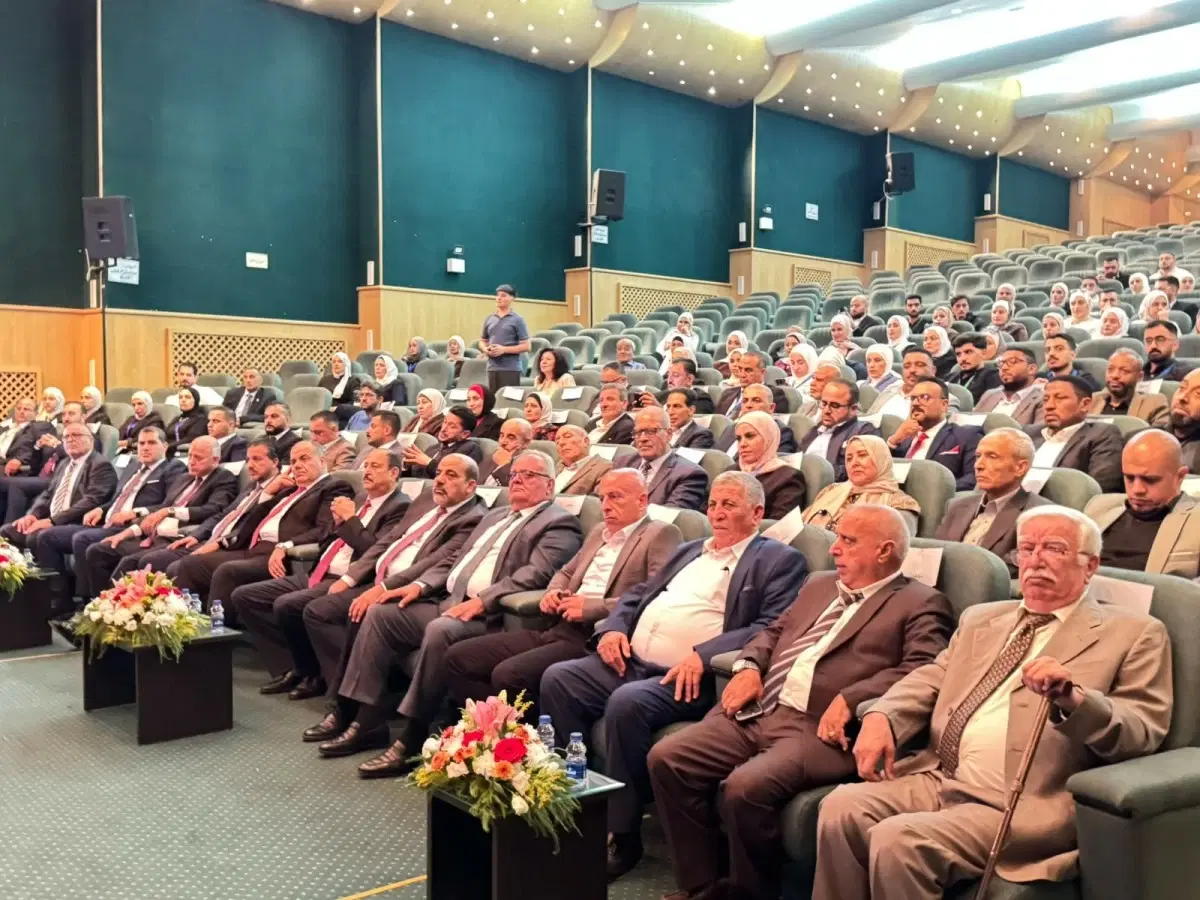
The 7th International Karak Medical Conference showcases the latest healthcare developments and explores future prospects
Al-Shayab: The efficiency of our staff and our medical achievements have solidified trust in the healthcare system
Amman5 min read
Share
Secretary-General of the Ministry of Health for Primary Healthcare and Epidemics, Dr. Raed Al-Shayab, stated that the health sector in Jordan, in both its public and private branches, has achieved qualitative accomplishments and a distinguished position, thanks to the efforts of its medical, nursing, technical, and administrative staff, who are known for their competence, as well as the accumulated experience, expertise, and institutional structure that have contributed to consolidating trust in our healthcare system and making it one of the fundamental components of the national development process.
Al-Shayab, who attended on behalf of the Minister of Health to sponsor the opening ceremony of the 7th International Medical Conference of the Karak Branch Committee of the Jordan Medical Association—held at the Al-Hassan Cultural Center in Karak in the presence of the representative of the Karak Governor, the Qasaba District Administrator Dr. Sufian Al-Hajaya, the President of the Jordan Medical Association Dr. Issa Al-Khashashneh, official figures, and with broad medical participation from all public and private sectors—added that the convening of this conference comes at a time when scientific and medical developments are accelerating and challenges are increasing, making the exchange of knowledge and experience and staying updated on the latest medical developments and practices an essential necessity to improve the level of healthcare and enhance our ability to respond to the needs and aspirations of citizens.
He pointed out that the importance of the conference goes beyond the scientific papers and specialized lectures it presents, to the spirit of partnership and integration it embodies among the various components of the health sector, and the space it provides for constructive dialogue, discussion of challenges, and exploring opportunities for development and innovation, all of which contribute to building an integrated and sustainable healthcare system.
He emphasized that the Ministry continues its efforts to strengthen the healthcare system at its primary, secondary, and tertiary levels, working to increase service efficiency, improve quality, and enhance integration among its components to ensure access to more comprehensive healthcare that responds to citizens' requirements.
Conference President Dr. Hatem Al-Tarawneh said that the persistence in holding medical conferences year after year reflects the Syndicate's commitment to fulfilling its mission in spreading health awareness and scientific development and supporting continuous medical education. It also constitutes a real addition to the journey of the Jordanian health sector, which takes pride in its achievements and its medical and scientific staff who have created, and continue to create, Jordanian success stories despite challenges and limited resources.
He added that organizing this conference with the participation of a selection of doctors, pharmacists, and workers in allied medical professions from various specialties from inside and outside the Kingdom, in cooperation with other specialized syndicates and pharmaceutical companies and warehouses, creates a space for meeting expertise, science, and experience, and showcasing the rapid developments in medical sciences to achieve a sustainable impact in serving both health sectors and citizens alike.
For his part, the President of the Jordan Medical Association, Dr. Al-Khashashneh, said that the Syndicate attaches utmost importance to supporting the branch committees emerging from the Syndicate in the governorates, based on its belief in the necessity of strengthening its presence and role in all regions of the country, consolidating the principle of justice in providing services, enabling committees to perform their syndicate, scientific, and professional mission, supporting their activities and initiatives, overcoming the difficulties they face, and working to address issues and challenges in a way that contributes to improving the work environment, enhancing opportunities for continuous medical education, and upgrading the level of health services.
Al-Khashashneh expressed his hope that all branch committees would exert more efforts to strengthen aspects of cooperation and coordination with the Syndicate Council, which contributes to organizing and regulating the profession, consolidating commitment to the provisions of the Syndicate’s law, regulations, and medical constitution, maintaining professional ethics and conduct, and addressing any practices or violations that would harm the status of the profession and its humanitarian mission.
In turn, the Chairman of the Scientific Committee of the conference, Dr. Khaldoun Al-Allawi, said that the conference, which came as a result of diligent efforts and fruitful cooperation between various committees and colleagues in the sector, will discuss over four days nearly (250) scientific and research papers in various medical fields, presented by a selection of doctors and researchers from the Ministry of Health, the Royal Medical Services, the private medical sector, universities, and academic institutions. A scientific paper on "Combating Smoking" was also organized to shed light on the dangers of this scourge and its serious complications.
Retired Major General Dr. Moeen Al-Habashneh presented a commemorative lecture in which he discussed the history of medicine and healthcare in Karak Governorate, from historical roots to modern medicine and artificial intelligence.
Al-Habashneh called for facing the increasing future challenges in the medical sector by updating infrastructure, providing precise medical specialties in the governorates, developing primary and integrated care, using smart technologies in early diagnosis, developing telemedicine services, and supporting precise surgeries based on modern technologies.
The Rapporteur of the Media Committee at the Jordan Medical Association, Dr. Mohammed Al-Tarawneh, valued the great efforts made by national media outlets, praising their pivotal role in highlighting medical and national events, consolidating the Jordanian identity and the values of belonging and good citizenship, and conveying the national message with all objectivity and honesty from all governorates of the Kingdom.