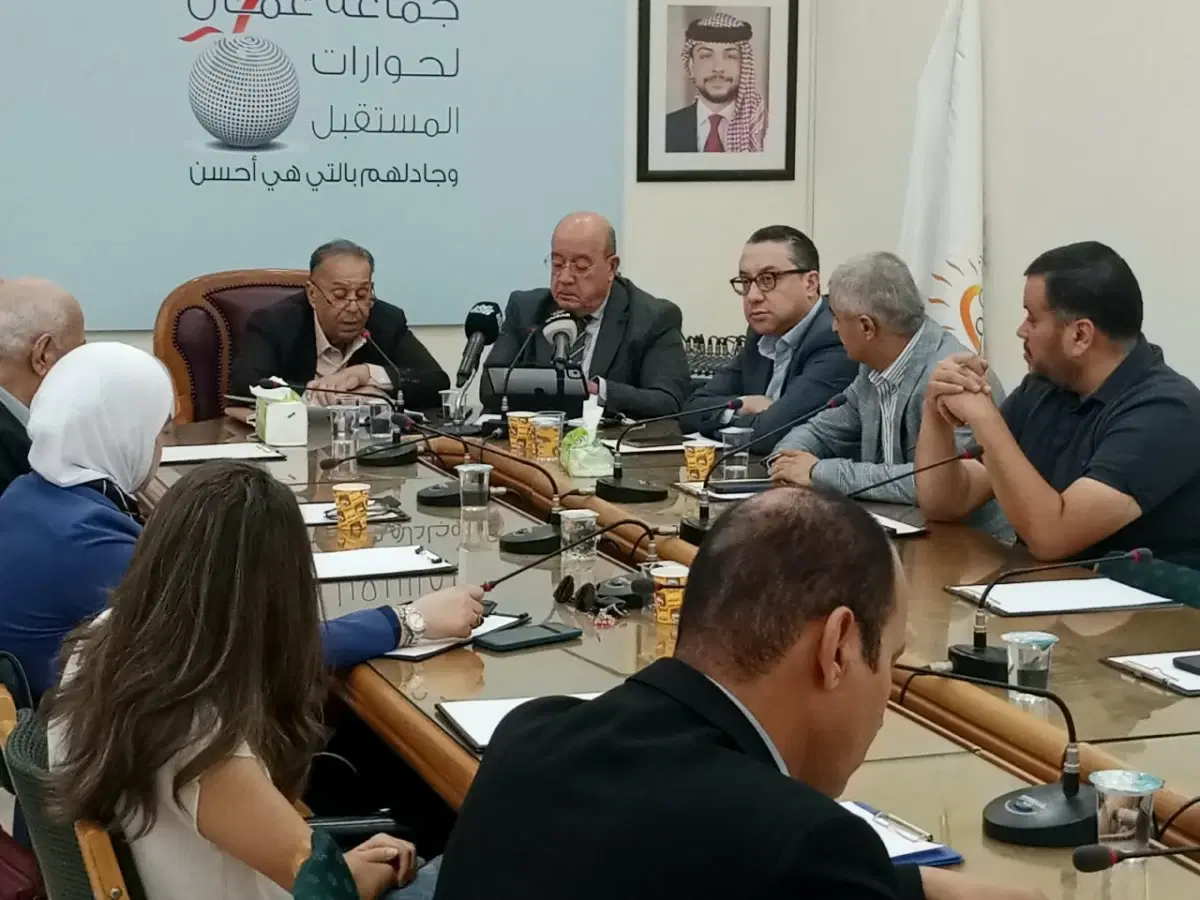
Al-Tal explained that the group's health team includes doctors, pharmacists, experts in health administration, and specialists familiar with the reality of the health sector, with the aim of providing an assessment based on data and practical reality.
For his part, the rapporteur of the health team in the group, the former Secretary-General of the Higher Health Council and expert accredited by the World Health Organization, Dr. Mohammad Rasoul Al-Tarawneh, reviewed the most prominent axes of the paper prepared by the team regarding the readiness of the Jordanian health system.
Al-Tarawneh said that Jordan represents a model of stability in the Middle East, pointing out that the role of the health system is not limited to providing services to citizens, but also includes preparing to deal with potential refugee influxes and the health and humanitarian repercussions of any emergency situation.
He explained that the paper based its assessment on the six building blocks adopted by the World Health Organization to analyze health systems, which are leadership and governance, financing, health workforce, medical products, health information, and service delivery, stressing that assessing readiness constitutes a national priority in light of the risks surrounding Jordan.
The paper reviewed the components of the Jordanian health system, along with the potential risks that could affect critical infrastructure, and the resulting disruption to medical supply chains and pressure on water and energy resources.
The paper pointed to the affirmations of Prime Minister Jafar Hassan regarding the government taking proactive measures to ensure the sustainability of supply, the continued momentum of the economy, and the preservation of strategic reserves.
Al-Tarawneh praised the efficiency of Jordanian medical services and field hospitals, and the speed of their preparation and deployment in areas of need and conflict zones, as happened during the war on the Gaza Strip and the West Bank, stressing the importance of these hospitals in providing medical care to tens of thousands of the wounded and treating them for various injuries.
The paper concluded with a set of recommendations aimed at enhancing the readiness of the Jordanian health system and developing its ability to respond under various circumstances.