Tehran holds intensive consultations to reopen Strait of Hormuz and resume talks with Washington
Amman5 min read
Share
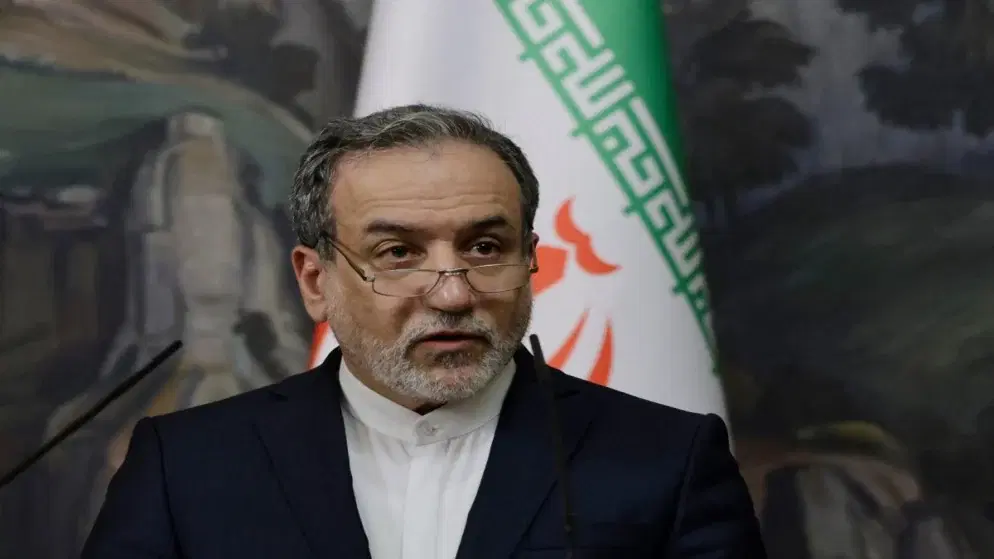
Iranian Foreign Minister Abbas Araghchi said on Monday that Tehran is holding intensive consultations through mediators, including Qatar and Pakistan, to reach a possible agreement to reopen the Strait of Hormuz and resume negotiations with the United States, as Iranian President Masoud Pezeshkian announced that Supreme Leader Ali Khamenei has granted the government certain authorities to negotiate with Washington.
Araghchi added, in an interview with the official Islamic Republic News Agency (IRNA) carried by Reuters: "If the United States accepts our conditions, the Strait of Hormuz will be reopened and negotiations will resume."
He continued, "Given the sensitivity and seriousness of the current situation, consultations and talks are extremely intensive," praising the "mediating and active role" of Doha and Islamabad in this regard.
For his part, Pezeshkian confirmed that Iran's Supreme Leader has granted the government certain authorities to negotiate with the United States, aiming to end the war in the Middle East and avoid a new round of escalation.
The official Iranian news agency (IRNA) quoted Pezeshkian as saying: "We seek to resolve the issue through dialogue. In this regard, the Supreme Leader has granted the government certain authorities."
In related developments, official media reported that Iran's Secretary of the Supreme National Security Council discussed the Middle East war with Russian President Vladimir Putin.
China and Russia expressed today their opposition to the potential resumption of military operations in a war that has damaged the global economy, amid concerns of renewed conflict following the U.S. midterm congressional elections held Tuesday.
- U.S. attack more likely than reaching an agreement
Oil prices dropped nearly 4% on Monday amid hopes that the latest round of mediation would lead to a diplomatic resolution of the crisis, but Iranian sources indicated they still consider a new U.S. attack more likely than reaching an agreement.
Baqaei said Iran's seven-point plan presented in September to end the war remains the core of discussions, but he confirmed remarks attributed to Araghchi on Saturday that the proposal could be shortened.
Baqaei said, "The basis of dialogue and talks between Iran and the United States, through mediators, still centers on Iran's seven-step proposal, which has been shortened so that it could be implemented within two days."
U.S. President Donald Trump rejected the seven-step proposal in September.
The plan calls on the United States to end its blockade of Iranian ports and for Iran to reopen the Strait of Hormuz, granting the United States an exemption for Iran regarding oil sales and lifting new sanctions imposed on Iran, followed by talks on other issues.
Baqaei reiterated that shortening the implementation timeline does not change Iran's fundamental position: that returning to nuclear negotiations is not possible until all conditions are verified as met.
Baqaei denied that the issue of transferring Iran's stockpile of highly enriched uranium to another country was raised during the talks, or whether Iran would agree to such a move.
A source familiar with the talks said Iranian negotiators left on Sunday, but not due to any problems in the discussions, adding without details that a draft proposal is being circulated.
- Russia and China's concerns
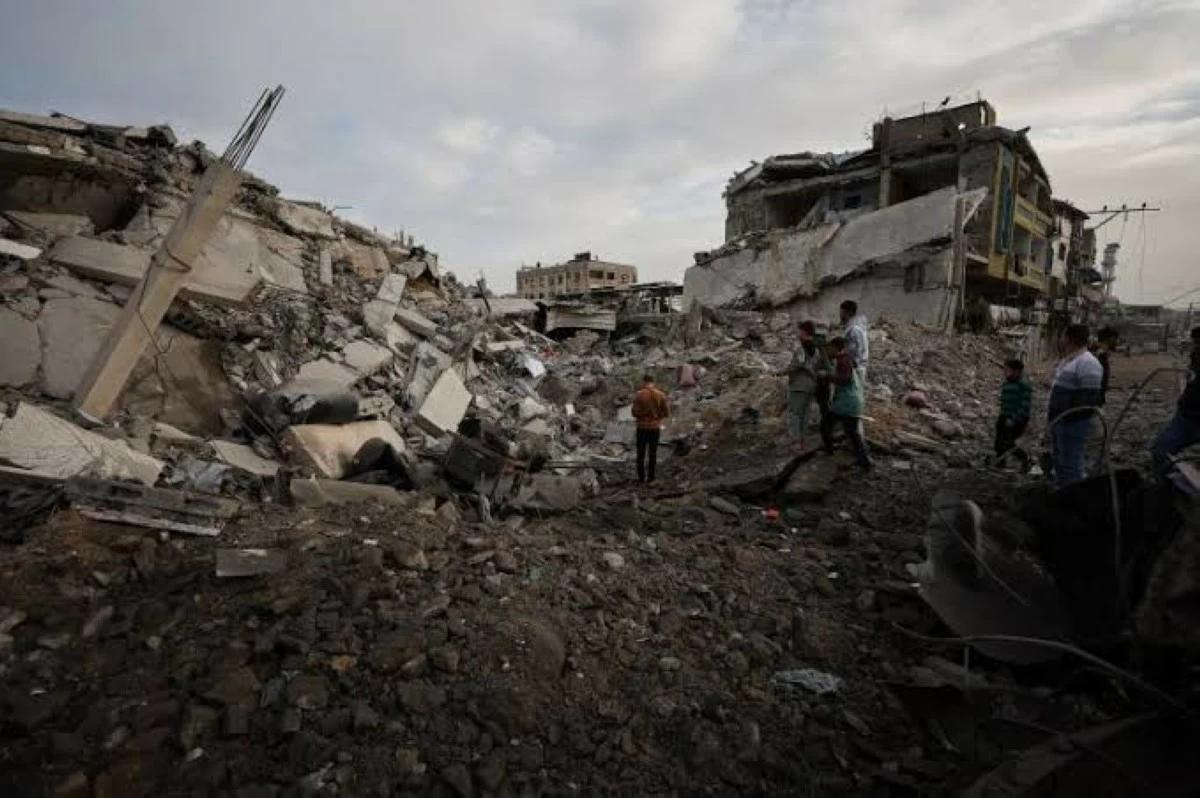
The war, launched unexpectedly by the United States and Israel on February 28, led Iran to close the Strait of Hormuz, prompted the United States to impose a blockade on Iranian ports, triggered repeated Iranian drone and missile attacks on Gulf countries, and reignited war in Yemen.
Trump has repeatedly stated he does not intend to launch a new attack on Iran before the midterm elections scheduled for Tuesday. Iran has affirmed it will respond forcefully to any new attack, noting it has plans to target sites inside and outside the Middle East.
Chinese Foreign Minister Wang Yi urged all parties to the conflict today to focus on political solutions rather than resorting again to arms, after meeting in Beijing with Ali Bagheri Kani, Iran's senior security official.
China, a major buyer of Gulf energy products, is engaging more actively in Middle East diplomacy this week and is hosting Sultan Haitham bin Tariq Al Said of Oman, whose country lies on the southern side of the Strait of Hormuz.
China's Foreign Ministry said Wang also met in Beijing with Saudi National Security Advisor Musaed bin Mohammed Al-Ibrahim and urged all parties to work toward protecting regional energy security and maritime passages.
In Moscow, the Russian Foreign Ministry expressed deep concern over reports of new military action against Iran and called for intensifying diplomatic efforts.
As an indication of risks threatening global energy supplies, Qatar Gas Transport Company said Sunday that unidentified objects struck a Qatari liquefied natural gas tanker in the Gulf region on Friday.
Attacks on oil tankers in the Gulf and Red Sea have become common during the war, but attacks targeting liquefied natural gas tankers are rare, with the last such incident involving a Qatari tanker occurring in early July.