15 attacks on farmers and their lands in the West Bank within 12 hours
Amman4 min read
Share
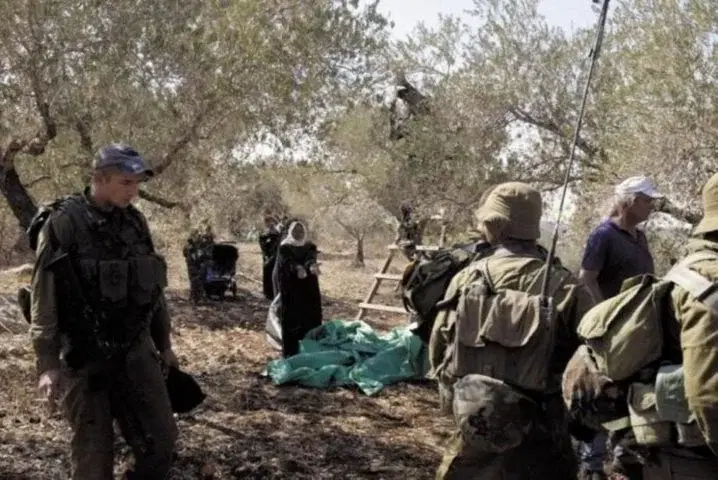
On Monday, the Wall and Settlement Resistance Commission monitored 15 attacks carried out by Israeli occupation forces and settlers against farmers and their lands in 6 governorates in the occupied West Bank within 12 hours. These attacks focused on burning and uprooting olive trees, bulldozing agricultural lands, sabotaging water sources, stealing crops, arresting farmers, confiscating a vehicle, and preventing Palestinians from accessing their lands, according to the official Palestinian news agency "Wafa".
The Commission explained that the attacks occurred between 6:00 AM and 6:00 PM, covering the governorates of Salfit, Nablus, Ramallah and Al-Bireh, Bethlehem, Qalqilya, and Hebron. In Salfit governorate, these were accompanied by the commencement of the construction of a new concrete wall adjacent to the lands of Marda village, north of the governorate.
In Salfit governorate, settlers burned agricultural lands and ancient olive trees in the Al-Badoun area belonging to the village of Iskaka, east of the governorate, as part of attacks witnessed in the Wadi Al-Shaer area between the city of Salfit and the town of Al-Lubban Al-Sharqiya, following the occupation forces' removal of an outpost that settlers had repeatedly attempted to establish on Palestinian land. They also set tires on fire in the middle of roads, blocked the main street, and threw stones at citizens' vehicles, which hindered traffic and threatened the safety of passersby.
In Marda village, the occupation authorities began building a concrete wall adjacent to the settler road known as "Trans-Samaria", concurrently with bulldozing lands and uprooting hundreds of fruitful and ancient olive trees, which threatens to isolate additional agricultural areas and restrict farmers' access to their lands.
In Nablus governorate, settlers, under the protection of occupation forces, stormed agricultural lands in the Al-Joura area of Qaryut village and used power saws to cut down fruitful and ancient olive trees in the Al-Dababees area. They also let their livestock graze in agricultural lands in the Al-Ain area in the town of Qusra and stormed the lands of Naqoura village, destroying a water spring well in the Ein al-Kafarat area.
In the Ramallah and Al-Bireh governorate, settlers let their livestock graze in agricultural lands in the Al-Baqara area in Al-Mazra'a al-Sharqiya, stole olive harvests from the Al-Batin area near the town of Sinjil, carried out provocations near houses in the village of Burqa, and bulldozed lands in the Turmus Ayya plain near the Abu Awad family home. They also raided the agricultural plain in the village of Al-Mughayyir, intimidated citizens, and prevented them from approaching their lands.
Settlers also attacked a family while they were harvesting olives in the Al-Misha area in Deir Ammar village and stormed Palestinian lands in Kafr Malik with their sheep during the harvest season.
In Bethlehem governorate, occupation forces arrested a farmer and assaulted him while he was harvesting olives on the lands of Tuqu' town, southeast of the governorate, while they arrested a young man in the Al-Wadat area belonging to the town of Hajjah in Qalqilya governorate during the harvest and confiscated his vehicle.
In Hebron governorate, settlers let their livestock graze inside lands planted with olive trees in the Hamroush area belonging to the town of Sa'ir.
The Commission stated that these attacks reflect an escalation targeting the foundations of Palestinian agricultural production, extending beyond assaults on the olive harvest season to imposing restrictions on land use and isolating it from its owners. It pointed out that the construction of walls, land bulldozing, tree uprooting, along with the sabotage of water sources, crop theft, and the arrest of farmers, constitute synchronized tools to undermine agricultural activity.
It warned that the continuation of these practices threatens to turn the restrictions imposed on Palestinians' access to their lands into a permanent geographical reality, demanding that the international community intervene to stop the attacks, ensure the protection of farmers, their trees, and their water sources, and hold those responsible for destroying and seizing agricultural properties accountable.
The Wall and Settlement Resistance Commission had announced in its monthly report released on Monday that occupation forces and settlers carried out 3,133 attacks against Palestinians, their lands, and their properties in the West Bank during last October, an increase of 52.8% compared to September.
The attacks were distributed as 1,764 attacks carried out by occupation forces and 1,369 by settlers, with an increase of 111.6% in settler attacks compared to the previous month.
The Commission also documented the damage of 5,890 trees during October, including 4,498 olive trees, in the context of escalating attacks on agricultural lands coinciding with the harvest season.