Democratic division in Michigan ahead of US midterm elections
Amman5 min read
Share
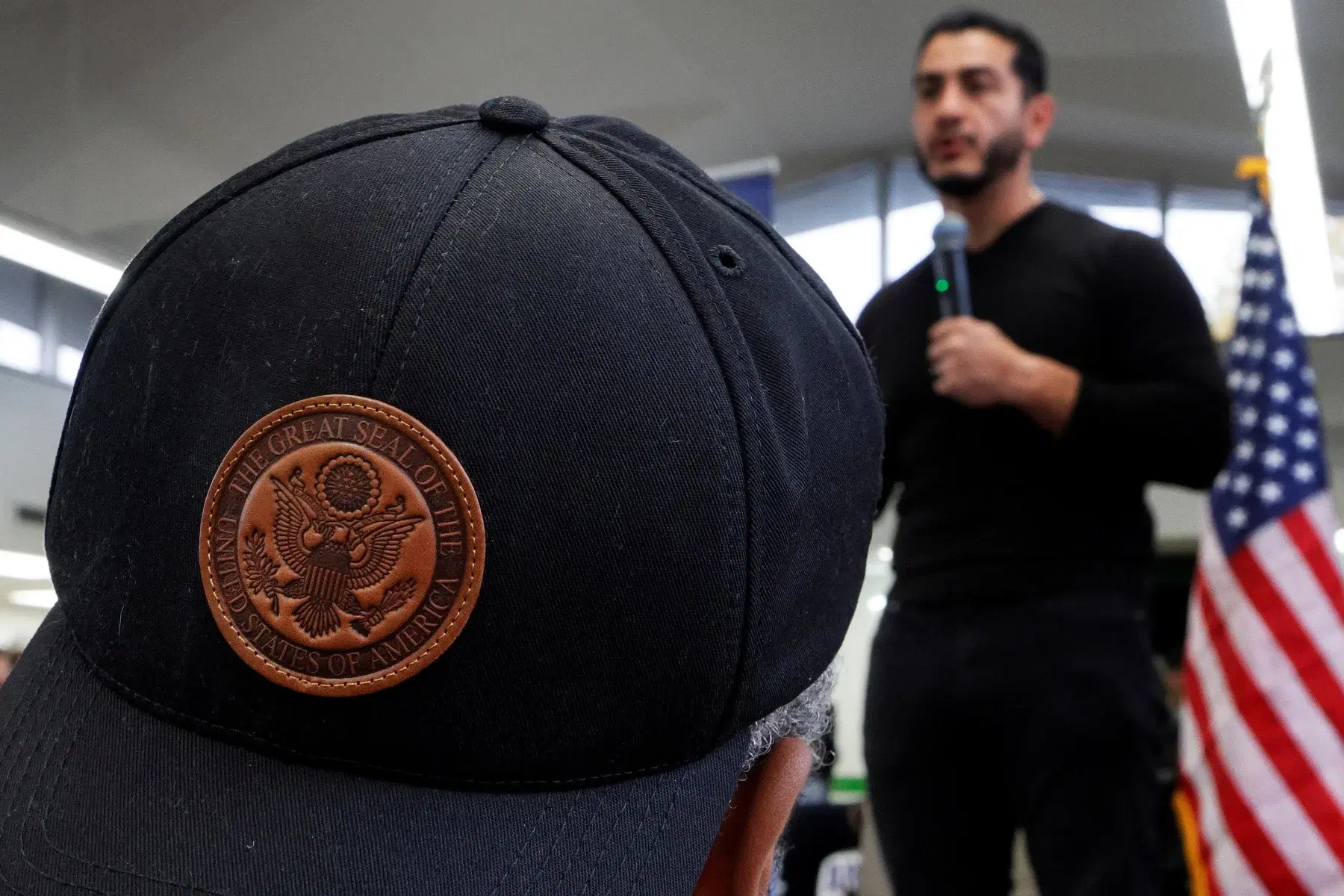
Democrats in the United States sought on Monday to contain a division within their ranks in the Michigan Senate race, after US Representative Haley Stevens announced her support for Republican candidate Mike Rogers, despite losing the Democratic primary to his rival Abdul El-Sayed, a move that confused party leaders a day before the midterm elections.
Stevens announced her position while appearing alongside Rogers at a church in the city of Detroit, in a shift that Republicans are seeking to capitalize on in a race considered crucial to Democratic hopes of wresting the majority from Republicans in the Senate, who currently hold 53 seats against 47 for the Democrats, in the elections scheduled for Tuesday.
Stevens' position sparked dissatisfaction among Democratic leaders, as Representative Debbie Dingell described it as a distraction to the party's efforts, while Stevens said in a video posted on social media: "There is no place for me in the Abdul El-Sayed campaign."
The dispute comes against the backdrop of criticism Stevens leveled at an advertisement launched by an outside group, which she said blamed Israel for rising food prices, demanding that El-Sayed condemn it.
In a statement, Stevens described the ad as "very painful," considering that some Democratic voters are receiving a message that the party or the campaign does not represent them.
In contrast, a spokesperson for the El-Sayed campaign revealed that the campaign raised $2.4 million on Sunday, its largest daily total, driven by small donations averaging $36.74, provided by more than 65,000 donors.
According to an informed source, the El-Sayed campaign recently asked Stevens not to attend his events until election day to avoid distracting from the campaign's key issues.
Republicans were quick to capitalize on the Democratic division, as Rogers considered the shift of part of the party toward what he described as intense hatred against a group of people to be dangerous.
El-Sayed, an Egyptian-American and Muslim born in Michigan, is running an election campaign during which he has been subjected to attacks from President Donald Trump and other Republicans who questioned his loyalty to the United States and described him—without basis—as a terrorist sympathizer, warning that his election would lead to attacks on Americans. El-Sayed described the questioning of his loyalty as "shameful."
These attacks are part of a broader discourse adopted by some Republicans, targeting Arab-Americans, Muslims, and converts, in addition to portraying Democrats as dangerous communists and extremists as the elections approach.
In explaining her daughter's position, her mother, Maria Marcotte, said the decision to endorse Rogers came because of what she described as dangerous political rhetoric from El-Sayed, pointing to his previous appearance with Hasan Piker, a leftist content creator who has faced criticism for his comments regarding Israel and American Jews.
Democratic voter Pamela Johnson, 72, also criticized Stevens' position after voting for El-Sayed in Warren, a Detroit suburb, calling the congresswoman a "traitor."
On the level of the wider electoral race, non-partisan analysts believe that Democratic chances of regaining the majority in the House of Representatives look promising, while the competition for the Senate looks more complex, with races intensifying in states that traditionally lean Republican, including Texas, Kansas, and Iowa, giving Democrats additional options to reach the majority.
Democratic control of either house would limit Trump's ability to pass legislation and enable them to open investigations into his administration, while a majority in the Senate would allow them to block his federal judicial appointments, including to the Supreme Court.
According to the University of Florida Election Lab, about 55 million voters have cast their ballots in person or by mail so far, exceeding the total of 45 million votes in the 2022 midterm elections.
Judicial developments in Alaska and California
In another development preceding the elections, a federal judge on Sunday dismissed a lawsuit filed by the US Department of Justice, through which it sought to block the certification of the Senate election results in Alaska if the current Republican Senator Dan S. Sullivan loses by a narrow margin.
The ministry based its lawsuit on the potential for voter confusion due to the presence of another candidate named Daniel J. Sullivan Jr. on the ballot.
The case sparked controversy over the past few days, after reports surfaced about the participation of Democratic candidate Mary Peltola's campaign in recruiting Sullivan Jr. to run in the election with the goal of splitting the voters' ballots.
While both Peltola and Sullivan Jr. denied coordinating with each other, the current Republican Senator announced he would accept the results of Tuesday's election, coinciding with the Trump administration's continued pressure to conduct a criminal investigation into the case.
Voter Elena Byrd, 24, a resident of Wasilla, Alaska, expressed her relief at the dismissal of the lawsuit after having voted for Peltola, considering it important to stand up to what she described as Trump's attempts to suppress voters.
In California, Trump filed an urgent request on Monday to the Supreme Court to stop counting the votes of more than 20,000 provisionally registered voters, whom federal officials claim are likely not US citizens.
In contrast, the state of California warned that the lawsuit could deprive 20,000 voters of their right to vote based on vague accusations, considering the administration's mechanism for identifying non-citizens to be flawed and prone to error.