Rawashdeh inaugurates the Jordanian Family Library project from Hammoud village
Amman6 min read
Share
Culture Minister Muhannad Al-Rawashdeh affirmed that selecting Hammoud village in Karak—still holding onto its wound and healing its spirit from the hands of treachery and cowardice—for launching the twentieth edition of the Jordanian Family Library project (Reading Festival for All) under the slogan "A Library for Every Home," carries profound intellectual and national connotations reflecting the triumph of awareness and knowledge over ignorance, terrorism, and extremism.
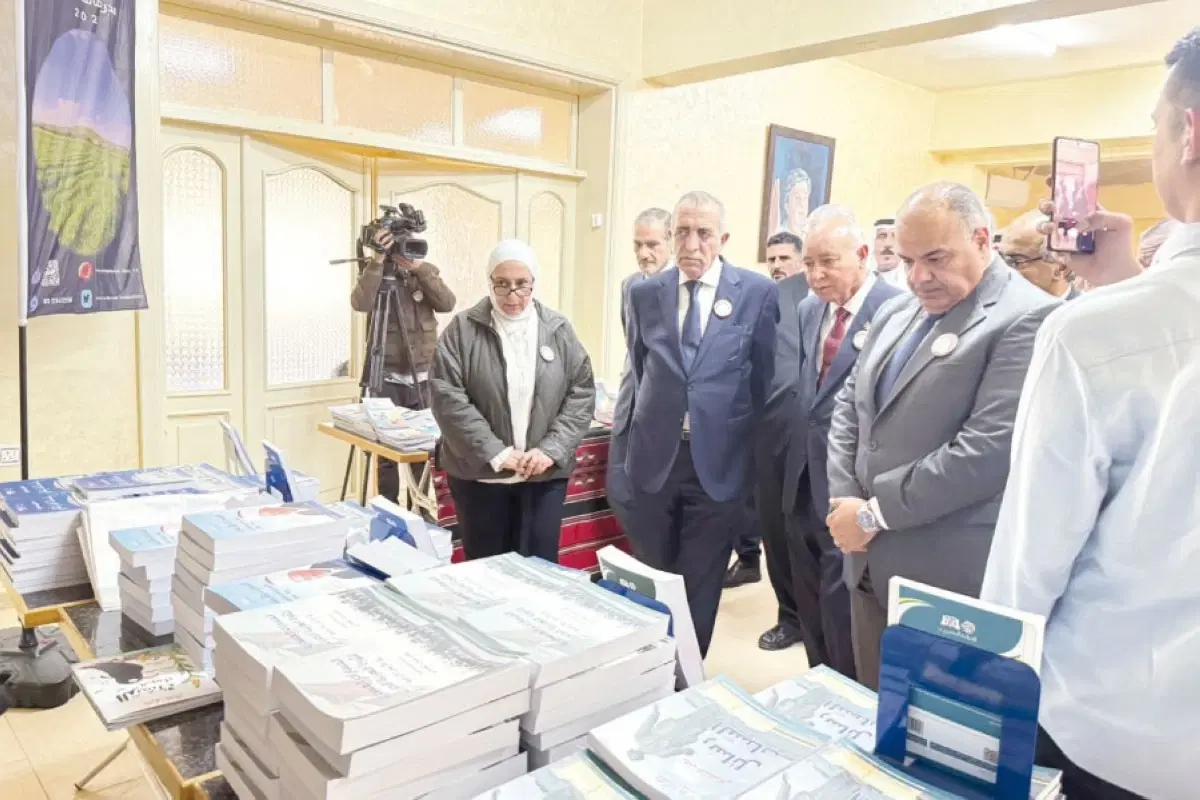
During his speech at the opening ceremony held at the Hammoud Charitable Society in the presence of official, cultural, and community figures, the minister added: "They chose terrorism and failed and were disgraced; we chose the book so that the flame of light remains our guide and beacon. They chose to extinguish life; we chose to open a thousand doors for it, to raise a lantern against darkness, to side with freedom against fear, with citizenship against hatred. We have not come to write a sad ending in Hammoud’s history, but to affirm that this history remains open to life."
He pointed out that Hammoud, through its steadfastness and unity, embodies the true values of citizenship that brought together all Jordanians—Muslims and Christians—when adversity struck, emphasizing that the wound it suffered is a wound in the heart of Jordan itself. He stressed that culture is not a luxury, that books are not mere home decorations, and that knowledge is not a privilege for anyone, but a right for every Jordanian man and woman, and a national responsibility we all shoulder within the framework of the national vision led by His Majesty King Abdullah II ibn Al-Hussein, to safeguard Jordan’s human identity, strengthen citizenship and moderation, and expand knowledge opportunities for all Jordanians.
The minister recalled the deep cultural and social roots of the town, noting that over a century ago, the people of Hammoud took the initiative, using their own efforts and funds, to build a school—an early sign of awareness that human development begins with knowledge. He highlighted that this fertile environment contributed to the creative landscape through the legacy of the great Arab novelist Ghaleb Halasa, whose literature carried questions about humanity, freedom, and place, leaving a profound impact that transcended geographical boundaries.
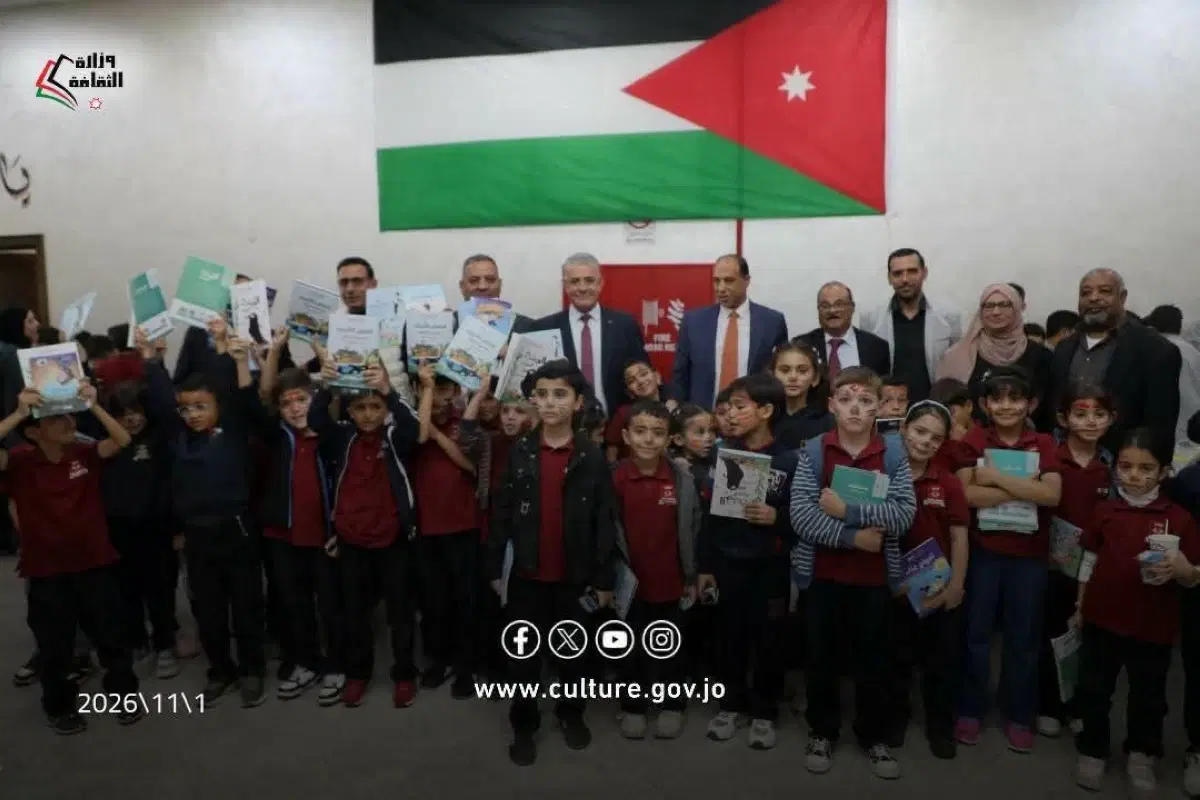
The minister emphasized that Jordanian awareness was not shaped solely by the clamor of cities, but also by its villages, teachers, early readers, and small libraries that lit homes like lanterns of knowledge. He explained that the Family Library project is now launching from Hammoud to bring books closer to every household, make knowledge accessible to every family, and establish reading as a habit passed down through generations.
The minister announced the approval of a package of cultural projects, including the launch of the Hammoud Prize for Arabic Novel, designating Hammoud as the Jordanian Cultural Village for 2027, erecting a memorial monument honoring the martyrs and preserving their noble memory, establishing a new library in the village, and naming a Culture Street to preserve the memory of the place, celebrate its cultural icons, revive the stories of its people, and make books, art, and creativity a presence in daily life. This street, the minister said, will not only bear the name of culture on its signs, but will carry its message to new generations—demonstrating the government’s commitment to keeping Hammoud a beacon of awareness and transforming its luminous history into a living cultural project.
For his part, Dr. Sallam Al-Dhaham, Director of the Jordanian Family Library Project at the Ministry of Culture, emphasized the vital role of culture and knowledge in fortifying minds and building societies, likening minds that stray from truth and close their doors to knowledge to "closed houses where the air turns stale and the sun of giving disappears."
He said: "Minds that turn away from truth and persist in arrogance are like those isolated houses. True knowledge is the pure air and radiant light that prepare the ground to receive the uninterrupted rain from heaven." He added that God Almighty has commanded humans to cultivate the earth and left between Him and them a continuous, woven rope made of the sanctity of souls and the inviolability of blood, linking earth to heaven, ensuring abundance through love and acceptance, and guiding the lost to the source of light and the unity of the lampstand.
Al-Dhaham recalled the great sacrifices made by Jordanian villages for the nation’s dignity and defense of its causes, citing the peaceful village of Hammoud, faithful to its nation and people. He affirmed that Hammoud has produced a constellation of righteous martyrs in Jordanian history, whether in the glorious Karak Revolution known as "Al-Hayya," or in battles of honor and bravery defending Jordanian and Palestinian soil, ensuring their legacy remains stories told, heard, and understood by hearts that grasp the meaning of sacrifice and devotion.
For his part, Faris Halasa, President of the Hammoud Charitable Society, affirmed that the will of Hammoud’s people and their determination for life and construction are stronger than all attempts to undermine the nation’s security and stability. He stressed that the best response to terrorism lies in holding fast to knowledge, dignity, and human values.
Halasa began his speech on behalf of the people of Hammoud by remembering the souls of the village’s martyrs, saying: "Today we stand on the sacred land of Hammoud (Mother of Martyrs), baptized in the pure blood of nine of our finest youth and men who ascended as martyrs following a cowardly terrorist betrayal."
He added: "Today we stand with fresh pain in our hearts, but willpower is stronger than the reach of darkness. Terrorism sought to plant death and fear in Hammoud, but we respond with work, life, and hope."
The society’s president noted that attempts to undermine social cohesion have failed, adding: "They wanted to silence our voice, so we opened the book; they sought to sow discord and division among us, so we united in love and patriotism; they wanted to leave behind a memory of death in this place, but we insist that Hammoud’s memory remain one of knowledge, dignity, and humanity. Hammoud reads. Hammoud lives."
He explained that the battle against terrorism and destructive ideologies is, above all, a battle of awareness and identity. A treacherous bullet does not fire without a deviant idea first exploding in the mind. Here, the book emerges as the strongest intellectual arsenal, fighting and protecting young minds against the epidemics of extremism, ignorance, and chaos, planting life wherever others sought to spread death.
He affirmed that launching the Reading Festival for All in Hammoud—a village that has been a radiant beacon and authentic source of knowledge and culture for over a century—sends a decisive message: the response to terrorism is not only through weapons, but fundamentally through spreading knowledge and awareness in the very place where extremists sought to extinguish its light. It is also a national message confronting all those who attempt to undermine Jordan’s security, unity, and social fabric.
The opening ceremony began with attendees observing a minute of silence and reciting Al-Fatiha in honor of the souls of Hammoud’s martyrs and the nation’s martyrs, as a gesture of gratitude for their sacrifices.